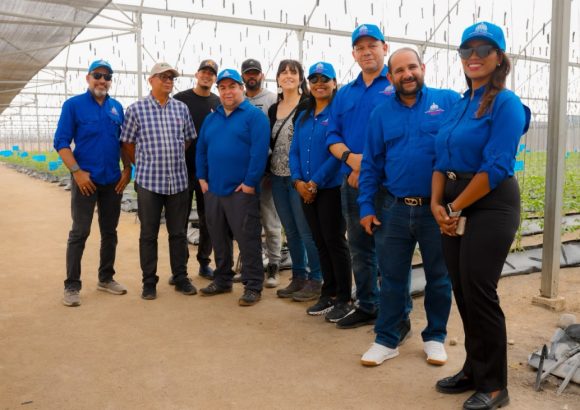
A high-level technical delegation from Chile’s National Irrigation Commission (CNR) has arrived in the Dominican Republic for a week-long knowledge-sharing visit, hosted by the Dominican Executive Directorate of National Irrigation Technology (TNR). The trip centers on examining the Caribbean nation’s cutting-edge progress in irrigation innovation and climate-controlled protected agriculture, as part of a broader bilateral cooperation agreement between the two countries.
The core goal of this collaborative initiative is to facilitate the cross-border exchange of technical knowledge, industry-tested best practices, and proven institutional management models, with the ultimate aim of boosting agricultural innovation capacity for both nations. Over the course of the visit, Chilean delegates are holding in-depth working sessions with senior TNR officials and conducting on-site tours of advanced greenhouse irrigation projects across three key Dominican agricultural regions: Jarabacoa, San José de Ocoa, and Azua.
During these site visits, the CNR team is closely studying Dominican strategies for cutting water waste through efficient conservation frameworks, integrating emerging technologies into agricultural water management, and raising overall crop productivity to meet growing domestic and export demand. At the official opening session of the visit, TNR Planning and Development Director Manuel Mejía underscored how far the Dominican Republic has advanced in recent years to modernize its national irrigation infrastructure and scale up production in controlled agricultural environments.
Mejía emphasized that this peer-to-peer exchange is far more than a technical visit: it is a critical opportunity to strengthen regional collaboration on sustainable agriculture and build long-term institutional capacity for both sides. For their part, the Chilean delegation has also presented an overview of their own country’s decades of experience in irrigation system governance and water resource management. By the end of the visit, both delegations confirmed they are actively exploring new avenues for future joint work focused on advancing sustainable, climate-resilient agricultural development across the region.