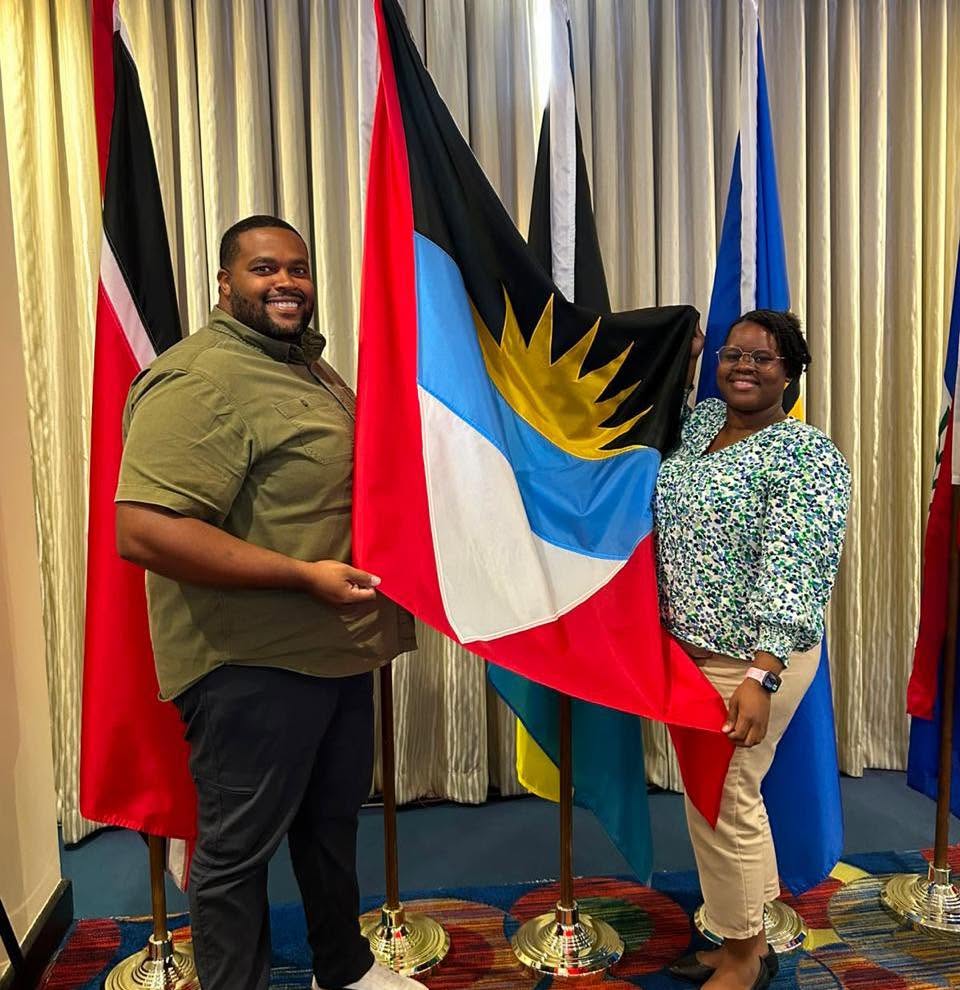
Against a backdrop of growing regional focus on environmental protection and sustainable waste management across the Caribbean, two senior technical officials from Antigua and Barbuda have completed a four-day specialized training workshop focused on advancing regulatory and practical capacity for handling hazardous chemicals and waste. Held in Trinidad and Tobago from July 7 to 10, the event, formally named the Joint Regional Training Workshop on Chemicals and Waste Multilateral Environmental Agreements, brought together environmental practitioners from across the Caribbean region to address shared challenges in environmental stewardship.
The Antigua and Barbuda delegation comprised J’herdine Browne, a graduate assistant attached to the country’s Department of Analytical Services, and Chris Winter, who serves as Landfill Manager at the National Solid Waste Management Authority. Over the course of the training program, participants delved into a diverse curriculum designed to build both foundational and advanced skills. Core topics covered included evidence-based hazardous chemicals and waste management protocols, the legal and operational requirements of international multilateral environmental agreements, frameworks for deepening cross-border regional cooperation, and practical application of the Globally Harmonized System of Classification and Labeling of Chemicals, a global standard designed to improve worker and environmental safety.
Beyond technical environmental content, the workshop also equipped attendees with transferable professional skills: participants received hands-on instruction in effective workplace mentoring strategies, the utilization of modern digital learning tools to expand ongoing education, and structured methods for sharing complex technical information across stakeholder groups. In a post-workshop statement, Antigua and Barbuda’s Department of Analytical Services outlined the long-term value of the participation for the small island nation. The department emphasized that the new skills and connections gained will directly contribute to strengthening local technical expertise, improving national-level implementation of binding international environmental agreements, and fostering closer collaborative ties between Caribbean nations working to address shared environmental challenges.