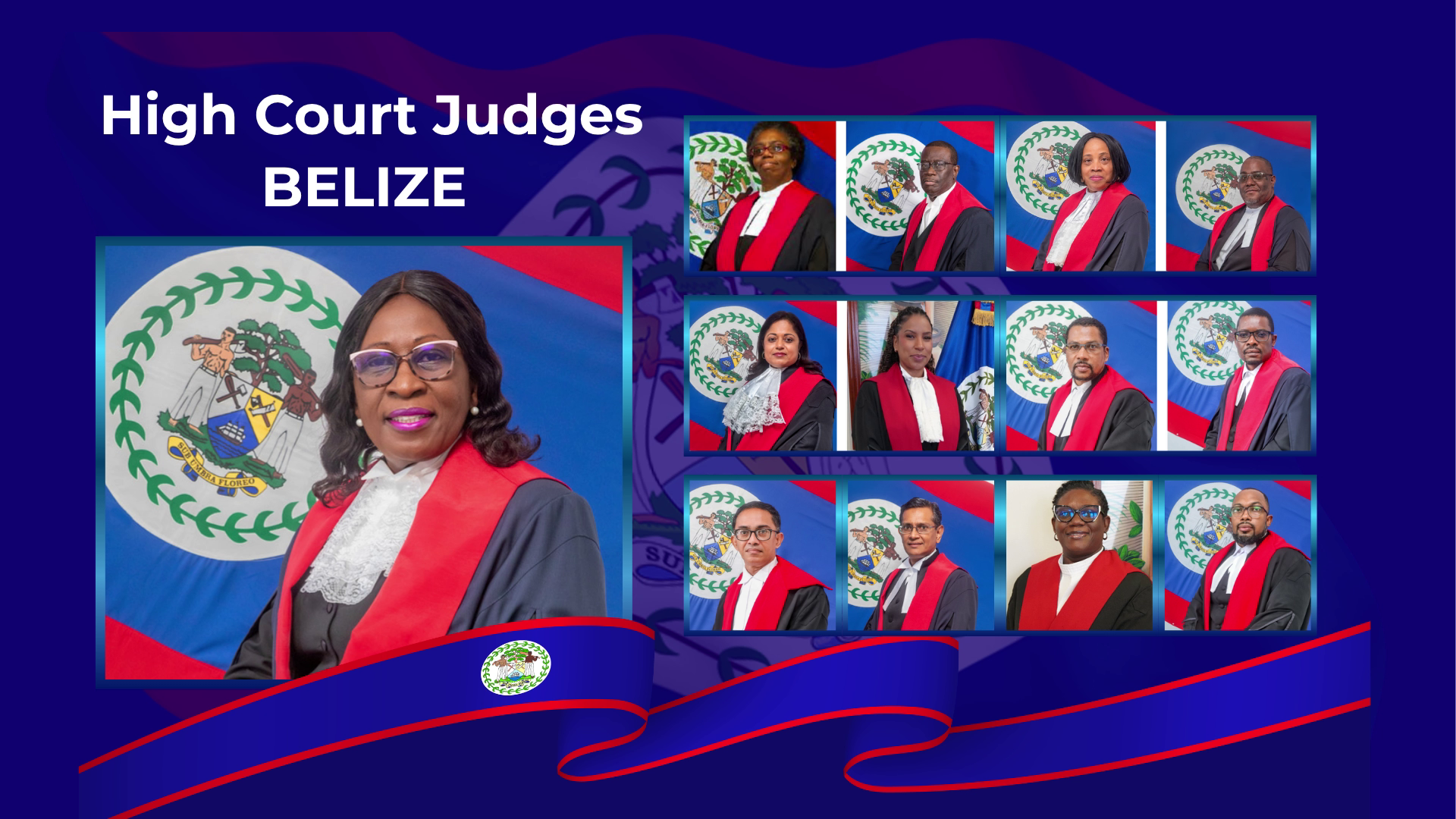
A public and fierce disagreement over judicial appointments to Belize’s High Court has split the country’s legal community, sparking a national debate over representation, judicial independence, and national sovereignty amid rumors of two new foreign nominees for vacant bench seats.
The conflict centers on a core question that has resonated across Belize: if qualified domestic legal professionals are available to serve, why does the High Court continue to draw the vast majority of its judges from outside the country’s borders? The controversy flared into public view after reports that the Judicial and Legal Services Commission is considering two foreign legal practitioners – Guyana’s Sheiniza Smith and Trinidad and Tobago’s Peter Carter – for two open criminal bench positions on the High Court. These pending nominations have pushed long-simmering frustrations among local defense attorneys into an open showdown with the Belize Bar Association.
In an interview with local outlet News Five, Orson Elrington, a leading spokesperson for the Association of Defense Attorneys (ADA), which represents the vast majority of criminal legal practitioners and half of all legal professionals active in Belize’s court system, clarified that the group’s criticism is not an attack on the qualifications of the nominees or a rejection of fellow CARICOM member state legal professionals. Instead, the ADA argues that the longstanding pattern of overlooking qualified Belizean attorneys for judicial appointments undermines national representation and threatens the long-term autonomy of Belize’s judiciary.
Elrington emphasized that the ADA, which has raised this concern for years, is not seeking to derail the constitutional appointment process – it is demanding a seat at the table for local legal stakeholders to have input on selections that shape the country’s justice system. Dickie Bradley, another prominent ADA attorney, went further, arguing that the exclusion of Belizean nationals from all levels of the domestic judiciary is fundamentally out of step with the separation of powers that underpins Belize’s system of government. “The bottom line is that there are three branches of government: the law making, the executive, and the judicial. And the judicial committee has not appointed a Belizean to the higher bench or to the lower bench. Never happened. Something must wrong with that,” Bradley stated.
For its part, the Belize Bar Association has defended the constitutional, independent appointment process overseen by the Judicial and Legal Services Commission. Bar Association President Jose Alpuche told reporters that the commission has acted fairly in its candidate recommendations, and that defending the existing process is critical to upholding public trust in Belize’s justice system. Alpuche did acknowledge that the current underrepresentation of Belizean attorneys on the High Court is a legitimate concern, noting that the Bar Association actively encourages qualified local legal professionals to apply for judicial openings and supports increasing domestic representation on the bench.
Attorney General Anthony Sylvestre has moved to calm tensions, confirming that no final decision has been made on the two pending nominations, and that the selection process remains ongoing with consultation with the Leader of the Opposition still underway. The leak of the candidates’ names early in the process drew public criticism even from opposition leaders, who raised questions about the lack of transparency around the selections.
A comparison of judicial composition across the Caribbean highlights just how unusual Belize’s current setup is. Neighboring jurisdictions including Jamaica, Barbados, Trinidad and Tobago, and Guyana all appoint domestic nationals to almost all senior judicial positions, including the role of Chief Justice. In Belize, by contrast, only one of the 13 sitting High Court judges has any Belizean connection: Justice Antoinette Moore, an American jurist with Belizean roots, who is scheduled to retire from the bench in August 2026. Once Moore departs, Belize will have zero judges with domestic ties serving on its highest domestic court.
What began as a disagreement over two potential appointments has now evolved into a broader national conversation about the future of Belize’s justice system, with stakeholders asking how the country can safeguard judicial independence while addressing widespread, legitimate public demands that qualified Belizean attorneys get a fair chance to serve on the bench that adjudicates the nation’s laws.