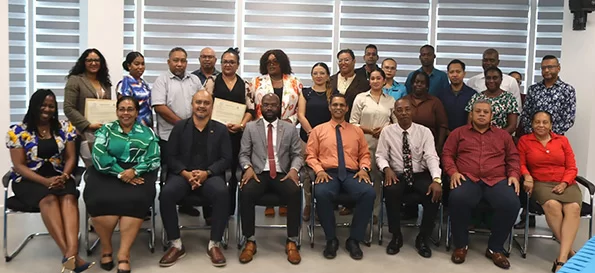
On a formal ceremonial day this week, a cohort of junior labor inspectors with Suriname’s Directorate of Labor Inspection took the oath of confidentiality, marking a key milestone in the country’s ongoing push to strengthen labor regulation and worker protection.
Hosted by the Ministry of Public Health, Welfare and Labor (VWA), the swearing-in ceremony was led by VWA Minister André Misiekaba, who used the occasion to outline the core responsibilities of the new inspectors and deliver a stark warning against unethical conduct. By signing the oath, the new inspectors formally committed to upholding the Labor Inspectorate’s three foundational values: unwavering integrity, strict confidentiality, and diligent compliance with legal requirements for all official duties. Following the collective swearing-in, each inspector received an official certificate confirming their oath, a formal document recognizing their entrance into full professional service.
Under the terms of the oath, inspectors are bound to never share confidential information obtained through their work with unauthorized parties — a requirement that remains in effect both during their employment and after they leave the agency. Ministry officials frame this oath as a critical step forward in the broader professionalization of Suriname’s labor oversight system.
Addressing the new inspectors directly, Minister Misiekaba emphasized the profound social responsibility that comes with their roles. He noted that workers are most often the economically disadvantaged party in employment relationships, placing a legal and moral obligation on the state to act as their protector. The minister made clear that worker exploitation remains an ongoing challenge in Suriname, with widespread violations including unsafe working conditions, unpaid or underpaid wages, and other breaches of the country’s labor laws still being reported across multiple sectors.
Misiekaba’s sharpest warning came on the topic of corruption: he explicitly cautioned the new inspectors against accepting bribes from unethical employers seeking to cover up labor violations. He made clear that any inspector found guilty of corruption or dereliction of duty will face severe disciplinary action, while the government will stand firmly behind inspectors who carry out their work honestly and in line with the law. Moving forward, the minister announced plans to allocate additional resources and funding to expand the capacity of the Labor Inspectorate, enabling it to carry out more effective and consistent workplace oversight across the country.
Rowan Noredjo, Inspector-General of the Labor Inspectorate, called the swearing-in ceremony a defining milestone in every labor inspector’s professional journey. He noted that this cohort of inspectors only took their oath three full years after completing their training, a delay from the legal requirement that the oath be administered upon accepting the position. Noredjo stressed that confidentiality is not just a formality, but a non-negotiable requirement for the inspectorate to function effectively. Inspectors routinely handle sensitive private data on both companies and individual workers, and they regularly receive anonymous reports from workers who fear retaliation if their identity becomes known. If the identity of a reporting worker or confidential details of an investigation are leaked, Noredjo explained, it can lead to intimidation, demotion, or dismissal for workers at the hands of unethical employers. He reaffirmed that this obligation of confidentiality never expires, even after an inspector ends their career with the agency.