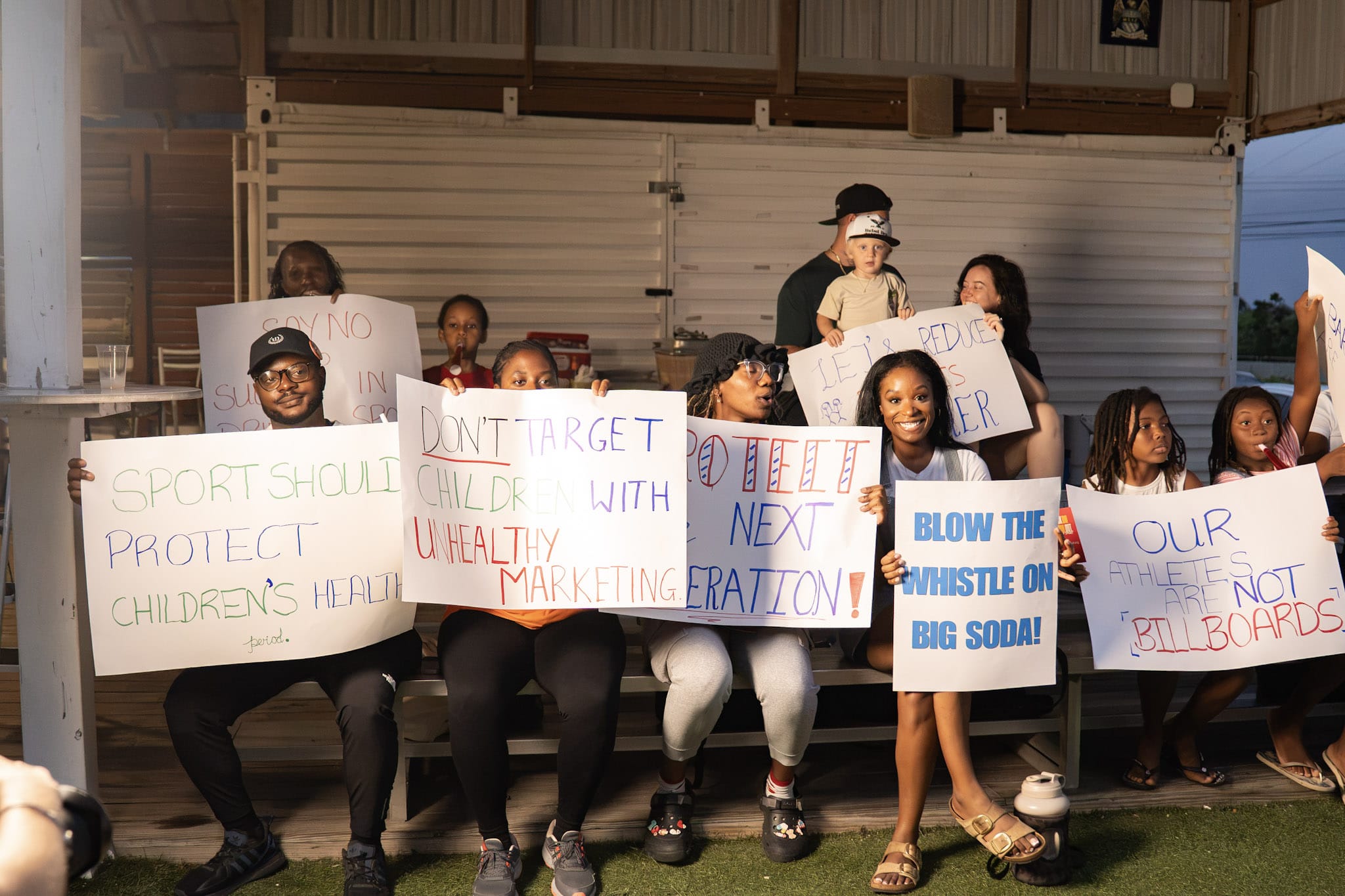
On July 11, a diverse coalition of young activists, medical students, and members of the Barbados Childhood Obesity Prevention Coalition joined a worldwide movement challenging the long-standing practice of large sugary drink manufacturers sponsoring the world’s most high-profile sporting events. For the Caribbean island nation, this fight is far from an abstract global campaign: official data shows nearly 42 percent of Barbadian children currently live with overweight or obesity, making the public health harms of targeted sugary beverage marketing visible every day in local clinics, schoolyards, and neighborhood communities across the country.
As the centerpiece of their local activation, youth leaders from the Heart & Stroke Foundation of Barbados’ Childhood Obesity Prevention Programme organized a symbolic 5-a-side futsal tournament at The Oasis Football Turf, designed to bring public attention to the global Kick Big Soda Out campaign and escalate ongoing advocacy to restrict marketing for unhealthy food and drinks on school grounds. As of the event date, more than 706,000 people across the globe have signed the campaign’s petition, and 104 global and local organizations have formally pledged their support.
The tournament featured two competing teams drawn from leading regional medical education institutions: Ross University School of Medicine and the University of the West Indies, Cave Hill Campus, Faculty of Medical Sciences. Rather than sporting logos from corporate beverage sponsors, players wore custom jerseys emblazoned with direct, unflinching messages highlighting the interconnected harms of overconsuming sugar-sweetened drinks: “Excess Sugar,” “Blood Sugar Spike,” and “Plastic Pollution,” tying public health outcomes to the growing environmental crisis caused by single-use beverage containers.
Throughout the day, activists engaged with spectators through informative placards, fact-based educational outreach, and open discussion, sharing key data on rising childhood obesity rates, excessive sugar intake among young people, and the growing public health burden of non-communicable diseases (NCDs) across Barbados. The event centered a critical public question that challenges long-standing norms in global sports: should products proven to contribute to chronic poor health be promoted to billions of fans through the world’s most beloved athletic events?
Activists also emphasized the urgent need to shield children and adolescents from predatory marketing of unhealthy beverages, urging attendees to add their names to the Kick Big Soda Out campaign, which demands that major international sporting governing bodies end all sponsorship and marketing partnerships with unhealthy food and beverage companies. One local advocate noted that corporate soda sponsorship has become so normalized in global sports that it is often accepted as an unchangeable part of athletic culture, but argued that the product has no legitimate place in health-focused athletic spaces. “Big Soda directly undermines public health, and nothing matters more than our health,” they said.
Team captains from both competing squads echoed this call for healthier, more responsible sports sponsorship ecosystems. The captain of the UWI Cave Hill team pointed out that global soccer draws an audience of billions, making it one of the most powerful platforms for public messaging in the world. “Advocacy succeeds when it engages the general public, and bringing ordinary sports fans into the movement for healthier habits is the most effective way to challenge Big Soda’s influence,” he said.
The Kick Big Soda Out campaign continues to pressure leading global sporting bodies, including FIFA and the International Olympic Committee, to prioritize partnerships that support public health and wellbeing, instead of tying their brands to companies whose products drive the global obesity and NCD crisis. Beyond Barbados, youth-led activation events are also being held across five countries: Brazil, Colombia, South Africa, and Trinidad and Tobago, building a growing global movement to decouple sports from harmful sugary drink marketing.