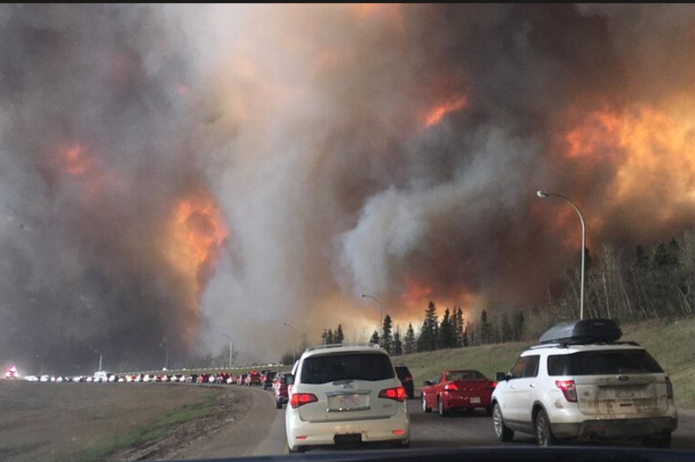
An unprecedented wave of wildfires continues to rage across Canada, sending thick toxic smoke drifting south into the United States and forcing widespread air quality warnings that stretch from the Upper Midwest all the way to the Northeast. As of Thursday, official data from the Canadian Interagency Forest Fire Centre confirms 857 active blazes are burning across the country, 23 of which ignited just within the last 24 hours. The overwhelming majority of these fires remain completely uncontained, according to the Canadian Wildland Fire Information System, creating one of the most severe wildfire seasons the nation has faced in recent memory.
The largest concentration of fires burning in northwestern Ontario has been the primary source of the dangerous smoke plumes. Thick plumes have already choked major Ontario urban centers including Thunder Bay and Toronto, while thinner concentrations of smoke at high atmospheric levels have drifted across the Great Lakes region toward New York. Forecasters say the smoke is likely to create hazy skies and unusually red-hued sunrises and sunsets across the northeastern U.S. over the coming days.
While forecasters predict widespread thunderstorms will roll across Ontario in the next few days, experts say the expected rainfall is unlikely to be heavy enough to extinguish the large, deep-seated blazes or meaningfully improve conditions. Northwesterly wind patterns will continue pushing smoke into northern U.S. states through the end of the week and into the weekend, raising concerns that poor air quality will reach New Jersey, the host site of Sunday’s World Cup final. A shift in wind direction forecast for Monday is expected to redirect smoke plumes toward Quebec, which will bring gradual improvements to air quality across the southern U.S., according to the U.S. National Oceanic and Atmospheric Administration (NOAA).
As of Thursday, air quality monitoring firm IQAir ranked Detroit, Michigan as the city with the worst air pollution in the world, with Minneapolis, Minnesota and Toronto, Canada claiming the next two spots on the list. The hazardous conditions have prompted official warnings from U.S. authorities, who classify air quality in large swathes of Michigan and Minnesota as hazardous under the U.S. Air Quality Index, urging all residents to limit outdoor activity and stay indoors as much as possible.
The cross-border pollution has sparked diplomatic friction, with four Republican U.S. House representatives from Michigan signing an open letter addressed to Canadian Prime Minister Mark Carney calling for more effective wildfire management. The letter expressed growing frustration, noting this is the third consecutive year Michigan has faced hazardous smoke from Canadian wildfires, and that lawmakers’ patience has been exhausted. “A year has passed, the season has come around again, and nothing has changed except that our patience has run out,” the letter reads.
U.S. Ambassador to Canada Pete Hoekstra struck a more collaborative tone in a statement Wednesday, praising ongoing wildfire response efforts from teams in both countries. “This challenge knows no borders. The United States will continue to coordinate closely with Canada, just as we have for more than four decades of shared wildfire emergencies,” he said.
Beyond the air quality crisis impacting densely populated urban centers hundreds of miles south, the wildfires have already caused severe disruption and damage to remote northern Ontario communities. Hundreds of residents from local First Nations communities have been forced to evacuate their homes, with shared footage showing many fleeing the isolated region by small boat. Anishinabek Nation Grand Council Chief Linda Debassige confirmed in a public statement that dozens of residential homes and community buildings have suffered extensive damage from the advancing flames.
The danger of the blazes was highlighted in dramatic footage released Wednesday that showed a freight train completely surrounded by roaring wildfire flames near Armstrong, Ontario, after the crew became trapped. Canadian National Railway quickly confirmed in a subsequent statement that all workers on the train were safely rescued via emergency response, and that rail operations through the affected region have been temporarily paused to allow for fire response and safety assessments.