Eight months after the Unity Labour Party (ULP) lost its 25-year hold on power in St. Vincent and the Grenadines (SVG), a landmark sovereign credit downgrade has ignited a fierce political dispute over who bears responsibility for the country’s worsening fiscal outlook. The Caribbean nation now holds its lowest-ever credit rating from Moody’s Investors Service, a development that has become the center of a heated public debate between the new ruling New Democratic Party (NDP) and the opposition ULP led by former prime minister Ralph Gonsalves.
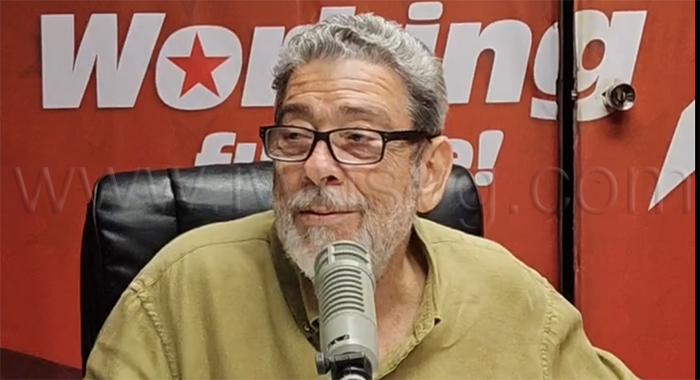
On June 30, Moody’s announced it would cut SVG’s long-term local and foreign-currency issuer ratings from B3 with a stable outlook to Caa1 with a negative outlook. Speaking on his party’s radio program Wednesday, Gonsalves, who now serves as opposition leader, pushed back hard against claims from the incumbent NDP that the downgrade is a direct result of reckless borrowing and fiscal mismanagement during the ULP’s 25-year tenure.
When the ULP left office after November’s general election, Gonsalves noted, the country carried a public debt load of EC$3.5 billion, with a debt-to-GDP ratio of 113%. But he stressed that Moody’s has been fully aware of this debt burden for years, and maintained SVG’s B3 stable rating through major economic shocks including the COVID-19 pandemic, the 2021 eruption of La Soufriere volcano, Hurricane Beryl in 2024, and large-scale infrastructure projects such as the EC$700 million new port in Kingstown. As recently as December 2025, weeks after the NDP’s election victory, Moody’s reaffirmed the B3 stable rating, Gonsalves added, and only flagged that increased market borrowing or limited access to concessional funding could trigger a future downgrade.
Gonsalves argued the downgrade is entirely a product of the NDP’s policy choices and public rhetoric since taking office, outlining three core policy triggers that he says led to Moody’s decision: a larger-than-expected fiscal deficit and sharp increase in market-based borrowing in the NDP’s first 2026 budget, public discussion of a potential debt swap and repeated framing of the existing debt as “unsustainable”, and the absence of a credible long-term economic growth plan recognized by Moody’s analysts. He added that three of the four factors Moody’s cited for the downgrade — intensifying liquidity pressures, elevated gross financing needs, and debt-swap speculation — directly stem from NDP decisions, while the high underlying debt was already fully priced into previous ratings assessments.
The opposition leader also defended the ULP’s decades-long borrowing record, noting that most of the debt was taken on as low-interest concessional lending to fund critical public infrastructure including hospitals, schools, roads, climate resilience projects, and disaster recovery, rather than short-term, high-cost domestic borrowing that the NDP has relied on since taking office. He further pointed to a 2024 International Monetary Fund (IMF) Article IV consultation that praised the ULP’s “decisive policy responses” to successive shocks and confirmed the country had achieved a “robust recovery” that supported the stable B3 rating.
Moody’s new Caa1 rating places SVG firmly in the agency’s “poor quality, very high credit risk” category, a designation Gonsalves warned will have tangible negative consequences for the country: lenders will be far more reluctant to extend new credit, any new borrowing will carry higher interest rates and shorter repayment terms, and concessional development lenders will likely impose stricter policy conditions on future funding. The negative outlook, he added, means Moody’s does not expect any near-term improvement without a dramatic shift in government fiscal policy.
The NDP has pushed back firmly against Gonsalves’ claims, arguing the downgrade is the direct result of 25 years of fiscal neglect under the ULP. Prime Minister and Finance Minister Godwin Friday, whose party won 14 of 15 parliamentary seats in the November election, has previously noted that the final public debt figure left by the ULP was EC$400 million higher than the incoming administration expected when it took office, and famously characterized ULP pre-election spending as “spending like a drunken sailor”.
Chiefain Neptune, minister of state in the prime minister’s office, reaffirmed the NDP’s position Wednesday, stating that “the Moody’s report underscores the deep-rooted systemic economic failures left behind by the previous administration. When we stepped into office, we understood that the economy was fragile. What we couldn’t foresee was just how bleak the legacy of neglect from the ULP truly was until we entered the Financial Complex in Kingstown.” Neptune added that the NDP remains committed to restoring fiscal and debt stability, while advancing economic development that directly benefits Vincentian households.
Notably, Gonsalves’ criticism of the NDP’s public communication around the country’s debt stands in contrast to recent praise from the Caribbean Development Bank (CDB), one of SVG’s largest development partners. In June, CDB Vice-President Isaac Solomon commended the NDP administration for its transparency around public finances, saying the government’s willingness to invite external scrutiny and articulate a clear national development vision was a rare and positive step that creates the foundation for effective development support. “That combination of confidence to invite scrutiny, clarity to articulate a vision, and humility to say we cannot do this alone is rarer than it should be. I think it deserves recognition,” Solomon said during a Development Partners Round Table in SVG.