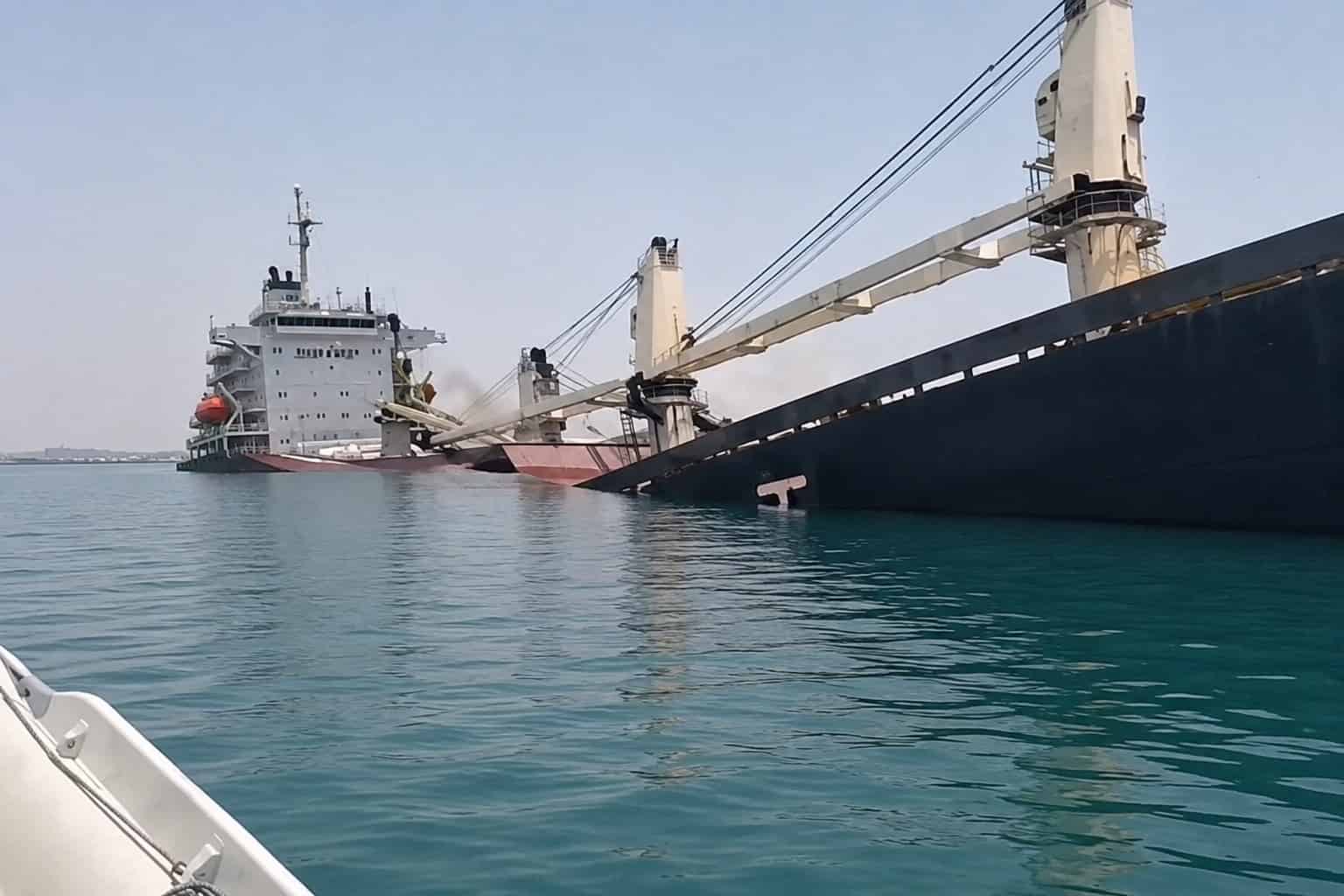
One of the world’s most strategically critical maritime chokepoints, the Strait of Hormuz, has been the site of a new shipping incident that is drawing global attention. An ageing bulk carrier registered to St. Kitts and Nevis, identified as the LUNI (IMO 9070711), broke apart and partially sank off the coast of Iran’s southern port city of Bandar Abbas on Tuesday, July 14, 2026, following sudden, uncontrolled water ingress that caused catastrophic structural failure.
Built in 1994, the 32-year-old cargo vessel was anchored in the northern stretch of the strait when the hull damage worsened, leading it to split cleanly in two. At the time of the incident, the LUNI was en route to Jebel Ali, the United Arab Emirates’ premier cargo hub. Preliminary investigations from local maritime officials point to a prior collision as the likely root cause of the sinking: the vessel collided with another ship several days before the structural collapse, and the unaddressed damage from that impact is believed to have allowed seawater to flood the hull gradually.
Thanks to rapid emergency response operations, all 23 crew members on board — all foreign nationals — were evacuated from the foundering vessel before it fully submerged. No injuries or deaths have been reported among the evacuated seafarers, a significant relief amid the incident. After splitting apart, the vessel settled in the shallow waters off Bandar Abbas, with the separated bow and stern sections still partially visible above the water’s surface.
The sinking has sparked public speculation, in part because it coincided with reports of loud explosions near Bandar Abbas and the nearby Qeshm Island. To date, however, Iranian maritime authorities have not confirmed any link between the reported explosions and the LUNI’s structural failure. Social media has amplified attention on the incident, with multiple user-uploaded videos of the sinking vessel circulating widely across platforms. Many online observers have raised questions demanding more clarity about the exact cause of the catastrophic hull split, particularly given the strait’s long history of geopolitical tensions and targeted maritime incidents.
The incident also comes shortly after former U.S. President Donald Trump positioned himself as the “Guardian of the Strait of Hormuz,” a political framing that has added an extra layer of public scrutiny to the event. Maritime safety analysts note that the incident underscores the ongoing risks of ageing bulk carriers operating in busy, high-stakes waterways, and highlights the need for rigorous post-collision inspection protocols to prevent avoidable sinkings.