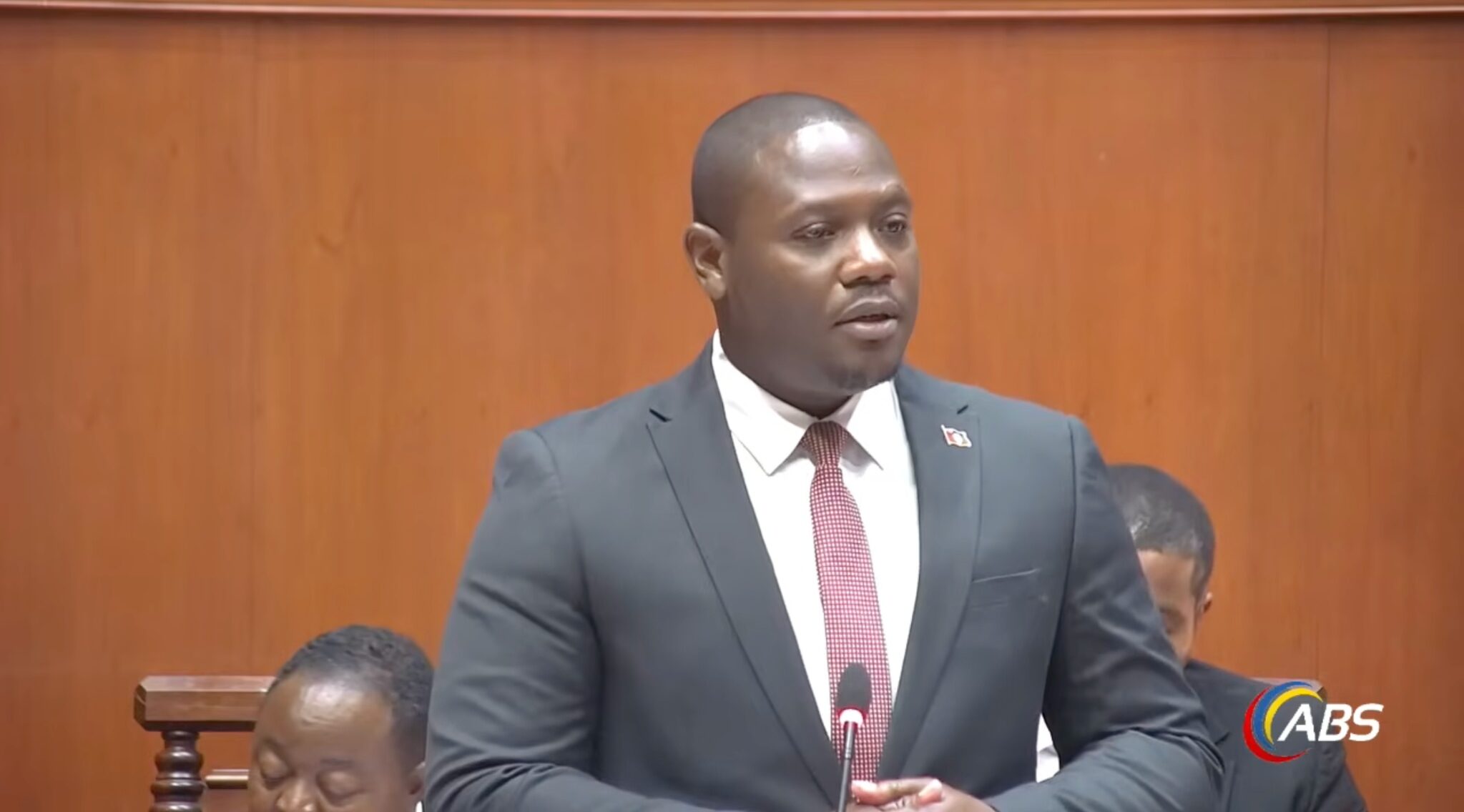
On Tuesday, Anthony Smith Jr., a ruling party member of parliament in Antigua and Barbuda, issued a public appeal for bipartisan collaboration as the nation advances negotiations with the United States centered on the potential transfer of third-country nationals. Speaking during parliamentary debate over a resolution that lays out formal guidelines for ongoing talks, Smith emphasized that the decades-long strategic and economic bond between Antigua and Barbuda and Washington carries too much national weight to be weaponized for partisan advantage.\n\nSmith, who expressed open support for the negotiating framework resolution, pushed back against attempts by opposition lawmakers to frame the talks as a partisan political controversy. He noted that while he was disappointed by efforts to turn the issue into political capital, he was not caught off guard by the maneuvering. Instead of turning the negotiations into a political football, Smith argued, all elected representatives should prioritize educating the public on just how critical the U.S.-Antigua and Barbuda relationship is to the nation’s long-term prosperity.\n\nDrawing a direct line between bilateral ties and national economic stability, Smith laid out key data to back his case: roughly 80% of all goods imported into Antigua and Barbuda originate from the United States. Beyond trade, he highlighted two foundational pillars of the nation’s economy that depend on strong relations with Washington: the dominant tourism sector, which draws millions of American visitors annually, and the domestic banking industry, which relies heavily on correspondent banking relationships with U.S. financial institutions.\n\nSmith warned of severe consequences if those ties were damaged: “Imagine we lost our correspondent banking relations. How would we accept U.S. funds? How would we be able to purchase goods overseas?” He stressed that maintaining productive, positive relations with the U.S. is non-negotiable for the country’s economic health, and that a unified parliamentary signal of support would strengthen the government’s hand at the negotiating table.\n\nAddressing concerns that the resolution would grant the executive branch unchecked authority to strike a deal, Smith pushed back on that characterization, clarifying that the text is designed to establish robust guardrails rather than a blank check for negotiations. “The resolution is not a blank check; it is a shield,” he explained. “It gives us permission to continue negotiating, but to negotiate with a framework that protects our people.”\n\nSmith went on to outline the specific protective provisions baked into the resolution. These include a ban on any automatic or open-ended transfer program, a requirement that every proposed transfer is reviewed and approved on an individual case-by-case basis, and the enshrinement of Antigua and Barbuda’s absolute right to reject any individual transfer request. Additional provisions cap the total number of people the country can accept based on its current national capacity, and mandate that all costs related to housing, healthcare, administration, and onward movement of transferred individuals must be fully pre-funded, eliminating any potential financial burden on Antigua and Barbuda’s taxpayers.\n\nThis framework, Smith argued, strikes a careful balance between international cooperation and national sovereignty, allowing Antigua and Barbuda to uphold its reputation as a responsible, collaborative member of the global community while protecting the interests of its citizens and the integrity of its borders. He closed by renewing his call for opposition lawmakers and the general public to get behind the government’s approach, noting that the resolution creates the structured guidance necessary to reach a final agreement that delivers maximum benefit to all people of Antigua and Barbuda.
Minister Smith Urges Bipartisan Support for US Negotiations, Says Relationship Too Important to Politicize