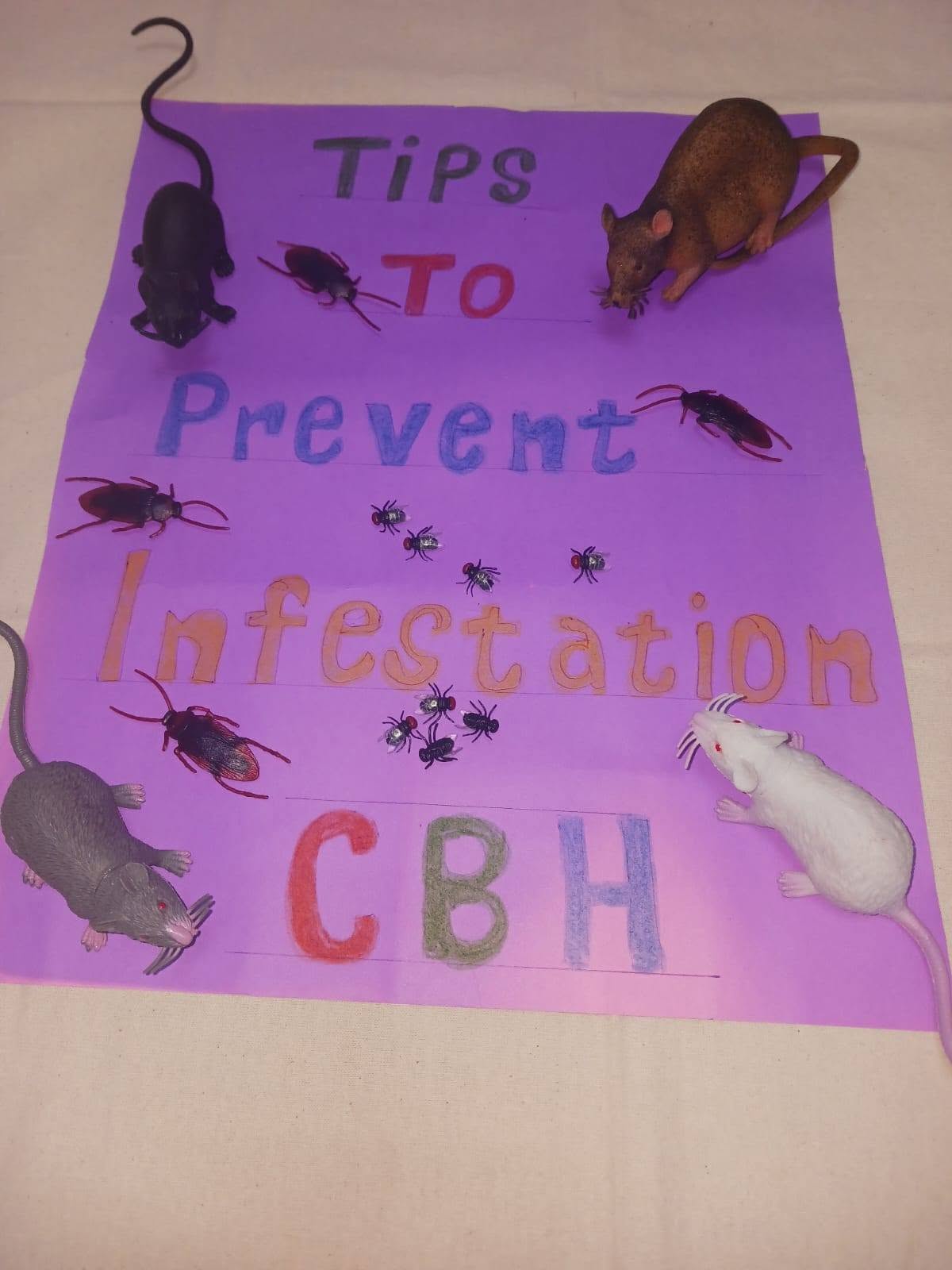
Public health education remains a top priority for the Central Board of Health (CBH) as it works to safeguard the wellness of local populations across the region. In its latest outreach effort, CBH personnel partnered with clinical teams at Villa Poly Clinic to turn routine waiting room time into a valuable learning opportunity, engaging patients and guests waiting for medical appointments with actionable, accessible guidance for building healthier household and living environments.
The informal, interactive sessions covered a diverse range of high-priority public health topics that directly impact daily life. Attendees learned how to identify and prevent pest infestations that can compromise home safety, received clear guidance on how to inspect canned goods for dents or damage during grocery shopping to avoid foodborne risks, and picked up best practices for storing toxic household cleaning products and chemicals separately from food supplies to prevent accidental contamination or poisoning. The sessions also covered core habits of strong personal and household hygiene, as well as evidence-based mosquito control strategies designed to lower community rates of mosquito-transmitted diseases.
Unlike traditional one-way public health announcements, these waiting room sessions encouraged open two-way conversation between participants and public health staff. Event attendees embraced the format, actively asking targeted questions about their personal health challenges, sharing their own experiences with home health maintenance, and requesting customized advice for common everyday health concerns. This high level of engagement underscores the growing demand for accessible community-facing health education, and demonstrates how meeting people in everyday spaces can help turn general health guidance into actionable daily habits.
CBH leadership emphasizes that protecting population-wide public health is not a task that government agencies can complete alone – it requires shared responsibility and collaborative action across clinical teams, community organizations, and individual residents. By partnering directly with the Villa Poly Clinic nursing team, the initiative was able to extend the impact of clinical care, providing patients with complementary preventive health knowledge that supports the treatment they receive during appointments. The long-term goal of this outreach is to help residents build safer, healthier homes, strengthen overall community wellness, and drive improved long-term health outcomes for people of all ages.
Moving forward, the Central Board of Health reaffirmed its ongoing commitment to expanding this model of community-focused health education, bringing relevant, actionable public health information directly to the populations it serves. The agency also extended formal gratitude to the entire Villa Poly Clinic staff for their ongoing collaboration and support of this public health mission.