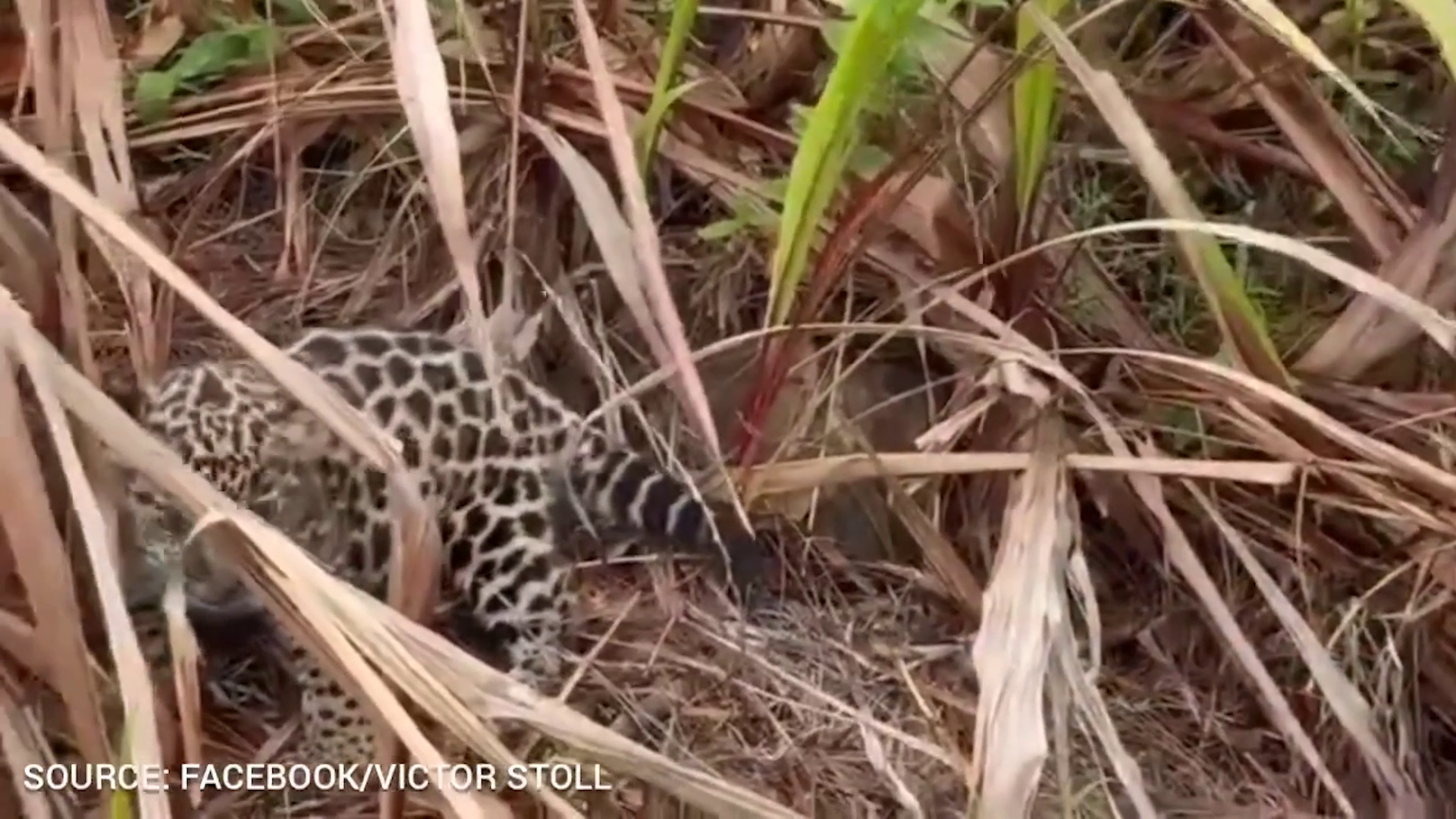
In a rare firsthand account of a recently sparked controversy centered on human-wildlife interaction in Belize’s Mountain Pine Ridge reserve, a witness who accompanied the Stoll brothers during the jaguar cub encounter has opened up about the unplanned incident, shedding new light on what unfolded in the field.
Leslie Penner, who was part of the birdwatching outing on that day, told local outlet News Five that the group first spotted an adult jaguar and its young cub lingering close to their parked vehicle. As the encounter unfolded, one of the Stoll brothers made the fateful decision to reach out and touch the cub – a move Penner has publicly labeled as both unnecessary and reckless. He emphasized that the impulsive action carried unnecessary risks, including the potential to ignite long-term human-wildlife conflict that threatens both animal populations and local conservation efforts.
Despite his sharp criticism of the action, Penner was quick to push back against narratives that frame the brothers as intentional violators of wildlife protection norms. He pointed to the Stoll brothers’ decades-long track record of conservation work across Belize, arguing that the pair had no malicious intent behind the encounter. In his view, any public conversation about the incident must also acknowledge the substantial contributions the brothers have made to protecting Belize’s unique ecosystems and endangered wildlife. Penner doubled down on this position, noting that Belize’s natural landscapes are in far better condition today because of the Stoll brothers’ work than they would be without their decades of advocacy and on-the-ground conservation.
Dr. Celso Poot, managing director of the Belize Zoo, shared expert perspective on why interacting with young wild big cats is strongly discouraged. While Poot noted that widespread fears of the mother jaguar abandoning her cub after human contact are unlikely to come to pass, he stressed that the interaction inflicts significant unneeded stress on the young animal and its mother. Drawing on generations of traditional ecological knowledge and decades of professional experience working with captive-bred big cats, Poot explained that even accredited zoological facilities that specialize in jaguar breeding avoid direct human contact with newborn cubs. Instead, facilities rely on remote camera monitoring to track cub health and development, only allowing public viewing once the mother jaguar has determined the environment is safe and brings her cubs out on her own. Direct handling, he emphasized, is never a recommended practice for either inexperienced visitors or seasoned conservationists.
The incident has sparked renewed debate across Belize about responsible wildlife viewing practices, even as it has highlighted the complicated nature of judging missteps against a backdrop of long-standing conservation contributions.