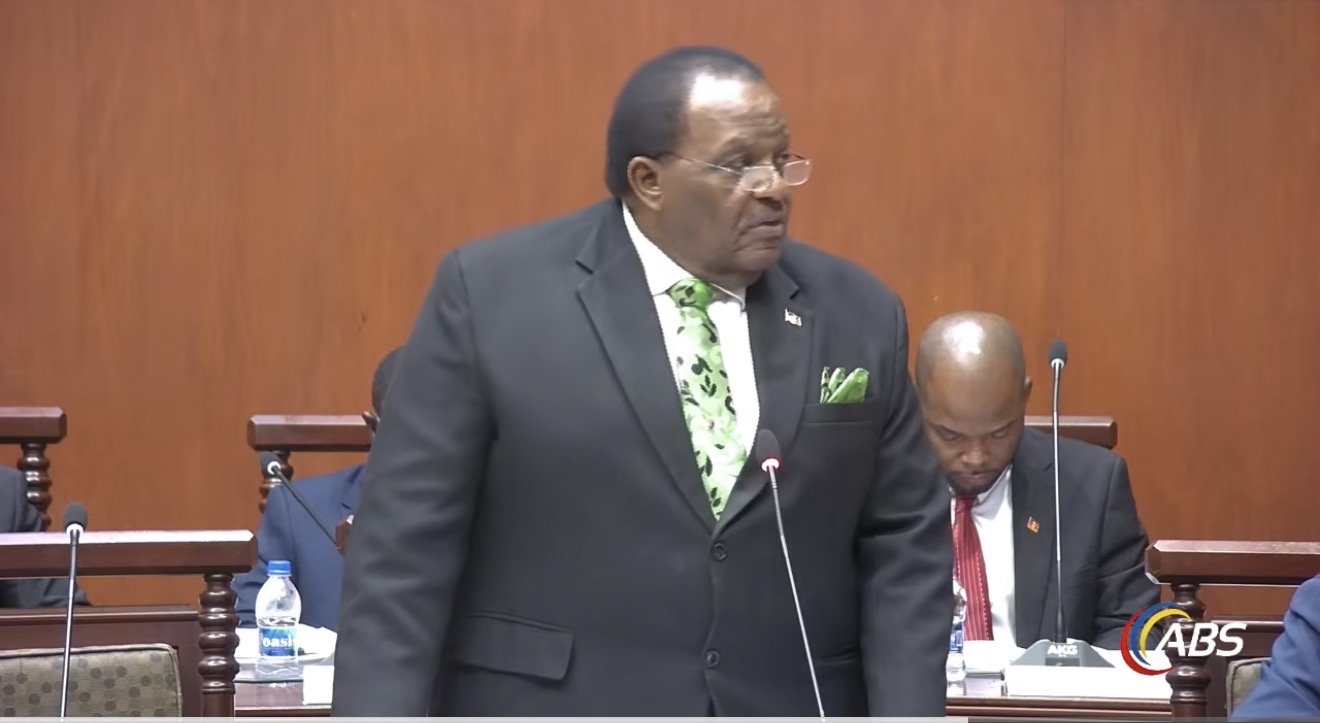
In a Tuesday address to the Antigua and Barbuda Parliament, Attorney General Sir Steadroy Benjamin moved to clear up widespread misconceptions surrounding ongoing negotiations with the United States over a proposed third-country national transfer framework. Speaking amid growing public and legislative debate over the scope of the proposed deal, Benjamin explicitly confirmed that no binding, final agreement has been signed between the two nations, and that lawmakers are only being asked to greenlight a set of guiding principles to shape future talks.
Addressing concerns raised during discussion of the government’s resolution, Benjamin pushed back against claims that Parliament was being asked to approve a finalized deal that had already been negotiated behind closed doors. He emphasized that no completed agreement currently exists, framing the current resolution as a procedural step rather than a final vote on a done deal. “The White Paper is not presented as a complete agreement, nor is this House being asked to approve a conclusive operating agreement. None exists,” Benjamin stated to the legislative body.
Under the terms of the resolution put forward to lawmakers, Parliament would only be granting approval for a foundational framework that outlines the government’s negotiating boundaries, leaving the executive branch – led by the Cabinet – to continue formal discussions with U.S. negotiating teams. Benjamin defended this division of responsibilities, noting that negotiation is an inherent executive function, and that Parliament’s core role in this process is to set the non-negotiable principles and limits that executive negotiators must respect.
Once the legislative body approves these guiding guardrails, Benjamin explained, the executive branch will conduct all further negotiations within the bounds set by lawmakers. If a final agreement is reached that requires adjustments to Antigua and Barbuda’s existing domestic law, the deal will be brought back to Parliament for further review and the passage of any required enabling legislation.
A key pillar of the government’s negotiating position that Benjamin highlighted is the protection of Antigua and Barbuda’s full sovereign authority over all immigration matters. He stressed that the Caribbean nation will never cede control over transfer decisions, and will retain the absolute right to approve or reject any individual proposed for transfer. The government’s formal counterproposal to the U.S. requires explicit written consent from Antigua and Barbuda for every transfer, and preserves the country’s right to refuse an individual without being required to provide a justification for the decision.
Benjamin also outlined additional core conditions that have guided the negotiations from the start. The proposed framework explicitly excludes three categories of people from eligibility for transfer: individuals with prior criminal convictions, people with pending unresolved asylum claims, and unaccompanied minors. Additionally, the government’s position requires that the United States cover 100 percent of all financial costs associated with any transfers that are ultimately approved.
Closing his address, Benjamin reaffirmed the Antigua and Barbuda government’s unwavering commitment to ensuring that any final agreement reached with the U.S. will fully protect the nation’s sovereignty, align with the country’s Constitution, and strictly adhere to the principles that Parliament ultimately endorses.