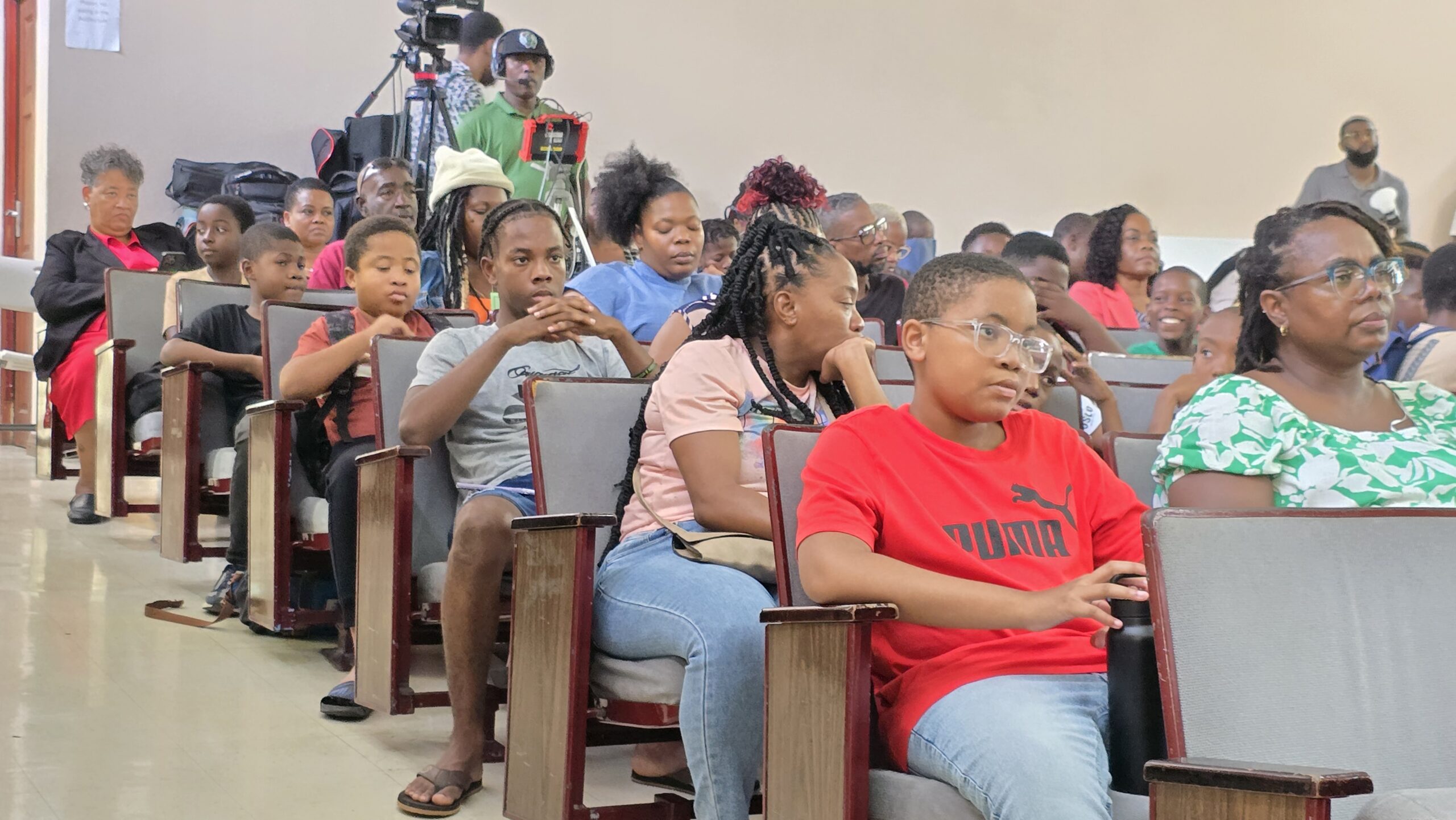
Against a backdrop of mounting concern over widespread literacy gaps disproportionately affecting young male students across Barbados, more than 130 boys have started a five-week intensive summer reading initiative hosted by Barbados Community College, with organizers urging participants to leverage the opportunity to build foundational reading and comprehension skills.
Founded nine years ago to directly address the systemic literacy challenges facing boys in Barbados, the Babb’s Reading Clinic has seen consistent year-over-year growth in demand that now far outstrips the program’s capacity. Originally capped at 100 participants, organizers continued to receive registration requests from anxious parents long after the limit was reached, a trend that Dr. Astra Babb, founder of the clinic, calls a clear warning sign of a growing national crisis.
Opening the summer programme at the college’s auditorium Monday, Dr. Babb opened up about the acute desperation driving many parents to seek out the clinic’s services. She shared heartbreaking stories of families facing the prospect of their sons repeating first form for a second consecutive year, and of older students preparing to graduate secondary school after 12 years of public education who still cannot read at a functional level. Questioning how Barbados — once held up as a regional education leader across the Caribbean — arrived at this point, Dr. Babb has called for a nationwide, inclusive conversation to examine the root causes of the literacy gap, particularly the overrepresentation of boys among struggling readers. “I believe all taxpayers, all parents and all government educational institutions need to engage in serious introspection. What is it that some of us are not doing correctly?” she asked. “Barbados was placed on a pedestal by all other Caribbean nations, an icon for all to emulate. Why are so many of our children unable to read? And why are most of them boys?”
Dr. Babb explained that the majority of enrolled boys struggle with two core, addressable issues: basic reading comprehension and connecting the relationship between graphemes (the smallest written units of language) and phonemes (the corresponding sound units). Despite the scale of the challenge, she expressed confidence that most participants would leave the five-week programme with demonstrable improvement in their skills, framing the clinic’s work as unlocking a barrier that has held students back academically. “I know that some children registered here simply need some assistance with comprehending text; they just want that lock unlocked,” she said. “I promise you, parents, that we will change that by the end of the programme.” Dr. Babb also acknowledged ongoing efforts by the Barbados Ministry of Education to improve national literacy outcomes, and noted additional support for the programme: members of the Barbados Defence Force will volunteer to mentor boys without positive male role models at home, and all participants will receive free daily meals for the duration of the initiative.
Featured speaker Ryan Straughn, Barbados’ Minister of Finance, praised the clinic’s critical work, framing literacy as both an educational priority and an economic issue that will shape the country’s long-term future. He highlighted recent declining national English assessment scores — which fell from an average of 72.5 percent last year to 64 percent this year — as evidence of how urgent initiatives like this clinic have become. “It is important that we understand how critical it is for all of our citizens, but especially our boys, to not fall further behind with respect to literacy,” Straughn said. “Because a boy who struggles to read today may struggle to seize opportunities tomorrow. The boy who cannot confidently read a job offer, a lease, or a business arrangement is not simply lacking ambition. He might grow into a man lacking access, and access is something that we all can change.”
Straughn encouraged participating boys to set aside any shame around seeking extra help, emphasizing that reading is a learned skill, not an inborn talent. “Reading is not a talent you’re born with. It is a skill. A skill that you build, one page, one chapter, one book at a time,” he told the group. He also urged parents to continue supporting their children’s reading practice after the programme ends, sharing a personal anecdote: his grandmother required him to read the daily newspaper each morning before school and summarize stories for her, a routine that built his comprehension skills and expanded his understanding of current events. He encouraged parents to adopt similar daily reading habits with their children to sustain long-term progress.
The finance minister also warned of the far-reaching social and economic consequences of unaddressed low literacy, noting that research has established a clear link between low literacy rates in youth and involvement with the criminal justice system later in life. “Reading is not just a single subject sitting all by itself. It allows you to connect the dots, as we would say in economics. Connecting the dots is important. It is a subject that others are built on. You can’t solve a mathematics problem if you can’t read the problem. You can’t hold up your end of the bargain if you don’t know what you’re agreeing to,” he said. Closing his remarks, Straughn reminded participants that while literacy opens new life doors, consistent discipline is what allows people to hold onto those opportunities: “Reading will open doors, but it is discipline that will keep those doors open.”