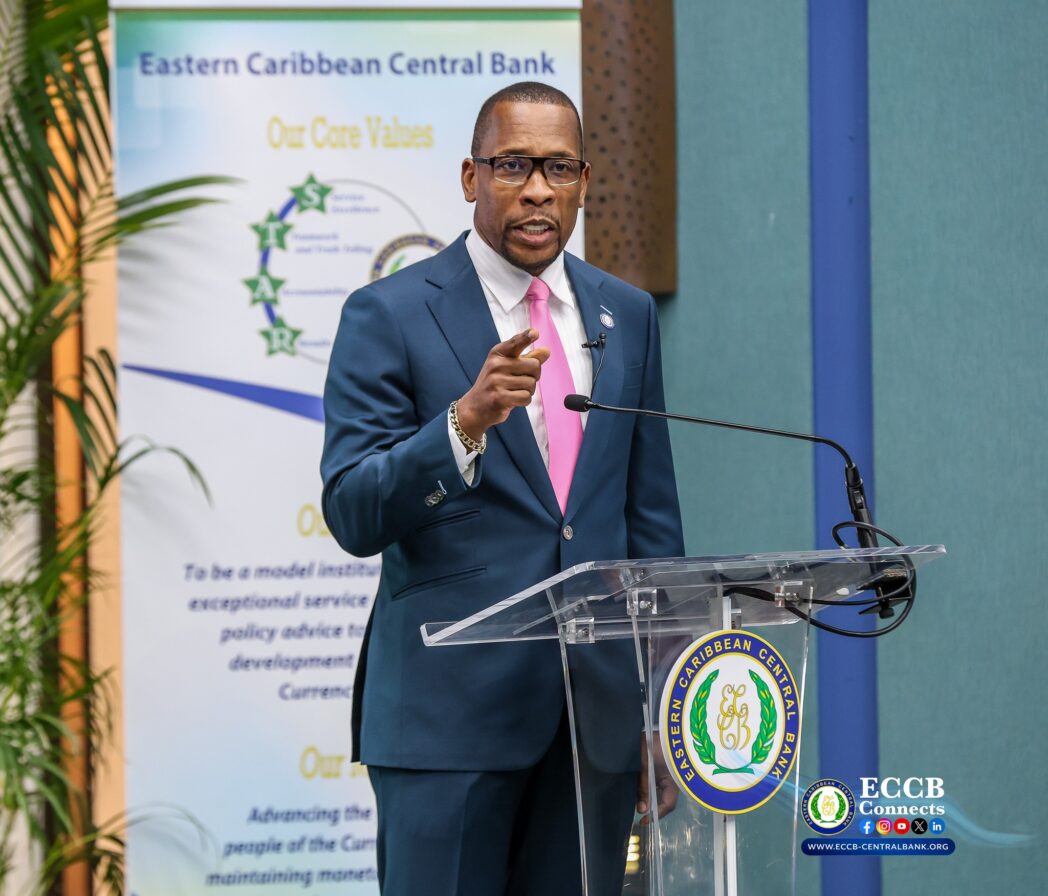
The Eastern Caribbean Central Bank (ECCB) is gearing up for its 113th Monetary Council gathering, scheduled to take place on July 9 in the Commonwealth of Dominica, with a full agenda focused on economic progress and long-term transformation for the Eastern Caribbean Currency Union (ECCU).
At the upcoming gathering, ECCB Governor Timothy N.J. Antoine will deliver the institution’s annual comprehensive report covering monetary, credit, and financial conditions across the eight-member currency union. Titled “From Stability to Resilience: The Next Chapter for the Eastern Caribbean Currency Union,” the document will not only outline the most recent shifts in regional economic activity and core policy priorities, but also break down current global growth trajectories and explain how cross-border economic shocks and trends are rippling through the ECCU’s small open economies.
Beyond the governor’s economic update, council members will dive into detailed discussions of the bloc’s flagship development framework, known as The Big Push Agenda. This ambitious initiative is structured around seven key “Theatres of Transformation” that address the most pressing challenges and growth opportunities for the region: upgrading human capital and workforce skills, strengthening food and nutrition security, building robust energy resilience, accelerating full digital transformation, expanding financial inclusion to drive broad-based wealth creation, revitalizing the tourism sector, and upgrading trade logistics and cross-border connectivity to boost regional integration.
Council delegates will also receive status updates on two high-priority infrastructure projects tied directly to The Big Push Agenda: the ongoing pilot program for the CARICOM Payments and Settlement System (CAPSS) and the development of the regional Fast Payment System. Both initiatives are designed to streamline cross-border commerce, reduce transaction costs, and support greater financial integration across the Caribbean bloc.
As the highest decision-making body of the ECCB, the Monetary Council is composed of finance ministers from each of the union’s eight member jurisdictions: Anguilla, Antigua and Barbuda, the Commonwealth of Dominica, Grenada, Montserrat, Saint Kitts and Nevis, Saint Lucia, and Saint Vincent and the Grenadines. The council’s chairmanship rotates annually among member states in alphabetical order, meaning this session will be led by a representative from the host nation, Dominica.
Following the conclusion of the closed-door meeting, the newly installed council chairman—Honourable Dr. Irving McIntyre, who also serves as Dominica’s representative on the body—will host a public media briefing. At that event, he will release the official meeting communiqué outlining the council’s key decisions and take questions from local and regional journalists about the bloc’s policy path forward.