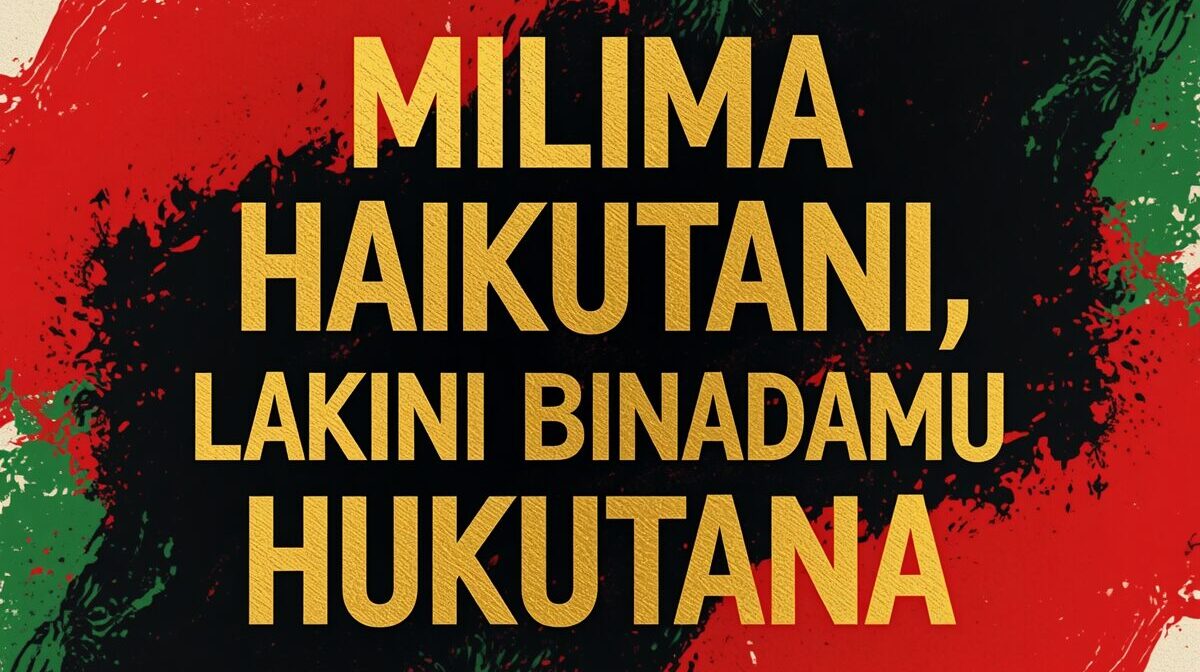
Across cultures, proverbs capture timeless truths about human connection. For East Africa and the broader African continent, the old Kiswahili saying *“Milima haikutani, lakini binadamu hukutana”* — translated as “Mountains do not meet, but humans do” — perfectly encapsulates the core purpose of Kiswahili itself: bringing diverse people together across divides. As the world marks annual World Kiswahili Language Day on July 7, the 2026 observance centers on the theme “Kiswahili for Peace, Solidarity and Global Economic Diplomacy,” shining a brighter spotlight than ever on this transcontinental language’s expanding global influence and cultural significance.
UNESCO data estimates that of roughly 8,324 documented languages worldwide, only around 7,000 remain actively used today, making the preservation and growth of widely spoken indigenous African languages like Kiswahili all the more critical. More than a mere communication tool, Kiswahili is a living vessel of African identity, collective unity, and centuries of shared cultural heritage. Today, it counts more than 200 million speakers globally, ranking it among the most widely used languages across Africa and the world.
Kiswahili has long served as a critical unifying communication medium across East, Central, and Southern Africa. It holds official language status for three major regional blocs: the African Union (AU), the Southern African Development Community (SADC), and the East African Community (EAC). As of November 2025, it gained a new marker of global recognition when it joined Arabic, Chinese, English, French, Russian, and Spanish as the seventh official language of UNESCO’s General Conference — a milestone that cements its status beyond African borders.
This year’s theme is intentionally designed to highlight Kiswahili’s unique strengths: it bridges cultural divides, fosters cross-border dialogue, and creates new pathways for global economic collaboration. It also emphasizes the language’s underrecognized contributions to peacebuilding, sustainable development, and modern economic diplomacy, particularly as Africa deepens its regional integration and expands its global influence. Economic diplomacy relies on strong cross-country relationships to boost national competitiveness and global influence, and language is the foundational tool for building and sustaining those partnerships. Kiswahili’s neutral, unifying structure makes it uniquely suited to this role.
The history of Kiswahili reflects its long tradition of bringing different cultures together. Two prevailing theories shape academic understanding of its origins. The first frames Kiswahili as a primarily Bantu language that emerged along the East African coast between 100 and 500 CE. It developed organically as a lingua franca to enable communication between Bantu-speaking communities and traders from Arabia and Asia, gradually growing into a central language for trade, diplomacy, and cultural exchange. The second theory centers the profound influence of Arabic on the language’s evolution: the name “Swahili” itself derives from the Arabic word sawāḥilī, which translates to “of the coast,” a nod to centuries of deep trade and cultural ties between the region and Arab traders. Over centuries, Arabic vocabulary, grammatical structures, and writing systems shaped Kiswahili, especially in coastal communities, helping it evolve into a robust both spoken and written language that could serve local and international communication needs alike.
Today, Kiswahili’s global footprint continues to grow, driven in part by its accessible structure: its logical, phonetic construction makes it one of the easiest African languages for new learners to master. Universities across every inhabited continent now offer Kiswahili courses, opening new doors for academic collaboration, cross-cultural exchange, and mutually beneficial economic cooperation between global partners and African communities. For millions of native and second-language speakers, this growing global visibility represents long-overdue recognition of the immense intellectual and cultural value of African languages. Today, it is already the most widely spoken language in sub-Saharan Africa and acts as a shared lingua franca across 14 African nations.
On this 2026 World Kiswahili Language Day, leaders and language advocates are calling for renewed global commitment to preserving and promoting Kiswahili. In an era marked by rising division and conflict, advocates argue that Kiswahili offers a model for how language can foster peace, unity, and open dialogue. Dr. Caroline Asiimwe, Executive Secretary of the East African Kiswahili Commission, notes that Kiswahili fills a unique role as a symbol of unity, peace, and shared understanding. “It belongs to no single ethnic community; it creates a neutral space where different cultures can meet without linguistic hierarchy,” Asiimwe explains. That neutral, connecting role makes it the perfect bridge between diverse communities across the continent and the world — living out the ancient proverb that says, even when mountains stand apart, humans always find a way to meet.