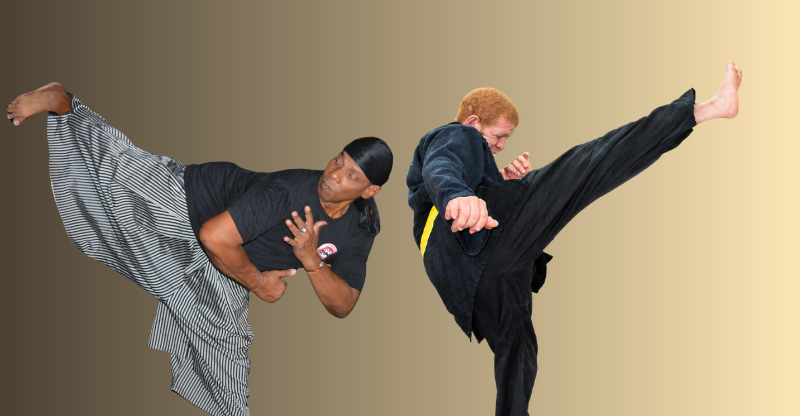
A groundbreaking six-week jiu-jitsu summer camp officially opened its doors on Monday in St. Michael, Barbados, built around a unique mission: to equip young people aged 8 to 18 with critical emotional management skills, anger control, and lifelong discipline through structured martial arts training. Running through to August 14, the initiative is hosted at the Israel Lovell Foundation on My Lord’s Hill and organized by the SWC Ryu-Jiu Jitsu Organisation School of Martial Arts.
In an interview with Barbados TODAY, SWC Ryu-Jiu Jitsu Organisation spokesman Shane Lynton explained that the camp was developed in response to growing challenges young people face with peer pressure, emotional regulation, and exposure to community violence. Unlike common misconceptions that link martial arts to aggression, Lynton emphasized that the program’s core philosophy actively pushes back against violence by teaching calm decision-making and conflict avoidance.
“The entire purpose of this camp is to create a space where we can support young people to master their emotional responses,” Lynton said. “That is the central goal of our system, alongside building consistent discipline and focused attention that translates to every area of their lives. That’s what this summer initiative is all about.”
Addressing the common misperception that martial arts encourage violent behavior, Lynton clarified: “I understand why people might assume martial arts promote violence, but our system works to achieve the exact opposite. Even though we teach physical techniques, our first rule is that these skills are never to be used to harm anyone unnecessarily. The core skill we teach is staying calm when you are under pressure. When students head back to school, they will inevitably face situations where others try to provoke them or push them into poor choices through peer pressure. This program trains them to stay centered and make smart choices instead of reacting impulsively.”
The organization’s core principle holds that self-defense techniques should only ever be used as a last resort. Lynton explained that the philosophy taught to all young participants centers on humility and respect: “We drill into our students that our mindset is, ‘I am humble, I care about you. I do not want to fight, but I will defend myself, my honor, my principles, and my family if I have no other choice.’ Fighting is never the goal here.”
Beyond the summer camp, the SWC Ryu-Jiu Jitsu Organisation has broad expansion plans for community programming across all age groups. Later this month, the group will launch new evening jiu-jitsu classes for adults, designed to address unmet mental health needs that many adults, particularly men, face. “We know that when it comes to mental health, men often don’t feel comfortable opening up about their emotions, so a lot of us bottle those feelings up,” Lynton noted. “This training system gives them a healthy, constructive outlet to process those emotions while building valuable skills.”
Lynton also highlighted the practical real-world value of the self-defense training the organization provides, pointing to a recent incident that proved the program’s effectiveness. “Earlier this year, one of our students was targeted in a robbery attempt, and she was able to use the techniques she learned here to escape the attack and protect herself,” he said. “We live in a time where everyone needs to know how to keep themselves and their loved ones safe, and that’s a core part of what we offer.”
The organization’s next community-focused addition will be a specialized jiu-jitsu and self-defense program designed specifically for senior citizens. Lynton explained that the program was developed in response to high-profile crimes targeting older residents, where elderly people have been attacked and robbed of their jewelry and personal property while out in their neighborhoods. The techniques taught in the senior program will be simplified and adapted for older bodies, but remain highly effective for self-protection. “Even though the moves are straightforward, with consistent training, senior participants will be able to confidently execute them to defend themselves if they are confronted,” Lynton said. “We want to give older members of our community the same chance to feel safe and protected that we give young people.”