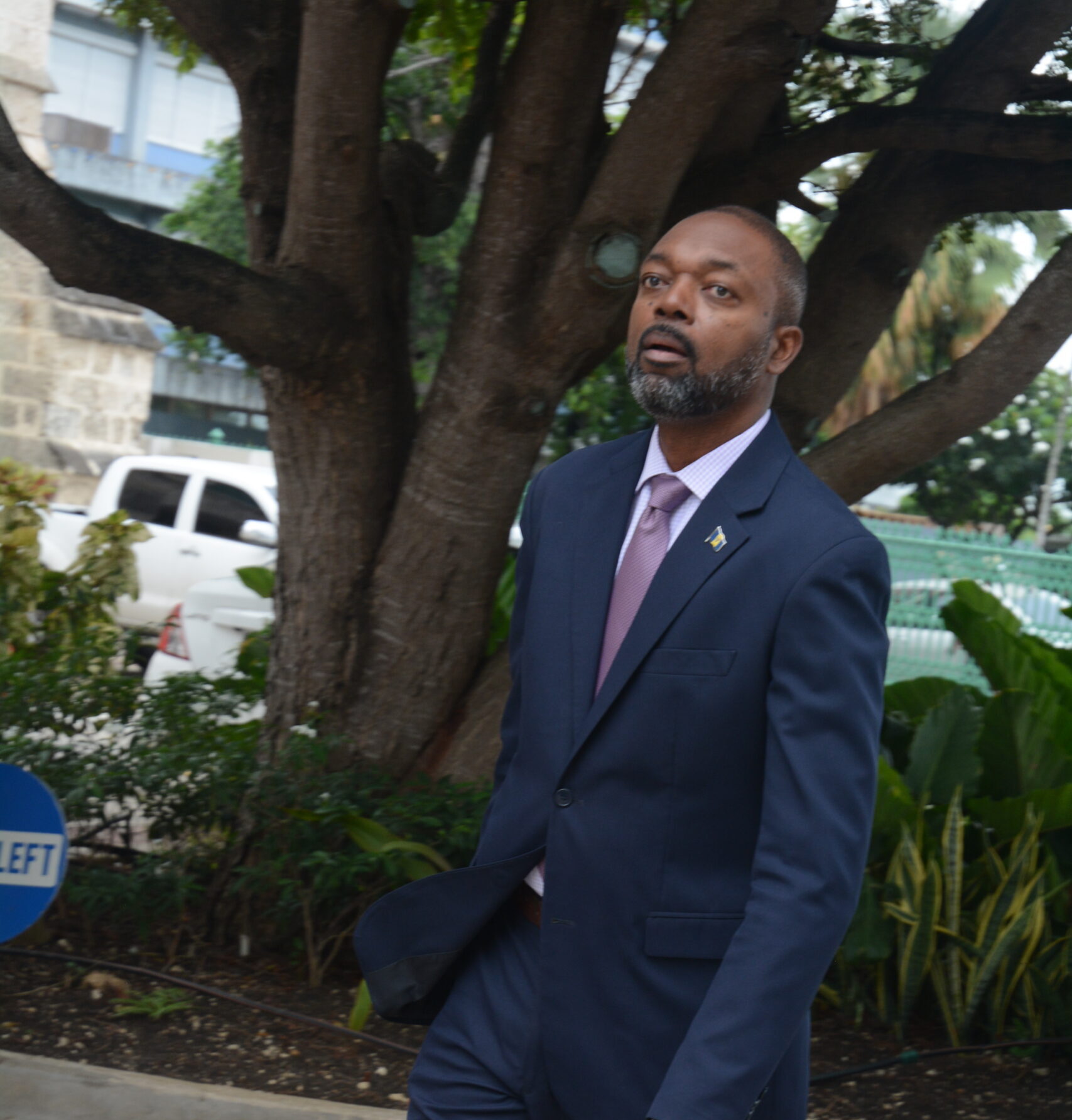
On Tuesday, the government of Barbados announced a firm zero-tolerance stance on worker exploitation, tabling a landmark new piece of legislation in Parliament designed to overhaul existing protections, strengthen employee rights and reshape employer-employee relations across the island nation.
Labour Minister Colin Jordan presented the Protection of Wages Bill to the House of Assembly, marking the latest step in a broader legislative push to expand worker safeguards ahead of the government’s completion of a full, formal national labour code. Aligned with international labour standards, the bill introduces a range of targeted reforms addressing longstanding gaps in wage regulation and worker security.
One of the bill’s key updates is the formal legal recognition of wire transfers and direct deposits as valid methods of wage payment, alongside a new statutory right for workers to select their preferred financial institution for wage deposits. Jordan confirmed that employers will be prohibited from passing any associated banking transaction fees onto their employees, while existing requirements mandating that employers give workers reasonable access to convert their wages to cash will remain in effect.
The legislation also significantly ramps up penalties for unethical employer practices around unauthorized wage deductions. For employers that deduct funds from worker paychecks for designated third-party organizations—including the National Insurance and Social Security Service, trade unions, credit unions, banks, and the Barbados Revenue Authority—but fail to remit those funds, the new bill imposes stiff penalties of up to $30,000 in fines or three years of prison time. “If those monies are not paid over, the penalty is $30 000 or up to three years in prison. Then that $40 or $50 can cost you up to $30 000,” Jordan emphasized.
The bill codifies existing regulations that classify interest charges on salary advances as illegal, and adds a new prohibition on so-called “retention deductions,” a practice where employers withhold portions of wages to offset potential business risks. Longstanding rules capping total deductions for salary advances and overpayments at one-third of a worker’s total wages will remain unchanged. In a flexibility-focused amendment, however, the legislation removes existing restrictions on wage assignments for mortgages and hire-purchase agreements, giving households more room to manage their personal financial obligations.
Beyond these rules, the bill mandates that all non-statutory wage deductions require explicit written consent from the affected worker. One of the most transformative reforms included in the legislation grants workers preferred creditor status in cases where an employer faces insolvency, receivership or bankruptcy. This change guarantees that unpaid wages will receive priority during the distribution of company assets, ensuring workers do not bear the full brunt of a business’s collapse.
To improve access to justice for workers facing unfair treatment, the bill streamlines the complaint process, allowing cases to be referred to the Employment Rights Tribunal via the Chief Labour Officer while preserving workers’ right to pursue legal redress through the traditional court system. Jordan stressed that the government itself will be bound by most of the legislation’s provisions, noting that the state has a responsibility to set a benchmark for fair worker treatment across all sectors.
Alongside the introduction of the Protection of Wages Bill, Jordan announced that upcoming amendments to the Employment Rights Act and the Labour Clauses (Public Contracts) Act are already in preparation, and new standardized pay rates and working condition rules for tourism accommodation workers across the country will be rolled out shortly. “I will shortly be establishing new rates of pay and conditions of work for workers in tourism accommodation across the country,” he said.
Jordan framed the new legislation as a reflection of the administration’s human-centred approach to national development, which balances expanded worker protections with commitments to boosting long-term productivity. “A bill that seeks to amplify our commitment to protection and production. Protection of those people on whose backs, on whose shoulders the development of our country rests so that given that protection, those people, those individuals, those human beings are able to produce, produce for themselves, produce for their dependents, ultimately to produce for their nation, to produce for our nation,” he explained.
The minister made clear that the zero-tolerance policy on exploitation applies to all workers in Barbados, regardless of origin—including native-born Barbadians, CARICOM nationals and migrant workers. “We have determined that we will not allow exploitation of workers in this country and when I say exploitation of workers, I’m speaking not just to Barbadian-born, but I’m also speaking to CARICOM nationals; I’m also speaking to migrant workers,” he said.
Jordan also issued a direct, uncompromising message to employers who argue that the wave of labour reforms has created overly burdensome regulatory requirements for businesses. “There are some employers who believe that we’ve been doing too much with respect to legislation. That it may be becoming too cumbersome to have business. I have a simple message for employers; If your business model does not allow you to treat your workers properly, then shut the place down,” he stated.
Addressing newly established foreign businesses operating in Barbados, Jordan added that all entities operating within the country are expected to respect local industrial relations norms and occupational safety standards. “In some cases, this disrespect for our traditional values is coming from newcomers… I use this opportunity to say to all those who will come, or those who have come, we expect nothing less than decent approaches to industrial relations and to occupational safety and health,” he said.
The entire piece of legislation is drafted to align with standards set by the International Labour Organisation (ILO), which were developed through global tripartite collaboration between governments, employer groups and worker organizations. The Protection of Wages Bill forms part of the government’s ongoing work to develop a comprehensive national Labour Code, a core commitment under Barbados’ Decent Work Country Programme 2025-2030, signed in partnership with the ILO. “That labour code is really the ultimate as it relates to consistency of legislation, consistency of definitions…. It is part of our Decent Work Country Programme 2025 to 2030, which we’ve signed with the International Labour Organisation,” Jordan noted.
Finally, Jordan acknowledged that robust inspection and enforcement mechanisms will be critical to ensuring the legislation delivers tangible change for workers. “The ministry that I have the honour to lead recognises its responsibility to the workers of the country…. We recognise that if there’s to be decent work, then our ministry, its legal department, but also importantly its inspectorate, have a critical role… We commit ourselves to understanding that role and acting in such a way as to make decent work a reality in this country,” he said.