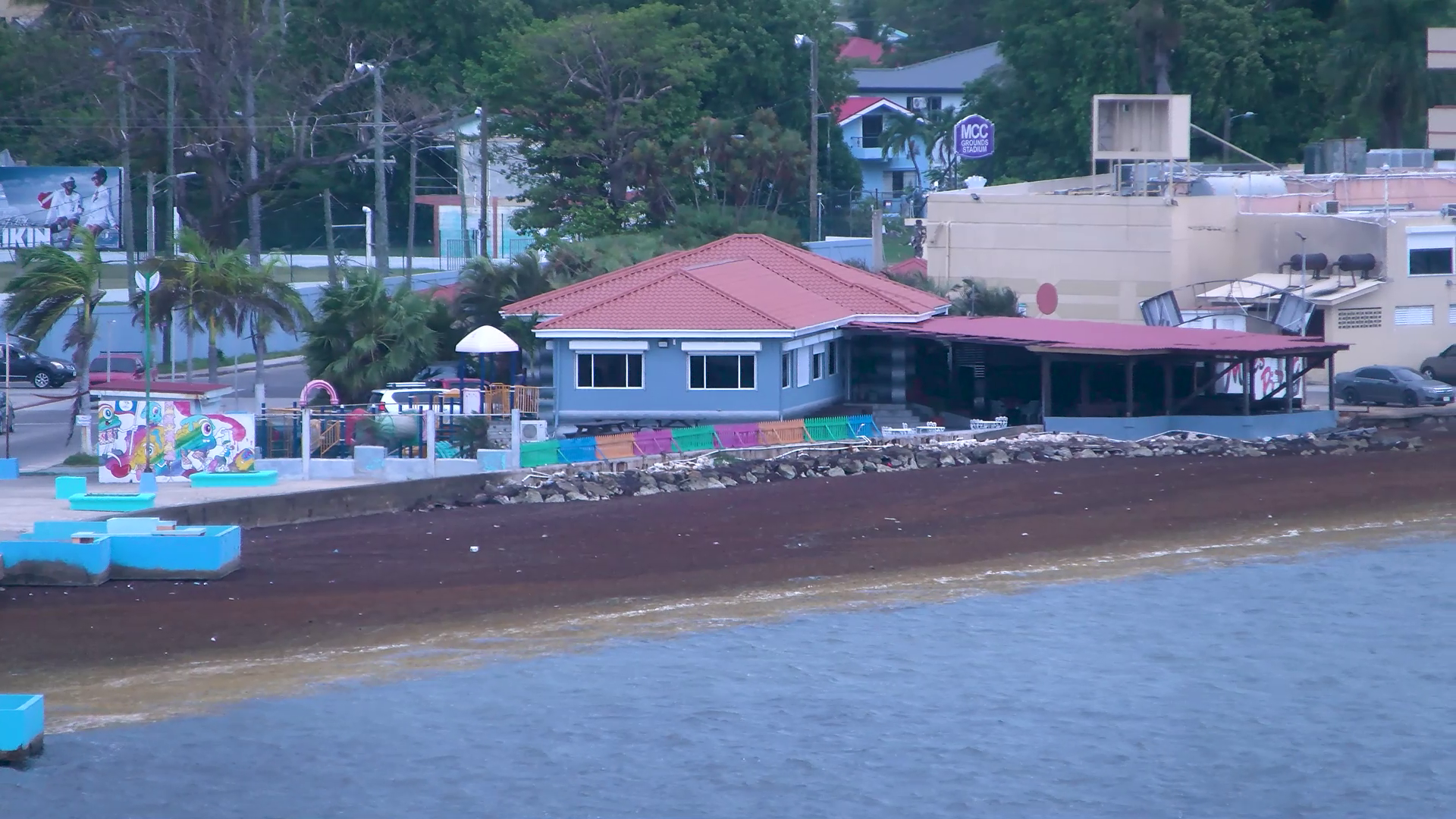
A growing environmental and economic crisis has washed up on the shores of Belize City, as massive piles of invasive sargassum seaweed that have long plagued popular island tourist destinations have now encroached on the nation’s largest urban center. Local business owners and residents are sounding the alarm over the foul stench, unsightly buildup, and looming threat to livelihoods, pushing city leaders to declare the situation an emerging municipal emergency.
For years, sargassum inundations have been a familiar crisis for Belize’s resort islands, including San Pedro and Caye Caulker, where the seaweed has repeatedly disrupted tourism operations. But the tide of algae has now shifted, with thick mats accumulating along Belize City’s public coastline and even drifting into the city’s inland canal network. The spread has upended daily life for waterfront businesses that rely on clean, scenic shorelines to attract both local patrons and visiting tourists.
At Golden Bay Belize Hotel, a popular accommodation famed for its sweeping ocean rooftop views, acting general manager Samantha Pagoada told local outlet News Five that the biggest immediate impact is the ruined aesthetic that draws guests to the property. While strong odors have not yet reached the hotel’s main areas, Pagoada noted that the situation could worsen rapidly as more seaweed washes ashore. Hotel leadership is already exploring partnerships with neighboring waterfront businesses to launch independent cleanup efforts, and is prepared to collaborate with municipal or national authorities to address the problem before it drives away customers. “Something needs to be done quickly. That’s what I believe,” Pagoada emphasized.
The impact is already far more severe for Moe’s Pizza, a waterfront eatery that has been hit directly by the stinking algal mats. Delivery worker Dion Parham explained that the overwhelming odor has made working conditions uncomfortable for staff and driven off customers who would normally dine al fresco to enjoy the coastal scenery. “As you walk in the building, before you even step out here, you’ll be smelling that scent,” Parham said, noting that the smell is particularly unappealing to out-of-town visitors, who are unlikely to stay for a meal while breathing in the foul air. With the federal government already earmarking funds to support sargassum-impacted businesses across the country, Parham said local operators are counting on national authorities to step in and assist with the cleanup now that Belize City has joined the list of affected areas.
Belize City Mayor Bernard Wagner has moved quickly to acknowledge the severity of the new threat, confirming that city officials have formally classified the sargassum inundation as a municipal emergency. After surveying the buildup firsthand, Wagner called an urgent meeting with senior city leaders, the City Emergency Management Organization (CEMO), and other relevant department heads to coordinate a response. Historically, Belize City’s emergency planning has focused on traditional natural hazards like hurricanes, floods, and tsunamis, but Wagner said the growing sargassum crisis demands that the city adapt its framework to address this new environmental phenomenon. The city is still finalizing its formal response plan, but Wagner confirmed he has already reached out to the national Department of the Environment and other agencies on the country’s interagency sargassum task force to collaborate on mitigation and cleanup efforts.
The spread of sargassum to Belize’s main urban coast marks a significant expansion of a regional problem that has disrupted coastal ecosystems and economies across the Caribbean and Gulf of Mexico in recent years. As local stakeholders wait for a coordinated government response, waterfront businesses are already preparing for potential revenue losses if the seaweed is not cleared quickly.