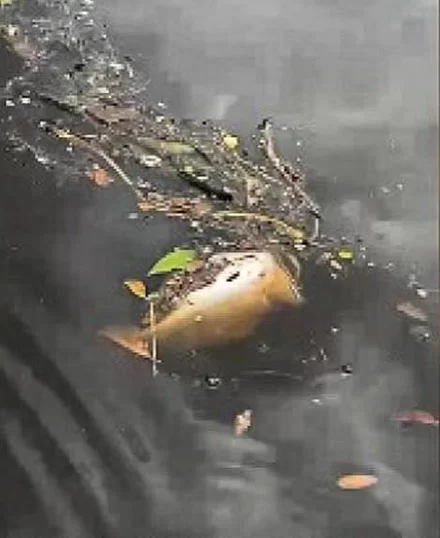
Suriname has long claimed the title of the world’s greenest nation, pointing to its vast old-growth forests, extraordinary biodiversity, and winding network of headwater rivers that act as the country’s ecological lifelines. International bodies have repeatedly celebrated the South American nation for its forest conservation and contributions to global climate change mitigation efforts. But the recent mass fish die-off in the Saramacca River has pulled back the curtain on a deeper, long-ignored environmental crisis that challenges this polished green reputation.
For indigenous and local communities living along the banks of the Saramacca, the hundreds of dead fish washing ashore are far more than an environmental anomaly. The disaster threatens their food security, access to clean drinking water, centuries-old cultural traditions, and ultimately their entire way of life, sparking widespread anxiety and outrage across the country. To date, the root cause of the mortality event remains unconfirmed, with widespread public speculation ranging from cyanide contamination to mercury poisoning. In response to the uncertainty, Suriname’s National Environmental Authority (NMA) has launched additional independent testing supported by international laboratories, a move that comes at a moment when unconfirmed claims on social media often outpace rigorous scientific investigation. Experts emphasize that caution and evidence-based conclusions are critical to maintaining public trust in national institutions, even as community members question the NMA’s slow response to early alarms raised by local residents.
While public debate has centered on identifying the immediate cause of the Saramacca fish deaths, a far larger systemic threat to Suriname’s waterways has largely flown under the radar. For decades, nearly all of the country’s major river systems – including the Marowijne, Lawa, Tapanahony, and Coppename, in addition to the Saramacca – have been pushed to the breaking point by unregulated small-scale gold mining, widespread deforestation, and other extractive human activities. Scientists, international environmental organizations, and local advocacy groups have been sounding the alarm about these cumulative pressures for years, but systemic policy action has failed to materialize.
It is true that the ongoing gold rush has generated much-needed revenue for Suriname’s economy, but it has also left a staggering environmental bill that the country has been reluctant to confront. Large swathes of old-growth forest have been cleared for mining access, topsoil has been severely degraded and contaminated, and polluted runoff from mining sites flows directly into the creeks and rivers that thousands of Surinamese depend on for survival. A healthy forest ecosystem is far more than just standing trees: it relies on intact, unpolluted soil to sustain the entire web of life, from microorganisms to fish to human communities. When soil is repeatedly excavated and contaminated over decades, the entire interconnected ecosystem – water, wildlife, and eventually people – suffers irreversible damage.
Ironically, while Suriname has formally banned the import of mercury for mining, the use of the toxic heavy metal remains widely permitted and widespread across the country. The import ban exists only on paper; visitors to Suriname’s interior can readily observe large quantities of mercury being used in informal small-scale gold mining operations, an open secret that regulators have failed to address. The recent disappearance of more than 300 kilograms of mercury from a police station compound in Geyersvlijt has only amplified public anger and mistrust, raising urgent unanswered questions: Where has the toxic material gone? And could it end up contaminating already vulnerable waterways? Suriname’s public still awaits clear, official answers.
For coastal residents, rivers are often just geographic features to cross by boat or plane. But for the thousands of people who call the inland regions home, rivers are the very foundation of life. Most inland villages are only accessible by water or air, making rivers their primary connection to the outside world. Communities drink from the rivers, bathe in them, fish in them, and rely on them for transportation – they are literal lifelines that shape every part of daily and cultural life. When a river becomes contaminated and sick, the entire community that depends on it becomes sick too.
Against this backdrop, the recent call for action from the Association of Indigenous Village Leaders in Suriname carries new weight. Indigenous knowledge does not replace rigorous laboratory testing, but the communities that have lived along these rivers for generations often spot ecological changes long before formal scientific monitoring teams arrive. Traditional ecological knowledge and Western scientific practice do not need to be opposing forces; they can complement and reinforce one another to build a more complete picture of river health.
Currently, systemic monitoring of Suriname’s river ecosystems remains woefully inadequate. Even as past studies have already confirmed elevated mercury levels in fish caught across multiple regions, the country typically only responds when a crisis hits – when thousands of fish die, when communities fall ill, or when local leaders are forced to sound the alarm. A coordinated, long-term policy framework to protect Suriname’s rivers, soil, and interconnected ecosystems has yet to be implemented.
The Saramacca fish die-off offers a critical wake-up call for Suriname. The true measure of a green nation is not just how much forest it retains on satellite maps, but the health of its soil, its waterways, and the communities that depend on those natural resources. It is time for the country to ask itself an honest question: Is Suriname truly the greenest nation on Earth, or is it only green from space, while the rivers that have sustained it for centuries slowly collapse under the pressure of unregulated extraction? Rivers do not die suddenly. They die slowly, bit by bit, as cumulative contamination and degradation wear away at their ecosystems. When a nation loses its clean water, it loses far more than just rivers – it loses the foundation of life itself.