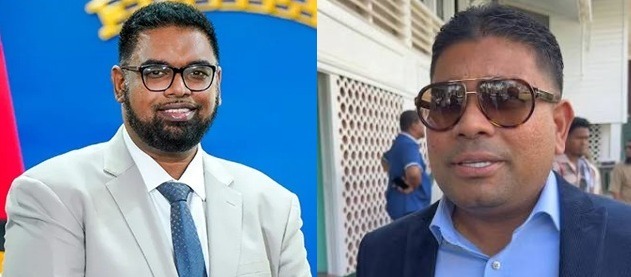
On July 1, 2026, a high-stakes constitutional dispute emerged in Guyana between President Irfaan Ali and newly sworn-in Opposition Leader Azruddin Mohamed, centered on the legally required consultation process for permanent appointments to the country’s two most senior judicial roles: Chief Justice and Chancellor of the Judiciary.
When pressed by Demerara Waves Online News for a timeline on initiating formal consultations with Mohamed, President Ali affirmed that his administration’s existing position – first outlined in a letter to former Opposition Leader Aubrey Norton – remains unchanged. The incumbent head of state noted that the government has maintained uninterrupted operation since winning re-election, and the prior recommendation for the substantive appointments of Justice Roxane George-Wiltshire as Chancellor and Justice Navindra Singh as Chief Justice still stands. When asked whether this long-held position had been formally communicated to the new Opposition Leader, Ali acknowledged the situation falls into a constitutional “grey area” that requires careful navigation, stopping short of committing to new talks with Mohamed.
Mohamed has rejected the President’s stance outright, arguing that a prior consultation with his predecessor cannot be legally transferred to his new post. In blunt remarks, the Opposition Leader emphasized that the Guyanese Constitution explicitly requires consultation with the sitting Opposition Leader, not a former officeholder. “Norton is no longer Opposition Leader. The President needs to reach out to me directly to schedule discussions on these critical appointments – we cannot rely on a years-old letter to a different officeholder,” Mohamed stated. He further revealed that he is currently preparing legal action to compel Ali to fulfill his constitutional obligation to hold new consultations, regardless of any personal or political differences between the two men. “We have a country to govern, and the Guyanese people expect us to put national interest above personal friction. I do not understand why the President is afraid to sit down and talk with me about this,” Mohamed added. When asked whether he personally supported the permanent appointments of the two currently acting judicial officeholders, the Opposition Leader declined to take a public position, saying he would share his stance at a later date.
The origins of the dispute stretch back to October 2025, less than two months after Guyana’s September 2025 general and regional elections, and three months before Mohamed defeated Norton in a parliamentary opposition leadership vote held on January 26, 2026. At that time, Ali first approached Norton to secure his support for making Roxane George-Wiltshire and Navindra Singh’s acting roles permanent, but Norton never granted his approval to the nominations.
In other related remarks Wednesday, Ali confirmed that the bipartisan parliamentary appointments committee will move forward with recommending nominees for a new Police Service Commission (PSC) following the recent deaths of PSC Chairman Patrick Findlay and commission member Lloyd Conway. Reaffirming his commitment to constitutional governance, Ali stated: “Wherever my role as President requires the execution of a constitutional function, you can expect me to uphold all requirements of the Constitution, as a leader committed to democracy and the rule of law.”
The dispute unfolds against a backdrop of broader political tension: the ruling People’s Progressive Party Civic-led administration cut formal ties with Mohamed and his father, Nazar “Shell” Mohamed, shortly after the U.S. Treasury Department’s Office of Foreign Assets Control imposed sanctions on the pair and their business entities. U.S. authorities allege the Mohameds evaded more than $50 million in taxes owed to the Guyanese government on exports of over 10,000 kilograms of gold. The two men have been indicted by a Florida federal court on charges of wire fraud, mail fraud, and money laundering connected to their gold trading operations, and are currently contesting a U.S. extradition request.