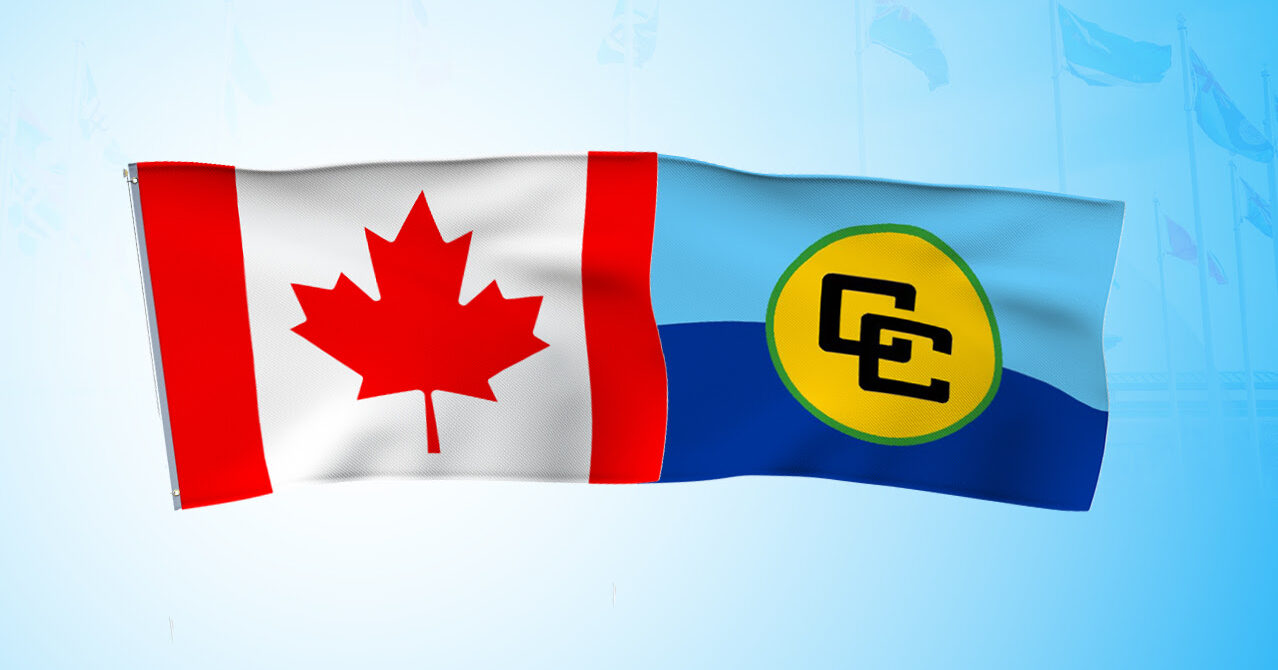
On the sidelines of the 2026 Organization of American States General Assembly held in Panama City, Panama, foreign ministerial representatives from Canada and the Caribbean Community (CARICOM) convened a high-stakes bilateral meeting, emerging with a unified recommitment to deepening long-standing cooperation across shared priority areas.
Co-chaired by Canadian Foreign Minister Anita Anand and Barbados Foreign Affairs and Foreign Trade Minister Christopher Sinckler – who chaired the session on behalf of CARICOM’s Council for Foreign and Community Relations (COFCOR) – the talks built on the foundations of the Canada-CARICOM Strategic Partnership formally established just three years prior in 2023. Ministers opened the discussion by acknowledging a shifting global landscape marked by rising geopolitical volatility, a reality that has elevated the urgency of tighter cross-regional collaboration to address shared challenges. By the close of the session, both sides reaffirmed their mutual dedication to advancing four core pillars: regional security, inclusive economic prosperity, climate adaptation and resilience, and upholding democratic governance norms across the hemisphere.
Following a comprehensive review of progress delivered under the existing strategic framework, ministers formally approved a renewed three-pillar Action Plan to guide cooperation moving forward. The plan centers on three key priorities: building competitive, shock-resistant regional economies; accelerating collective climate action; and shoring up regional security and stability. Attendees agreed that the final version of the plan will incorporate clear implementation timelines, quantifiable performance targets, and commitments to sustainable resourcing to ensure tangible outcomes, rather than symbolic agreements.
Security emerged as one of the most heavily debated topics on the meeting agenda, with ministers addressing a cascade of transnational threats ranging from transnational organized crime and pervasive gang violence to irregular migration and the rapidly deteriorating humanitarian and security crisis in neighboring Haiti. Attendees uniformly agreed that expanded regional coordination is critical to boosting domestic institutional capacity, strengthening maritime border security, and cracking down on cross-border illicit trafficking networks that exploit weak governance across the region. They further noted that modern security threats are deeply interconnected, requiring coordinated action across maritime defense, cyber resilience, cross-border intelligence sharing, and the systematic dismantling of transnational criminal syndicates. Canada received widespread praise from CARICOM delegates for its sustained support of regional security efforts, including ongoing capacity-building programs, targeted interventions, and frontline operational partnerships.
The ongoing crisis in Haiti dominated much of the security discussion, with ministers voicing deep alarm over the country’s persistent political gridlock, widespread violence, and catastrophic humanitarian conditions, as well as the spillover effects that have destabilized the broader region – including a sharp rise in drug and weapons trafficking across Caribbean borders. Ministers stressed that sustained international backing for Haiti’s multinational Gang Suppression Force (GSF) remains non-negotiable, framing the deployment as a critical tool to help Haitian authorities restore basic security across the country. The delegation also pledged full collective support for renewing the GSF’s mission mandate at the United Nations Security Council when the vote comes up in early autumn.
Participants acknowledged incremental progress made by already deployed GSF personnel, including the establishment of command structures, ongoing frontline training, and targeted capacity-building efforts for local security actors. Ministers reiterated their long-held position that the Haitian people must be the sole arbiters of their country’s political future, and reaffirmed CARICOM’s full backing for Haiti’s interim transitional authorities as they work to organize inclusive, credible general elections at the earliest possible date. They also emphasized the urgent need to combat systemic corruption and widespread impunity in Haiti, calling for the immediate activation of the country’s two newly established specialized anti-corruption judicial units. To keep global attention focused on Haiti’s ongoing crisis, ministers agreed to convene expanded multi-stakeholder consultations during the upcoming United Nations General Assembly to map out both immediate relief interventions and long-term collective strategies to address the country’s deep-rooted challenges.
Beyond security, economic development and climate resilience were framed as mutually dependent priorities for the bloc. Ministers highlighted that reliable, affordable access to energy is a fundamental prerequisite for broad-based economic expansion, industrial growth, and private sector innovation across the Caribbean. They also pointed to untapped opportunities to expand bilateral trade and investment, strengthen resilient regional supply chains, and advance sustainable development through deeper commercial integration between Canada and CARICOM member states. The discussion specifically spotlighted the enduring value of the CARIBCAN program, the Commonwealth Caribbean Countries Tariff initiative that grants duty-free access to the Canadian market for most goods originating from 18 Commonwealth Caribbean countries and territories.
Against the backdrop of persistent global economic uncertainty and escalating geopolitical tensions, ministers noted that small island Caribbean nations face disproportionate exposure to external shocks, ranging from global supply chain disruptions to intensifying climate-related extreme weather events. The joint statement called for continued collaborative action to build national and regional resilience, while also advocating for sweeping reforms to the global international financial system and expanded access to concessional financing for vulnerable middle-income Small Island Developing States, which often face barriers to affordable funding despite their high exposure to climate and economic shocks. The meeting further underscored the urgency of scaling up disaster preparedness infrastructure, expanding access to clean and renewable energy, preserving critical correspondent banking relationships for regional financial institutions, and increasing access to climate finance and concessional funding tailored to the specific vulnerabilities and shock absorption capacity of small island states.
Looking ahead, ministers reaffirmed their commitment to the Canada-CARICOM Strategic Partnership as a foundational framework for advancing shared interests. They directed senior bureaucratic officials to finalize the renewed Action Plan by identifying high-impact priority initiatives, developing a detailed implementation workplan, and strengthening accountability and reporting mechanisms to track progress. A dedicated Senior Officials’ Dialogue has already been scheduled for this coming autumn to advance implementation of the plan and update ministers on achieved milestones. The 2026 foreign ministerial gathering brought together senior leadership from across the CARICOM bloc, including representatives from The Bahamas, Barbados, Belize, Dominica, Grenada, Guyana, Haiti, Jamaica, Saint Kitts and Nevis, Saint Lucia, Saint Vincent and the Grenadines, Suriname, Trinidad and Tobago, and the CARICOM secretariat.