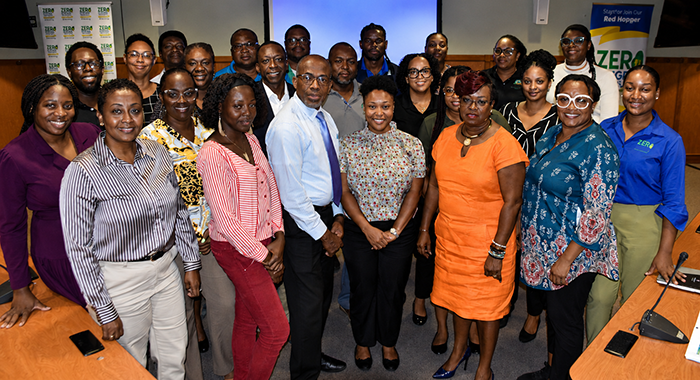
On June 18, the Zero Hunger Trust Fund (ZHTF) hosted a critical stakeholder validation workshop in Kingstown, marking a key milestone in the finalization of its five-year strategic framework covering 2026 to 2030. This collaborative gathering brought together a diverse cross-section of actors, including senior representatives from national government ministries and departments, local non-governmental organizations, youth advocacy groups, civil society bodies, and other core implementing partners. The core objective of the session was to conduct a comprehensive review of the draft strategic plan and collect targeted feedback to refine the fund’s proposed direction for its next operational cycle.
Facilitated by experienced strategic consultant Kevin Hope, the workshop formed a central component of a broader inclusive planning process. This process was intentionally designed to guarantee that the finalized strategy fully aligns with St. Vincent and the Grenadines’ national development priorities, reflects existing institutional capacities and constraints, and centers the on-the-ground lived experiences of vulnerable communities across the islands.
The validation session built on preliminary stakeholder consultations held earlier in March, where community leaders and partner organizations shared on-the-ground insights into the rapidly shifting food and nutrition security landscape across St. Vincent and the Grenadines. Input from those initial consultations already helped shape the refocused draft framework, which prepares the fund for its second decade of operations, impact delivery, and systemic food system transformation.
During the day-long working session, participating stakeholders assessed whether the draft plan accurately upholds ZHTF’s statutory mandate, matches national priorities, and responds to the evolving challenges that shape food and nutrition insecurity in the country. Attendees examined every core component of the draft, including its proposed vision, mission statement, overarching strategic theme, dual core mandate, holistic full food systems approach, six defined strategic pillars, and priority implementation actions. They also flag areas requiring additional clarification, identified opportunities to strengthen alignment across stakeholder roles, and submitted concrete recommendations to streamline the plan’s final approval, publication, and rollout.
At the heart of all workshop discussions was a shared consensus that hunger and systemic food insecurity cannot be resolved through disconnected, standalone interventions. In response, the draft strategic plan adopts an integrated, cross-sectoral systems approach that connects diverse policy and programming areas, including social protection, public health nutrition, local food production, agriculture, fisheries, livelihood development, market access, climate resilience, data-driven governance, and community-led participation.
This model is rooted in the recognition that long-term sustainable solutions require coordinated action across multiple sectors, and stronger linkages between two critical priorities: immediate food and livelihood support for vulnerable households, and long-term strategic investments in building climate-resilient local food systems.
Addressing assembled participants, Safiya Horne-Bique, Director and CEO of ZHTF, emphasized that meaningful stakeholder engagement is non-negotiable to ensure the final strategic plan is practical, credible, and fully relevant to the national context. “The goal of this workshop is that we leave with a clearer, stronger and more validated strategic framework that can guide the work of the Zero Hunger Trust Fund from 2026 to 2030 and position the Fund for its second decade of impact,” Horne-Bique stated.
Encouraging open, constructive feedback from all attendees, she added: “Help us ensure that this document is not only a good strategic plan on paper, but also a useful national instrument for action.”
As ZHTF prepares to mark 10 years since its founding, Horne-Bique noted that the organization must not only celebrate its past achievements, but also adapt its operating model to respond to new and emerging challenges facing the country. “The environment in which the Fund now operates is very different from the one that existed in 2016. Saint Vincent and the Grenadines faces deeper climate and disaster risks, rising food prices, high food import dependency, shifting dietary patterns, youth unemployment, an ageing population, and continued vulnerability among households and communities. These realities require us to think beyond individual programmes and to look at the food system as a whole. That is the central purpose of this Strategic Plan.”
Horne-Bique further explained that the fund’s future direction must strike a critical balance between delivering immediate assistance to vulnerable populations and advancing long-term work to reduce systemic vulnerability, strengthen community livelihoods, and build overall food system resilience. “This workshop is not intended to be a ceremonial exercise. It is a working session. We are here to validate the strategic direction of the Fund for the period 2026 to 2030 and to ensure that the final plan is ambitious, but realistic; nationally relevant, but institutionally deliverable; visionary, but measurable.”
The draft strategic plan also clarifies and sharpens ZHTF’s unique value proposition as a national institution. The fund does not aim to replace existing government ministries or community-based organizations; instead, it positions itself as a catalytic, flexible, and partnership-driven intermediary that connects policy development, financing, on-the-ground programming, community leadership, and evidence-based learning. Through this niche role, ZHTF is positioned to mobilize much-needed resources, pilot innovative intervention models, directly support vulnerable groups, strengthen local food systems, and turn national food and nutrition security priorities into actionable, results-driven work.
For his part, consultant Kevin Hope highlighted the immense value of the input collected across the full consultation and validation process. He noted that workshop discussions reinforced both the critical importance of ZHTF’s mandate and the need to build broader public understanding of the fund’s role in advancing food and nutrition security across the islands. “It is now for us to work together on how we align our initiatives, how we use the activities ZHTF is doing to catalyse other investment, and how we deliver on the mandate. The mandate is ending hunger, food security and sustainable livelihoods,” Hope said.
He added that meaningful food security and food sovereignty must become embedded in national culture and daily community practice, rather than remaining abstract policy concepts reserved for government documents. “How do we target interventions and work together collaboratively to reduce poverty and vulnerability in communities using agriculture and fisheries as mediums? How do we strengthen and support livelihoods in these communities, and how do we ensure that food sovereignty and food security are not just buzzwords, but part of our lived culture? I am hopeful that at the end of this strategic planning exercise, there will be greater public awareness and stronger buy-in as to the ‘why’.”
Moving forward, all feedback and recommendations collected during the June 18 validation workshop will be integrated into the draft to produce the final version of the 2026–2030 Strategic Plan, which will then be submitted for official government approval. Once finalized, the plan will serve as the official roadmap guiding ZHTF’s work to end hunger, strengthen food and nutrition security, support sustainable livelihoods, deepen cross-sector partnerships, and contribute to the development of resilient, inclusive, and sustainable food systems across St. Vincent and the Grenadines.