A fatal police shooting of a 38-year-old mentally ill man in San Juan has sparked deep grief and serious questions from his family, who say they called law enforcement to get him life-saving medical help, not a death sentence. Abraham Hackette, a longtime outpatient at St Ann’s Psychiatric Hospital, was shot and killed by officers on the evening of June 22 following a chaotic confrontation that left one police officer injured. What has intensified the family’s pain is the gaping mismatch between their account of the call for help and the official narrative released by police, alongside unanswered queries about why less-lethal force options were not used to subdue Hackette.
Hackette’s surviving sister, who requested anonymity to protect her family’s privacy, told local outlet the Express that the encounter began as a desperate plea for help. On Monday afternoon, Hackette became severely agitated during a mental health episode, armed himself with knives, and confronted a family member. Their mother, fearing for the safety of everyone in the home and neighborhood, placed an emergency call to police, asking officers to assist in transporting Hackette to the psychiatric hospital for care. The sister explained that their mother expected officers would sedate Hackette and move him to receive treatment, never anticipating the situation would end in her youngest brother’s death.
This was not Hackette’s first acute mental health crisis, his sister confirmed. The youngest of five siblings, Hackette had a history of mental illness that required institutional care: a previous episode that led to an assault on a relative resulted in his arrest, a court-ordered psychiatric evaluation at St Ann’s, and eventual discharge with ongoing medication to manage his condition. The sister emphasized that the entire family only wanted to get Hackette help on the day of the shooting, and no one foresaw the violence that would unfold. “Because he was having an episode. No one expected this to escalate to what happened,” she told reporters.
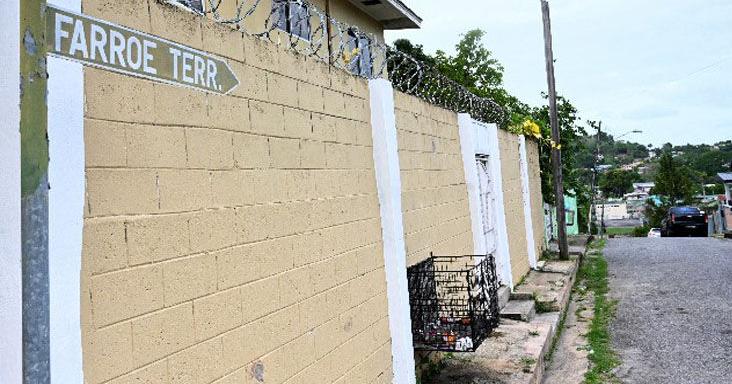
Official police reports lay out a different sequence of events. Just before 7 p.m. on June 22, two officers — WPC Nakhid and PC David Noel — responded to the disturbance call at Farroe Terrace, where the Hackette family lives. Upon arrival, the officers found Hackette, armed with two knives, being chased by a group of local men. He ran onto Saddle Road near Concord Road, where PC Noel exited his marked patrol vehicle and ordered Hackette to drop his weapons. When Hackette ignored the command and lunged at Noel, slashing the officer’s left hand and right arm.
Hackette then fled east along Concord Road, with both officers in pursuit, shouting repeated orders for him to surrender. During the chase, he attempted to attack PC Noel a second time, prompting the officer to fire one warning shot in Hackette’s direction. Hackette evaded officers by jumping a wall and hiding in dense brush near the San Juan River. While the injured PC Noel was transported to the Eric Williams Medical Sciences Complex (EWMSC) in Mt Hope for treatment, additional units from the San Juan CID and North Eastern Division Task Force launched a large-scale manhunt for Hackette.
Around 7:30 p.m., search teams spotted Hackette holding a 12-inch knife in a bushy trail near the river. Police say Hackette ignored multiple demands to drop his weapon, shouted “Ah go kill allyuh” (I will kill all of you), and continued advancing toward officers. Officers opened fire, striking Hackette multiple times. He was rushed to EWMSC in a police vehicle but was pronounced dead on arrival. PC Noel, the injured officer, was treated at the same hospital and remained in stable condition as of the family’s interview. Crime scene investigators later processed multiple locations connected to the incident and collected evidence for the ongoing investigation.
In the days after the shooting, the Hackette family says they have received almost no information from police about the details of the encounter, leaving them to grapple with grief and suspicion. Hackette’s sister questioned the use of deadly force against her brother, noting that he was a small man who did not pose an unavoidable lethal threat, even armed. Most pointedly, she asked why officers did not deploy less-lethal tools such as Tasers or pepper spray that could have disabled Hackette without killing him, even if officers felt threatened. “Why didn’t they try to shoot him in his foot or something to disable him and disarm him? The whole thing just doesn’t sit right with me,” she said, adding that she has little confidence that an internal investigation will yield accountability or answers for her family. The shooting has left the entire family traumatized, she added, and they are still struggling to process how a request for medical help ended in a young man’s death.
As a public service, the story included a resource note for community members facing mental health crisis: anyone experiencing a mental health emergency can contact the Ministry of Health’s free 24-hour National Suicide Prevention Hotline at 800-COPE (2673).