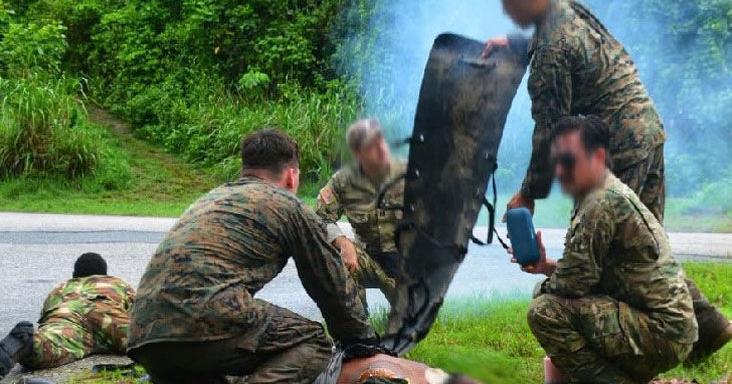
A four-day joint Tactical Combat Casualty Care (TCCC) training exchange between national security forces of the United States and Trinidad and Tobago has successfully concluded at Teteron Barracks in Chaguaramas, marking another milestone in the two countries’ deepening defense and security partnership. The exercise brought together service members from the Trinidad and Tobago Defence Force (TTDF) alongside representatives from multiple local interagency partners, who participated in rigorous, real-world simulated trauma exercises designed to build practical frontline skills. According to an official social media statement shared by the U.S. Embassy in Port of Spain, the drills centered on three core, life-saving competencies: rapid casualty assessment, on-site trauma treatment, and coordinated casualty evacuation under combat-like conditions. The training program was co-led by two instructors: a U.S. Special Operations combat medic and a TTDF Special Operations soldier who had previously completed the same TCCC training through bilateral cooperation. In its official comment on the exercise, the U.S. Embassy noted that the exchange exemplifies how the longstanding military partnership between the two nations is creating durable, self-sustaining training capacity within Trinidad and Tobago’s domestic security forces. The conclusion of the medical exchange comes as Trinidad and Tobago advances expanded security cooperation with the U.S. to address persistent transnational criminal threats, particularly drug trafficking along the country’s coastline. In remarks delivered earlier this week to local media outlet the Express, Trinidad and Tobago Prime Minister Kamla Persad-Bissessar outlined upcoming enhancements to the bilateral security partnership, noting that the U.S. will deliver additional patrol vessels to Trinidad and Tobago in the coming months to boost border protection capabilities. She also confirmed that U.S. military and intelligence personnel will increase their on-ground presence in the country to support local law enforcement and security agencies’ ongoing anti-crime operations. Persad-Bissessar disclosed that a contingent of U.S. Navy SEALs— the U.S. Navy’s elite special operations force, trained for high-stakes maritime and land-based missions—is already on the ground in Trinidad and Tobago handling advance logistics for a larger upcoming deployment of SEAL teams. These special operations personnel will provide specialized training and operational support to the Trinidad and Tobago Coast Guard and TTDF, focusing on three core priorities: strengthening border surveillance, disrupting illegal drug shipments, and shoring up the country’s internal security. The Prime Minister explained that expanded cooperation comes amid incremental progress in curbing drug flows into Trinidad and Tobago from South America, but persistent threats remain in vulnerable coastal regions. She identified the southern, southwestern, and central coastlines of Trinidad as persistent hotspots for illicit smuggling activity, with the stretch from Caroni to Marabella posing particular challenges. The dense mangrove ecosystems and informal squatter settlements that line this coastline make it easy for smuggling operations to go undetected, she noted, adding that these squatter communities are heavily infiltrated by transnational criminal networks and local gangs that facilitate the drug trade. This expanded security partnership reflects the U.S.’s ongoing commitment to supporting Caribbean nations in countering transnational organized crime, which has been identified as a core shared priority for regional stability.