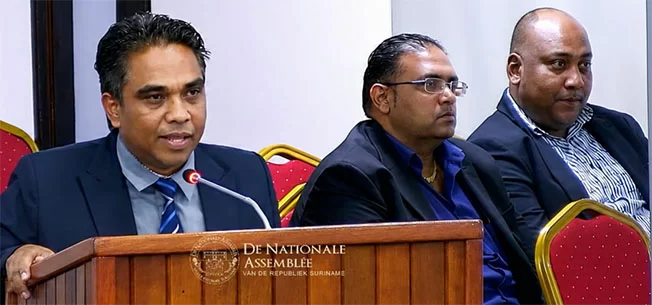
In a parliamentary address delivered during budget deliberations on June 23, Suriname’s Minister of Agriculture, Livestock and Fisheries (LVV) Mike Noersalim has revealed shocking details of systemic mismanagement and widespread corruption within his ministry, announcing that over 25 potential corruption cases have already been documented for investigation.
According to Minister Noersalim, when he took office, he inherited a government department grappling with not only deep organizational dysfunction, but also what he describes as deliberate policies that created fertile ground for corrupt activities. Corrupt practices have permeated every level of the ministry, from senior strategic leadership to frontline operational staff, with multiple officials found to have engaged in illicit activities, the minister confirmed.
To date, formal reports have been filed with law enforcement authorities, relevant individuals have been questioned for investigation, and multiple suspects have been taken into custody, Noersalim said, adding that criminal legal proceedings are already underway against those implicated.
Beyond the corruption scandal, the minister laid bare the severe operational decay that has crippled the ministry for years. Many core departments are critically understaffed, and basic working infrastructure ranging from temperature-controlled storage facilities and office computing equipment to functional work vehicles is severely lacking. In a striking example of the depth of disarray, Noersalim noted that ministry staff have in the past been forced to pool their own personal money to pay for vehicle fuel just to carry out required field inspections and site visits.
Minister Noersalim emphasized that comprehensive internal reform is a non-negotiable first step before the LVV can deliver meaningful progress toward rebuilding and revitalizing Suriname’s critical agrarian sector. “You cannot build a functional, effective sector on a corrupted foundation,” he stated.
The ministry has already launched a full organizational audit and overhaul process, with ongoing work including facility renovations for ministry buildings, upgrades to digital IT infrastructure, fleet and equipment modernization, streamlining of internal work processes, and targeted skills training for existing staff. To prevent future abuses of power and mismanagement, Noersalim highlighted that digital transformation and strengthened internal oversight mechanisms are core priorities of the ongoing reform effort.