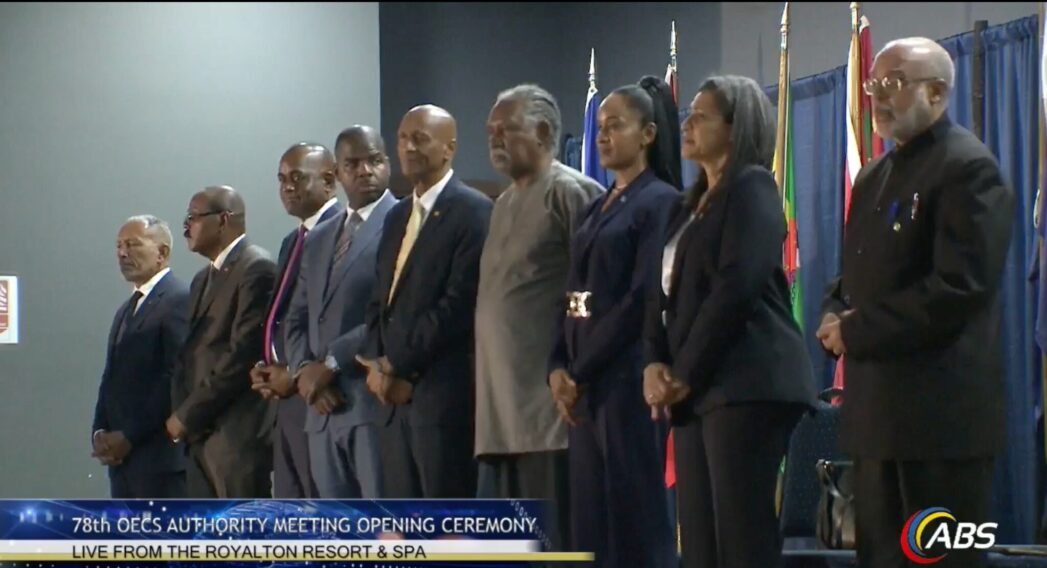
In his inaugural address as the newly appointed chairman of the Organisation of Eastern Caribbean States (OECS) Authority on Sunday, Antigua and Barbuda Prime Minister Gaston Browne has tabled a bold demand for a sweeping restructuring of the OECS Commission, the 11-nation bloc’s central administrative body. Browne argues that the institution must trim bureaucratic bloat, speed up decision-making processes, and boost its overall performance to effectively tackle the growing array of challenges facing member states.
Taking over the one-year rotating chairmanship from St. Vincent and the Grenadines Prime Minister Dr. Godwin Friday, Browne publicly directed OECS Director General Didacus Jules to draft a comprehensive reform blueprint focused on three core goals: sharpening operational efficiency, cutting unnecessary administrative costs, and elevating the quality of public services delivered across all member countries. The prime minister revealed that he had already held frank, private discussions with Jules on the reform agenda before bringing the proposal into the public domain, framing the changes as a necessary evolution for the decades-old regional body.
Reflecting on the OECS’ 45-year history of regional integration, Browne praised the bloc as one of the most successful regional cooperation frameworks globally, highlighting landmark achievements delivered through its existing institutions. He pointed to the enduring stability of the Eastern Caribbean dollar, which has maintained a fixed peg of 2.70 Eastern Caribbean dollars to 1 U.S. dollar for decades, the significant cost savings unlocked by the joint regional pharmaceutical procurement program, and the consistent work of institutions like the Eastern Caribbean Central Bank and Eastern Caribbean Supreme Court as proof of the power of collective action.
“What we cannot do alone, we can certainly accomplish together,” Browne said, noting that this founding principle has guided the bloc’s progress to date and must remain the cornerstone of its future work. He emphasized that current regional leaders carry a dual responsibility: to safeguard the institutions built by past generations of leaders, and to build new, adaptive structures equipped to address 21st-century challenges. “Many of us are better trained, and if we’re better trained and we have more resources, it means that we too can establish sustaining institutions for the benefit of the OECS people,” he added.
Browne’s call for reform comes amid a shifting global landscape marked by rising geopolitical friction, widespread global supply chain disruptions, skyrocketing cost of living, and growing macroeconomic uncertainty that disproportionately impacts small island developing states. He warned that in today’s fractured global order, individual OECS member states operating in isolation face far greater exposure to external shocks and economic vulnerability, but unified collective action turns small individual economies into a stronger, more resilient regional entity.
While Browne stopped short of laying out specific, granular reform measures for the commission, he confirmed that the reform plan will be developed over the coming months as part of a broader push to make the OECS more effective and responsive to the needs of its population. “We must re-engineer the OECS Commission into a leaner, faster and more effective institution that is fit for purpose,” Browne reiterated, framing the restructuring as a critical step to secure the bloc’s relevance and impact for decades to come.