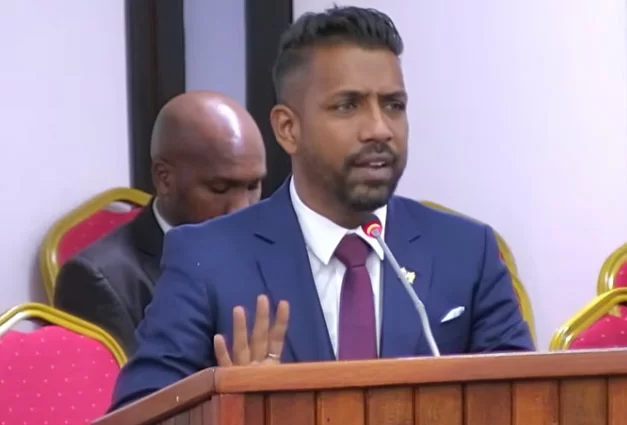
On June 19, a planned law enforcement and regulatory operation targeting unregulated gold mining at 21 Bergi in Suriname’s Matawai region is set to launch, with the explicit goal of eliminating life-threatening working conditions and bringing order to the country’s informal mining sector. Minister of Justice and Police Harish Monorath outlined the full details of the operation during an address to the National Assembly Thursday evening, responding to repeated calls for clarity from BEP party faction leader Ronny Asabina.
Monorath explained that the 21 Bergi area has been plagued by unsafe, unregulated mining activity for years. He reminded legislators that a major landslide several years ago killed 15 miners working in the region. Just weeks before the planned operation, another severe incident occurred when a sand bank collapse buried four workers. Two of those workers faced fatal injuries before being successfully rescued, highlighting the ongoing danger in the area.
According to the minister, informal miners in the region have constructed an extensive network of dangerous underground tunnels, some stretching up to two kilometers in length and reaching depths of hundreds of meters. This unapproved infrastructure creates constant lethal risk for every worker on site, Monorath emphasized.
The push for government intervention did not originate from national officials, the minister clarified. Local traditional leadership and the district commissioner requested government action to address the unsafe conditions months ago. Following that request, interministerial delegations from the ministries of Justice and Police, Defense, Regional Development, and Natural Resources conducted an on-site assessment alongside local police to review conditions and plan next steps.
After reviewing the assessment, the national cabinet approved a plan to regulate and restructure gold mining activity in the region. All miners currently working in the high-risk zones will be temporarily relocated, and will be required to complete an official re-registration process. Once the process is complete, miners will be able to resume their work in safer, organized designated areas.
Monorath stressed that all relevant local and national stakeholders have spent weeks proactively notifying miners in the region of the upcoming measures, clearly communicating that all workers must evacuate the high-risk, unregulated tunnel sites ahead of the operation. Starting Friday, clearing operations will begin in the dangerous zones, and the re-registration process for gold miners will get underway immediately after the evacuation is complete.
The discussion was brought to the floor of the National Assembly after Asabina raised concerns over circulating rumors claiming the entire region would be fully evacuated, displacing all local miners. He asked the government to confirm its official stance on the operation, warning that lingering public uncertainty over the plan could trigger unnecessary social tensions in the mining community.
ABOP Member of Parliament Edgar Sampi, who participated in earlier negotiations between the government and local traditional leadership, confirmed that the operation does not involve a full evacuation of the entire area. Instead, it is a targeted restructuring of mining activity that prioritizes worker safety, and no miner will lose their livelihood as a result of the intervention, Sampi said.
Following Minister Monorath’s detailed briefing, Asabina expressed his appreciation for the clear, transparent response from the government, stating he was satisfied that the administration recognized the importance of accountability and transparency to the national legislature.