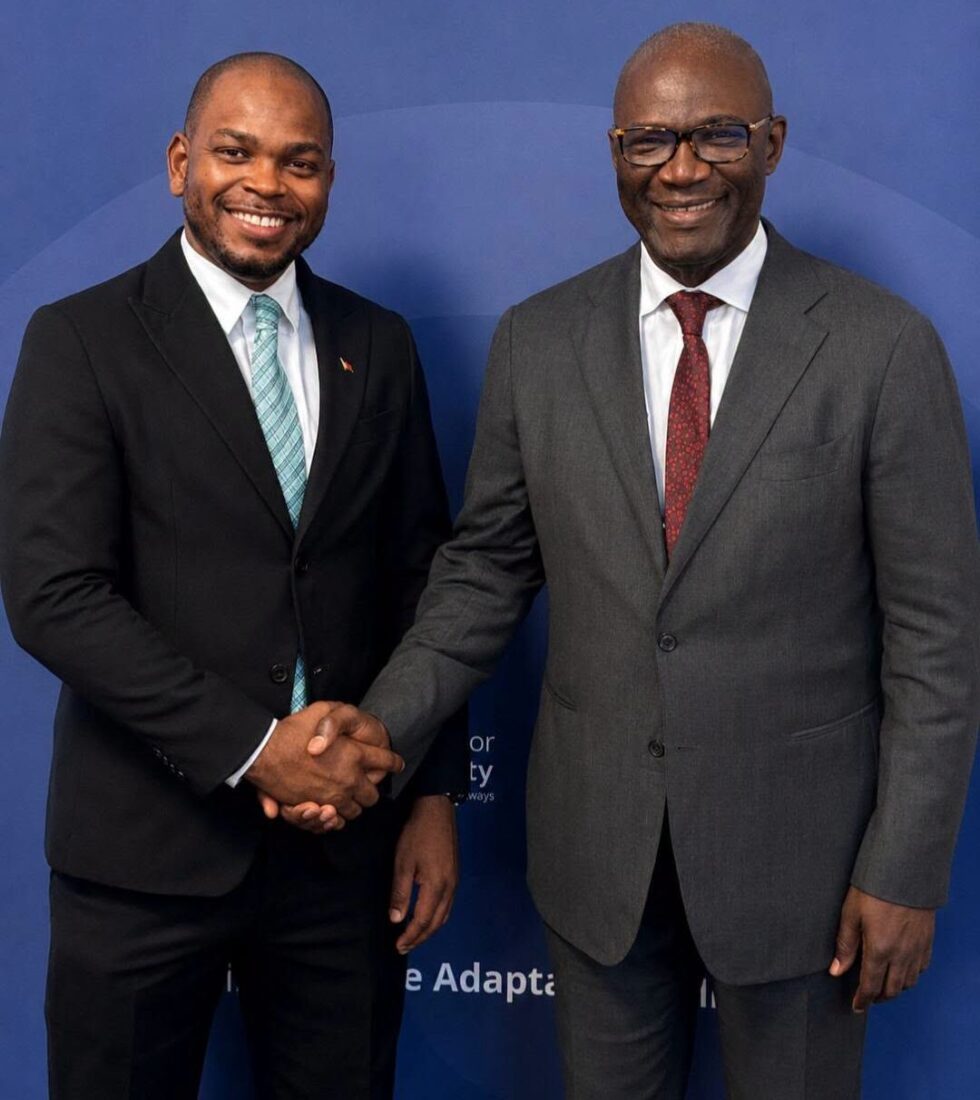
Side talks at the 2026 Berlin Climate Mobility Forum have brought critical focus to the disproportionate climate risks facing Small Island Developing States, as senior officials from Antigua and Barbuda and the global Loss and Damage Fund sat down to advance actionable progress for climate-vulnerable nations.
Michael Joseph, who leads the ministries of Health, Wellness, Environment, and Civil Service Affairs for Antigua and Barbuda, met one-on-one with Ibrahima Cheikh Diong, Executive Director of the Fund for Responding to Loss and Damage, to unpack the cascading challenges that climate change imposes on low-lying island nations. The closed-door discussion zeroed in on the overlapping vulnerabilities SIDS confront across nearly every sector of society: climate impacts are increasingly eroding critical infrastructure, destroying residential housing, straining already stretched public health systems, undermining core livelihoods, and derailing long-term national development plans that many small island states have spent decades building.
Joseph underscored that Antigua and Barbuda has remained a consistent, unwavering voice in global climate negotiations calling for fair and equitable access to climate finance for frontline nations. For countries that have contributed the least to global greenhouse gas emissions yet face the worst climate outcomes, he stressed, timely and sufficient support to address climate-induced loss and damage is not a favor—it is an existential necessity. The minister went on to outline the unique realities small island states grapple with that are often overlooked in global climate frameworks: even one major extreme weather event can leave long-lasting social and economic scars that stretch far beyond the scope of immediate emergency disaster response. Recovery can take years, if not decades, and derail development gains that communities worked generations to achieve.
Following the discussion, both Diong and Joseph exchanged constructive perspectives on how to move from global agreement to on-the-ground action. A central point of their talks centered on operationalizing accessible, efficient financing mechanisms that can rapidly meet the needs of countries already experiencing climate loss and damage, ensuring that the most vulnerable populations receive the targeted support they need to recover and rebuild stronger after climate shocks.
Joseph reaffirmed Antigua and Barbuda’s longstanding commitment to collaborative international climate action, and expressed clear support for ongoing global efforts to strengthen support systems for nations on the frontline of the climate crisis. He was joined at the meeting by Ruleta Camacho-Thomas, Antigua and Barbuda’s Climate Ambassador, who has been a core leader driving the country’s climate advocacy and international engagement on the global stage.
The 2026 Berlin Climate Mobility Forum serves as a convening point for cross-sector global stakeholders, bringing together heads of government, leaders of international organizations, development finance institutions, and leading climate experts to advance practical, implementable solutions to interconnected challenges including climate-driven human mobility, climate adaptation, community resilience, and inclusive sustainable development.