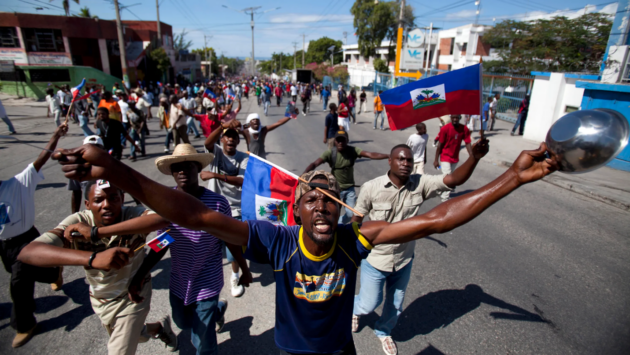
As the political landscape in Haiti remains fluid and uncertain, the CARICOM Eminent Persons Group (EPG) is maintaining close, real-time monitoring of developments through continuous virtual dialogue with a broad cross-section of Haitian stakeholders. These conversations span across government leadership, opposition political blocs, and grassroots civil society organizations, giving the group a grounded, multi-faceted understanding of the crisis unfolding on the ground.
Recognizing that digital engagements cannot replace the nuance and trust-building of face-to-face interactions, the EPG has made clear its intention to deploy an on-the-ground delegation to Haiti as soon as logistical and security conditions allow. Once in the country, the group plans to hold direct talks with all major stakeholders to facilitate dialogue and support Haitian-led efforts to resolve ongoing political divisions.
To provide context, the Caribbean Community (CARICOM) – the regional bloc that convened the EPG – was founded in 1973 following the signing of the Treaty of Chaguaramas, with a major 2001 revision of the accord that paved the way for a single integrated market and economy across the Caribbean. Today, the bloc counts 15 full member states and six associate members, representing a combined population of roughly 16 million people, 60 percent of whom are under the age of 30.
CARICOM structures its work around four core pillars: deepening economic integration across member states, coordinating collective foreign policy, advancing inclusive human and social development, and strengthening cross-border security cooperation. The bloc’s overarching mission is to build an integrated, inclusive, and resilient regional community powered by innovation, knowledge, and shared productivity. It aims to position the Caribbean as a unified competitive force on the global stage, where every resident has equal access to opportunity, guaranteed human rights, and social justice, and can share in the region’s collective economic, social, and cultural prosperity.
Widely recognized as one of the most successful regional integration projects among developing nations, CARICOM carries out its day-to-day operations through its central administrative body, the CARICOM Secretariat, which is permanently based in Georgetown, Guyana.