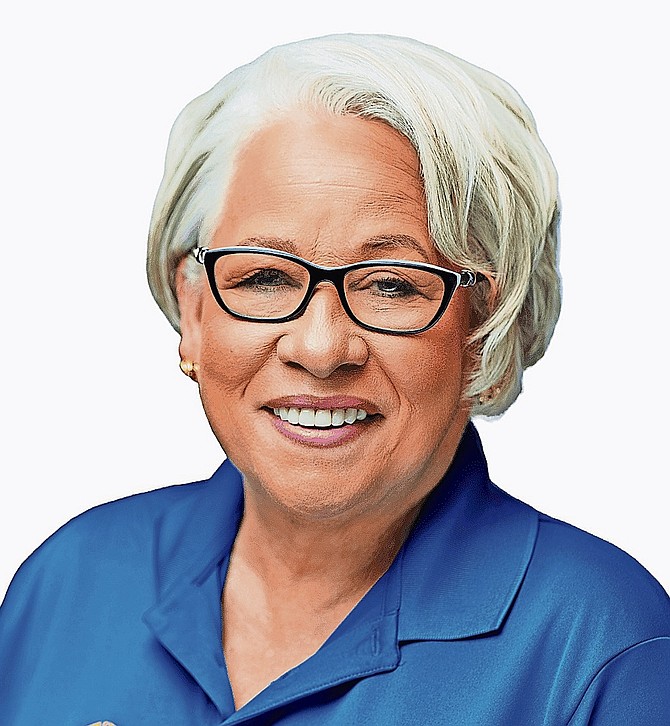
The Bahamas has continued its post-pandemic tourism rebound, hitting a new milestone in visitor arrivals through the first four months of 2026, according to the nation’s top tourism official. Speaking in the country’s House of Assembly on Wednesday, Tourism Minister Glenys Hanna-Martin unveiled the latest sector data and used the occasion to call for a fundamental reevaluation of how the country defines tourism success, arguing that raw arrival numbers no longer equal broad national prosperity.
Between January and April, the archipelago recorded a total of 4.9 million visitor arrivals via both air and sea across all its islands, Minister Hanna-Martin confirmed. The figure represents a 13.9% increase compared to the same period in 2025, and an 88% jump over pre-pandemic levels recorded in 2019. Foreign air arrivals alone also outpaced prior benchmarks, growing 5.5% against 2018 numbers and 4.3% over 2025’s first four months.
But the minister drew sharp attention to a stark imbalance in visitor spending that has long shaped the country’s tourism sector: the gap between mass cruise tourism and high-value stopover travel. Industry estimates show the average cruise passenger spends just $85 to $150 per visit, while the average overnight stopover visitor spends roughly $2,700 per trip. Even as cruise passengers account for 80% of all annual arrivals to The Bahamas, they contribute only around 20% of total tourism expenditure, figures Hanna-Martin called “stark” and impossible to ignore.
“Many destinations have learned that increasing arrivals does not on its own increase prosperity,” the minister told legislators. “The Bahamas already attracts high-spending visitors, so the work before us is to maximize local capture of that spending.”
Hanna-Martin outlined that the nation’s new tourism strategy will center on shifting focus from raw arrival growth to boosting four core outcomes: higher per-visitor expenditure, longer average length of stay, increased repeat visitation, and a larger share of total tourism revenue retained within local Bahamian economies. The strategy is built on five key pillars, including expanding tourism yield and local economic retention, improving airlift and international connectivity, developing climate-resilient tourism infrastructure, establishing digital tourism leadership, and ramping up investment in local workforce development.
Addressing gaps in workforce participation, the minister emphasized that far too many Bahamian citizens remain locked out of higher-income positions across the tourism sector. Calling the current underrepresentation “insane,” she pledged that the government would prioritize targeted changes to expand access to these roles. “That must change and it will change,” she said.
To address the cruise spending imbalance, Hanna-Martin announced that the government will soon launch formal discussions with major cruise lines and local industry stakeholders to revise current visitor patterns. The government’s goals include encouraging cruise passengers to spend time and money outside of restricted, cruise-controlled port areas, and marketing the nation’s leisure offerings to convert day-tripping cruise visitors into future overnight stopover guests.
“The question we must keep asking is, how much value each visitor generates, and how much of every tourism dollar stays in the local economy,” Hanna-Martin said, framing the new approach as a long-overdue adjustment to build a more equitable and prosperous tourism sector for all Bahamians.