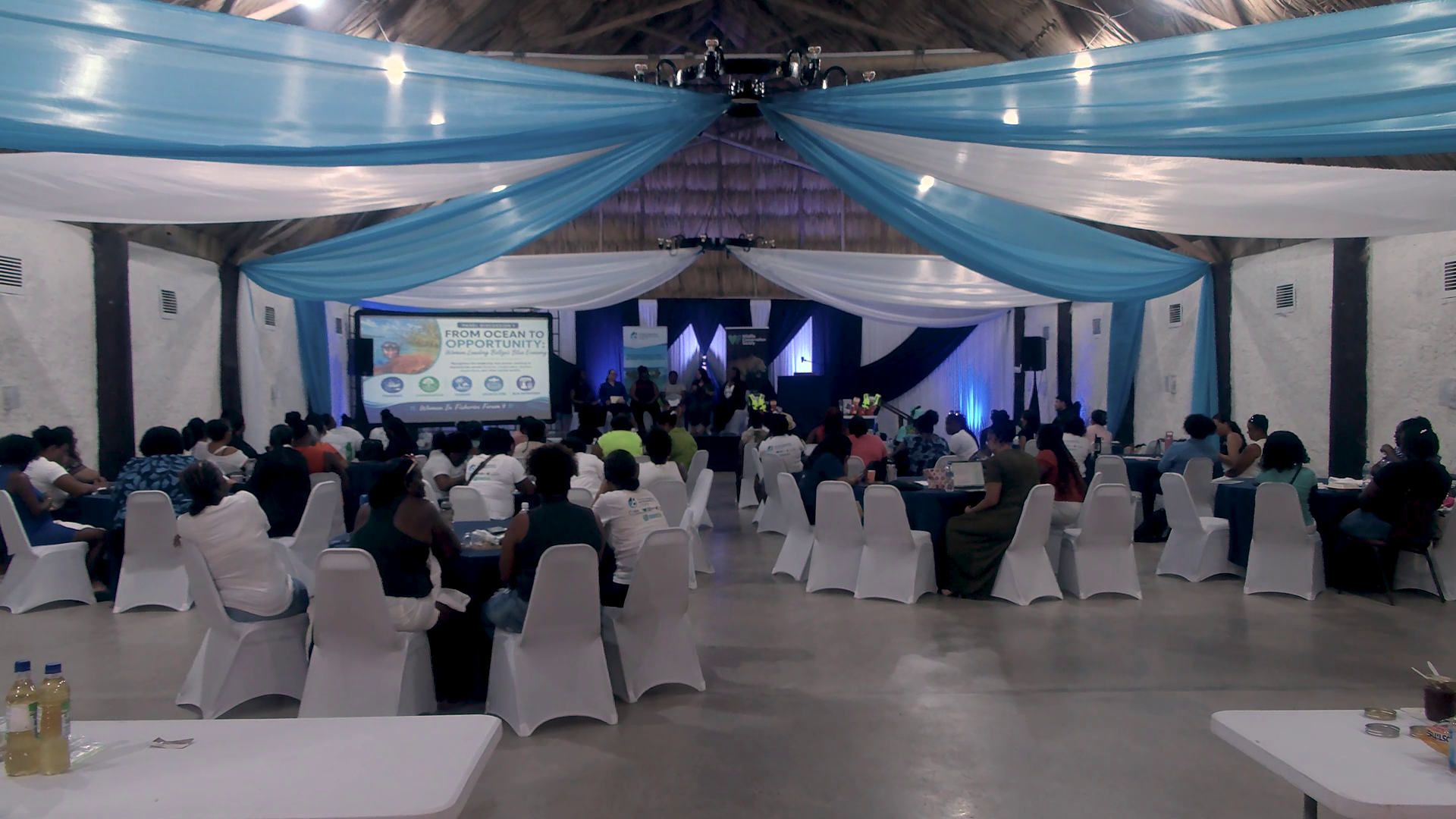
Opening on June 16, 2026 at Old Belize, the second annual Women in Fisheries Forum has kicked off, turning a long-overdue spotlight on the underrecognized women who form a critical backbone of Belize’s coastal blue economy. Co-hosted by the Wildlife Conservation Society and Belize’s National Women in Fisheries Association, the two-day gathering unites working fishers, small business owners, and marine conservation leaders to address the overlapping systemic and environmental challenges that have long sidelined women in the industry, from soaring operational costs and climate-driven ecological shifts to limited access to capital and professional opportunities.
For generations, commercial fishing has been the economic lifeline of Belize’s coastal communities, supporting nearly 20,000 households and contributing millions of dollars annually to the national economy. Yet despite this outsized impact, women remain vastly underrepresented, holding less than 4% of formal industry roles. The forum’s organizers and attendees are working to shift that imbalance, centering conversations that elevate women’s lived experience and push for greater leadership access, expanded market opportunities, and equitable sustainable financing for women across the marine sector.
Paula Jacobs Williams, chair of the National Women in Fisheries Association and a third-generation fisher from Punta Negra, says fishing is embedded in her identity. “I grew up in a fishing community. My mom and dad were fisher folk, and I always tell people I’ve been fishing from inna di belly — when I was pregnant with my children, I was still out fishing, so they didn’t know a life without it,” she shared at the event. Like many women in the industry, Williams has adapted to mounting pressures in recent years: rising fuel costs, shifting fish populations driven by climate change, and new regulatory changes have forced many small-scale fishers to diversify their income streams. Williams and her family have expanded into coastal tourism to supplement their fishing income, allowing her to continue working on the water she has called home her whole life.
Ralna Lamb Lewis, marine conservation director at the Wildlife Conservation Society, explained that outdated cultural perceptions of fishing as a “male-only” industry have created systemic barriers that lock women out of critical resources. “When there’s a widespread perception that only one group belongs in this space, it limits access for everyone else to the resources and opportunities the sector offers,” Lewis said. “Our focus right now is identifying what resources and opportunities exist for women to fully participate in the growing blue economy, and supporting innovative ideas that let them generate sustainable income for themselves, their families, and their whole communities.”
The 2020 national ban on gill nets, implemented to protect vulnerable marine ecosystems, reshaped fishing practices across Belize — but it also created new challenges for small-scale operators. With net fishing restricted, many fishers have shifted to fish traps, increasing competition for limited fishing grounds. Vonetta Dawson, a small-scale fisherwoman from Dangriga, says southern coastal communities have borne the brunt of these new pressures. “Since the net ban, more and more fishers are using traps, so more fishing area is taken up, leaving less space for small operators like me,” Dawson explained. She added that skyrocketing operational costs have made it nearly impossible to earn a living wage: “Gas prices are incredibly high, and a sack of ice costs $20 here, compared to just $5 in other parts of the country. For most of us, it’s hand to mouth — there’s no extra money to reward ourselves after a long day out on the water.”
Despite these persistent challenges, the forum has become a space for collective action and solidarity. As the Belizean fishing industry continues to evolve amid climate and economic change, the country’s fisherwomen are organizing to claim their space, supporting one another, advocating for policy change, and building a more inclusive, sustainable future for the nation’s marine economy.