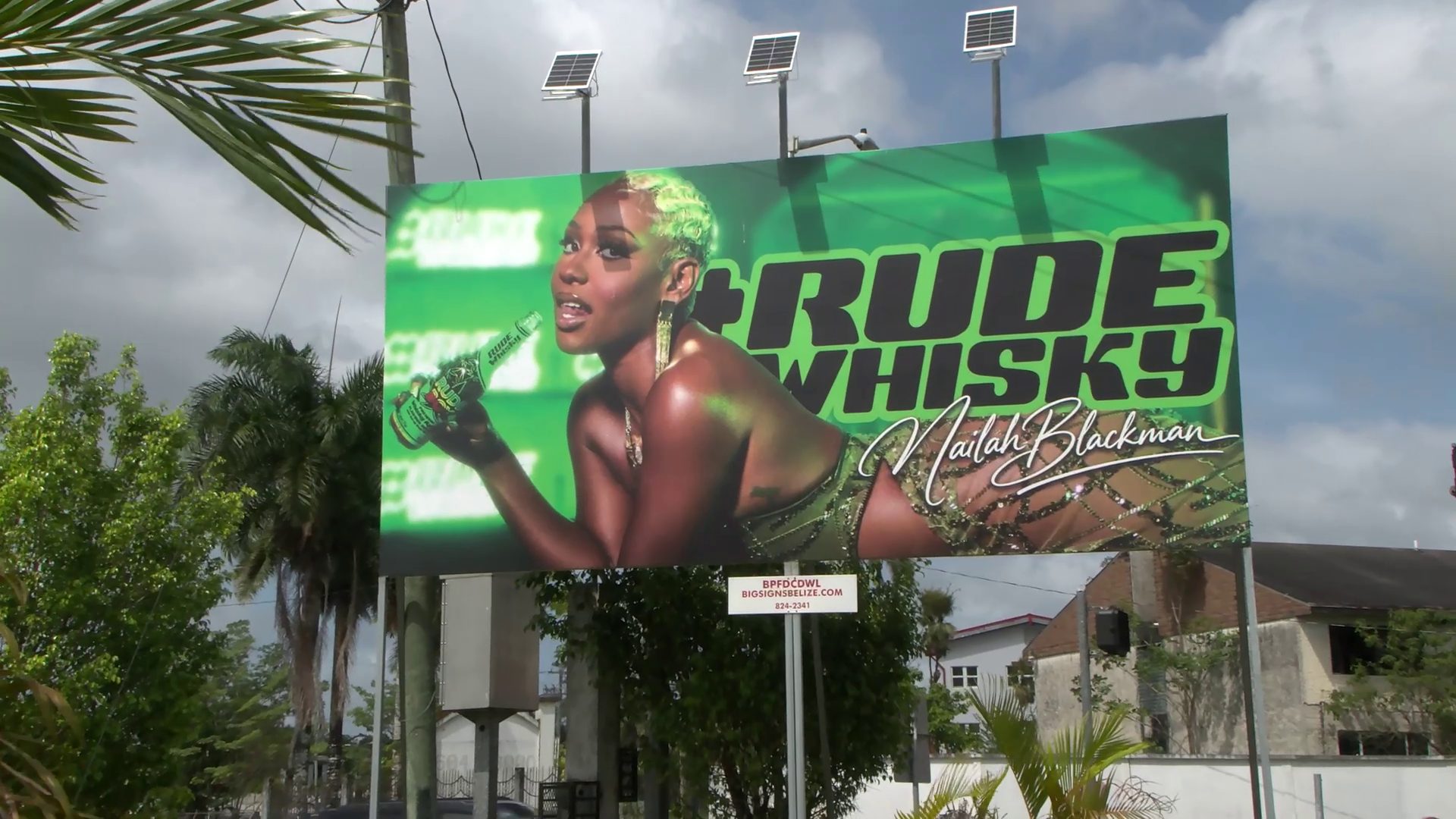
Weeks after Trinidadian soca artist Nailah Blackman wrapped up her performance tour in Belize and departed the country, a public advertisement featuring the singer has become the center of a growing culture clash in the nation’s capital, Belmopan. The billboard, placed at a high-traffic major intersection, has split local public opinion sharply, with critics speaking out against its imagery as inappropriate for a public space accessible to all ages.
At a recent municipal public meeting, multiple local residents and religious leaders formally pushed back against the display, reigniting a long-simmering broader conversation about where to draw the line between acceptable community content standards and the right to artistic and commercial self-expression. The debate has put Belmopan’s municipal leadership in the position of mediating between opposing sides of the community.
Belmopan Mayor Pablo Cawich has argued that public concern over the billboard may be out of proportion to the actual issue at hand. In comments at the meeting, Cawich framed the advertisement as a standard commercial placement no different from countless other marketing displays across the city. “It is a regular advertisement sign like any other sign,” he told attendees. “As I mentioned to the pastors, if there is an issue with the content, I am prepared to join forces with them to fight the content and to legislate content. But I see no benefit in limiting how anybody advertises, especially if in my view and from checking with other people, you have a split in perspective.”
Cawich noted that opinion across the capital is already evenly divided: some residents share the view that the imagery is offensive, while others see no problem with the display. He added that other commercial brands across the city already use similar aesthetic and marketing approaches for their own public advertising, creating an inconsistent standard if the Blackman billboard is targeted for removal. The mayor drew a clear line between the current controversy and cases involving public nudity, which he acknowledged would warrant formal municipal action. “We as a city cannot try to put any type of restriction on marketing if it reaches a level where nudity or something like that would be involved and that’s a completely different case,” he explained. “I believe nudity is a real problem if it were at that level. But in this case, that’s not the case.”
Notably, an identical advertisement featuring Blackman has been installed at a major intersection in Belize City, at the corner of Central American Boulevard and Pine Street, and no public objections or petitions have been filed against the display there to date. The discrepancy in public reaction between the two cities has further highlighted how differing community norms can shape responses to public art and commercial advertising, leaving the debate over the Belmopan billboard ongoing with no clear resolution in sight as both sides continue to make their cases.
This report is adapted from a transcript of a televised evening news broadcast from Belize.