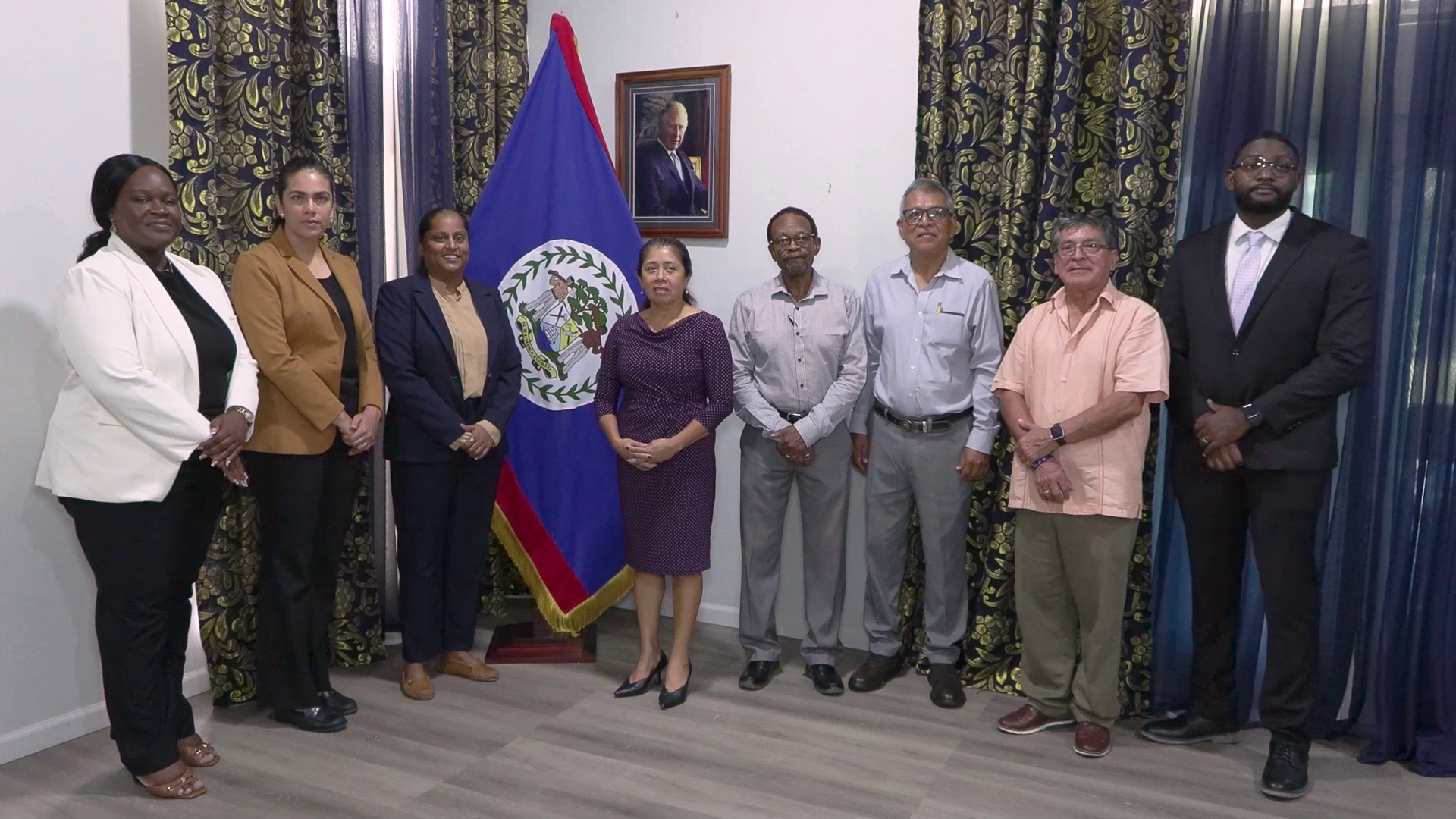
June 15, 2026 — A newly sworn-in Integrity Commission has launched a sustained, systematic anti-corruption initiative centered on continuous financial monitoring of public officials, as the body works to embed a culture of accountability across all levels of government. The commission, headed by newly re-appointed Chair Andrea McSweaney-McKoy, welcomed seven new members during an official oath-taking ceremony held today, joining existing member Senior Justice of the Peace Adrian “Danny” Madrid to expand the body’s oversight capacity.
At the core of the commission’s strategy is mandatory annual financial disclosure for all public officials, a requirement that takes effect the moment an individual accepts public office. Under the framework, officials must document all sources of income, assets, and major acquisitions, giving investigators a clear paper trail to cross-reference declared wealth with any unreported gains that may signal illicit activity. McSweaney-McKoy explained that this routine filing system enables the commission to flag inconsistencies, identify suspicious wealth accumulation, and assess whether official policy decisions are being skewed by private financial gain.
For the commission’s leadership, the fight against corruption extends far beyond processing disclosure forms. McSweaney-McKoy emphasized that systemic corruption poses an existential threat to the nation’s foundational cultural and governance norms, warning that unregulated self-dealing among public officials can erode institutional trust and eventually spiral into anarchy. “If every public official prioritizes personal gain over procedural rules and public trust, we lose the structure that holds our society together,” she noted.
The commission’s two primary long-term goals, McSweaney-McKoy outlined, are to enforce consistent compliance with financial disclosure laws and to create a lasting culture of accountability that encourages ethical decision-making. Officials are expected to not only meet their legal obligation to file annual disclosures but also to uphold the public trust by managing personal finances and making official decisions aligned with national anti-corruption legislation.
The rollout of this expanded monitoring effort comes after a period of internal capacity building for the commission, where the team worked through backlogs of unprocessed disclosures and refined operational processes. McSweaney-McKoy credited the body’s small, dedicated team for advancing the initiative despite the steep learning curve and institutional barriers, noting that the addition of seven new members will further strengthen the commission’s ability to root out corruption across all branches of government. The monitoring covers all elected and appointed officials across both the upper and lower houses of the national legislature, as well as all other persons holding public office.