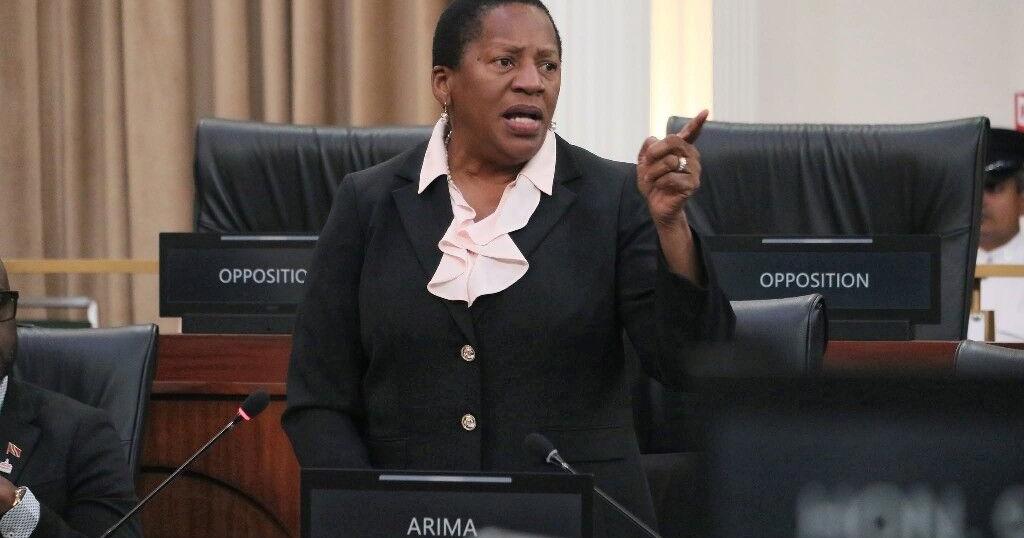
A sharp political confrontation has erupted in Trinidad and Tobago’s Parliament over unsubstantiated claims of illegal activity linked to the opposition People’s National Movement, after Attorney General John Jeremie dropped a bombshell announcement during a Wednesday debate focused on extending a national state of emergency. Jeremie told the legislative body that the United States government had revoked visas belonging to a group of figures labeled the “1%”, a comment widely interpreted to hint at connections between opposition figures and criminal activity. Now, opposition leader Pennelope Beckles is pushing back forcefully, challenging the ruling government to act on its claims rather than hiding behind parliamentary immunity.
In a fiery address to government lawmakers, Beckles argued that the governing administration has abused the legal protection of parliamentary privilege to smear the PNM and its members without offering any concrete proof of wrongdoing. “It is one thing to stand on this floor and level accusations against the opposition, but if you actually hold evidence, take it to the police,” Beckles stated, doubling down on her demand that officials stop making unproven claims behind the protection of parliamentary immunity. “Do not hide behind this privilege to spread baseless accusations when you know you lack the evidence to back them up. If you have proof tying me to any illegal activity, take it directly to law enforcement.”
Beckles went on to accuse the ruling party of being fixated on targeting the so-called “1%” for political gain, rejecting any implication that she or any fellow opposition parliamentarian are involved in unlawful activity. She issued an open challenge to the government to release any formal reports that name opposition members or tie the PNM to criminal networks, stating that the public has a right to see the evidence if it actually exists.
Noting the context of the debate around the state of emergency, which is tied to public safety and gang violence, Beckles acknowledged the government’s attempt to link its accusations to broader national security concerns. She insisted, however, that if authorities have credible evidence of wrongdoing, they must follow formal legal processes instead of using parliamentary privilege to make unchallenged claims that cannot be legally answered outside the chamber. “If you have the information, act on it properly,” she said. “You cannot keep coming into Parliament to level these smears, when you refuse to repeat them outside these walls where you can be held accountable – and everyone knows why that is.”