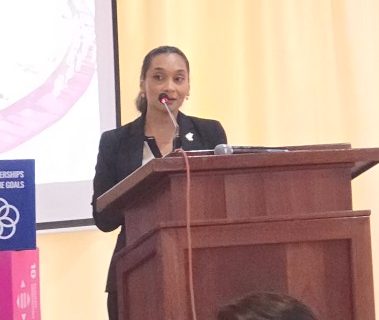
GEORGETOWN, GUYANA – 11 June 2026 – As Guyana grapples with a steep rise in civil lawsuits alleging constitutional rights violations by law enforcement, the country’s top legal leadership is pushing to establish a permanent, mandatory training program for all ranks of the Guyana Police Force (GPF) to strengthen legal compliance and operational accountability.
The announcement was delivered Thursday by Deputy Solicitor General Shoshanna Lall during the opening ceremony of a specialized joint training initiative between the GPF and the Office of the Director of Public Prosecutions (DPP). This event falls under the Partnership of the Caribbean and European Union (PACE) Justice Project, a regional development effort co-funded by the European Union and the United Nations Development Programme (UNDP).
Lall told attendees that Attorney General Anil Nandlall has already initiated preliminary discussions with DPP Director Shalimar Hack and senior UNDP representatives to formalize the permanent training framework. Unlike one-off workshops, the proposed program will focus exclusively on practical legal topics critical to daily police work: core criminal practice and procedure, constitutional law principles, updates to existing and newly enacted statutes, legislative amendments, proper protocols for traffic offense ticketing, the balance of civilian constitutional rights and freedoms during police operations, identification of repealed legislation, and analysis of binding case law precedents.
Lall emphasized that this targeted training fills a long-unaddressed gap in local law enforcement capacity building. While she publicly acknowledged the invaluable, wide-ranging “yeoman service” the GPF provides to Guyanese communities, she underlined that consistent, up-to-date legal knowledge is non-negotiable for ethical and effective policing.
Citing official data from the Attorney General’s Chambers, Lall confirmed that lawsuits against the GPF for alleged constitutional rights breaches have become one of the most frequent legal matters the chambers handles. “From my personal vantage point at the AG Chambers, when police – not all officers, by any means – fail to uphold these protected rights and freedoms, civil proceedings are immediately filed,” she explained. “Defending these police actions makes up the single largest portion of our court work. Constitutional challenge claims are filed almost every other day, requiring our team to continuously respond to litigation tied to police operations.”
Looking ahead, Lall noted that additional cross-sector training will be required later this year, when the judiciary formally launches new criminal code rules. This upcoming regulatory shift will require updated training not only for police officers, but also for prosecutors, judges, and practicing defense attorneys across the country to ensure uniform implementation of the new legal framework.
The push for permanent training comes as Guyana’s legal system continues to adapt to growing public demand for greater law enforcement accountability, with international development partners backing efforts to strengthen judicial and policing capacity across the Caribbean region.