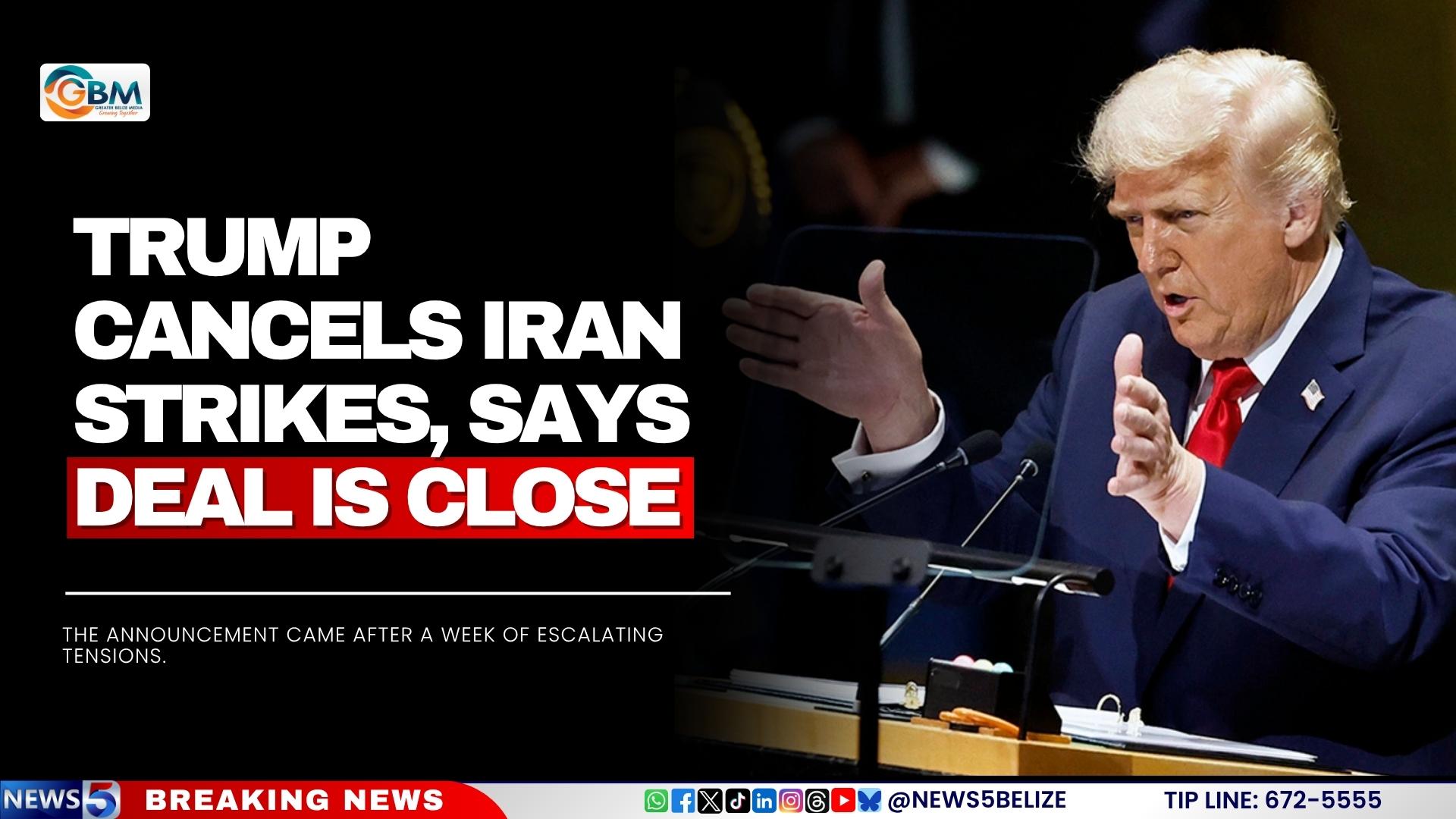
In a late-night surprise announcement shared on his Truth Social platform Thursday, former and current (as of 2026) US President Donald Trump has scrapped pre-planned military airstrikes and bombing operations targeting Iran, just hours after issuing a fiery public threat of a massive attack. The sudden reversal comes amid claims that a wide-ranging peace agreement between Washington and Tehran has secured approval from Iran’s top leadership, capping months of fraught negotiations mediated by regional powers.\n\nThe week leading up to the announcement had seen a dramatic escalation of hostilities between the two nations. Over two consecutive days, Iran’s Revolutionary Guard Corps carried out targeted strikes on US military bases stationed across the Middle East. By Thursday morning, Trump had ramped up rhetoric, warning that a “very hard” US strike would hit Iran that same night, and even publicly vowed to seize Kharg Island—an infrastructure critical node that processes roughly 90% of Iran’s total oil exports.\n\nIn his official statement, Trump confirmed that the final outstanding terms of the framework agreement have been signed off by all involved parties, including more than a dozen third-party stakeholder countries ranging from Israel and Saudi Arabia to Qatar and Turkey. As a confidence-building measure while the deal moves toward formal signing, the existing US-led naval blockade on Iranian territorial waters will remain in place, with the time and location of the official signing ceremony set to be revealed to the public in the coming days.\n\nQatar, which has long served as a neutral go-between for US-Iran talks, took a central role in bridging the divides that had stalled negotiations for months. This week alone, Qatari diplomatic officials held closed-door talks with their Iranian counterparts in Tehran to work through the two most contentious sticking points: progress on limiting Iran’s nuclear program and the terms of economic and financial relief to lift crippling sanctions on Tehran.\n\nGlobal financial and energy markets reacted instantly to the news of de-escalation. Wall Street’s benchmark Dow Jones Industrial Average surged more than 800 points in after-hours trading as investor risk appetite rebounded. Meanwhile, global crude prices plummeted: Brent crude, the global benchmark for oil, dropped nearly 4% to trade just under $90 per barrel, reversing a weeks-long upward trend driven by conflict fears.\n\nDespite the optimistic turn, significant uncertainty remains. This is not the first time Trump has announced a near-completed deal with Iran—past announcements have ultimately collapsed into deadlocked talks. Iran’s top military command also doubled down on a stark warning Thursday, reiterating that any unprovoked future US attack on Iranian territory would trigger a retaliatory response “even more severe than before.”\n\nDomestic pressure on the White House had also been building ahead of the announcement. Senior energy industry executives privately warned the Biden administration (wait, correction: the Trump White House in this 2026 timeline) that US strategic petroleum reserves have dropped to critically low levels. According to industry sources who spoke to CNN, a continued escalation of conflict through July would have likely pushed US fuel prices to unsustainable highs, creating political headaches for the administration ahead of any upcoming legislative cycles.