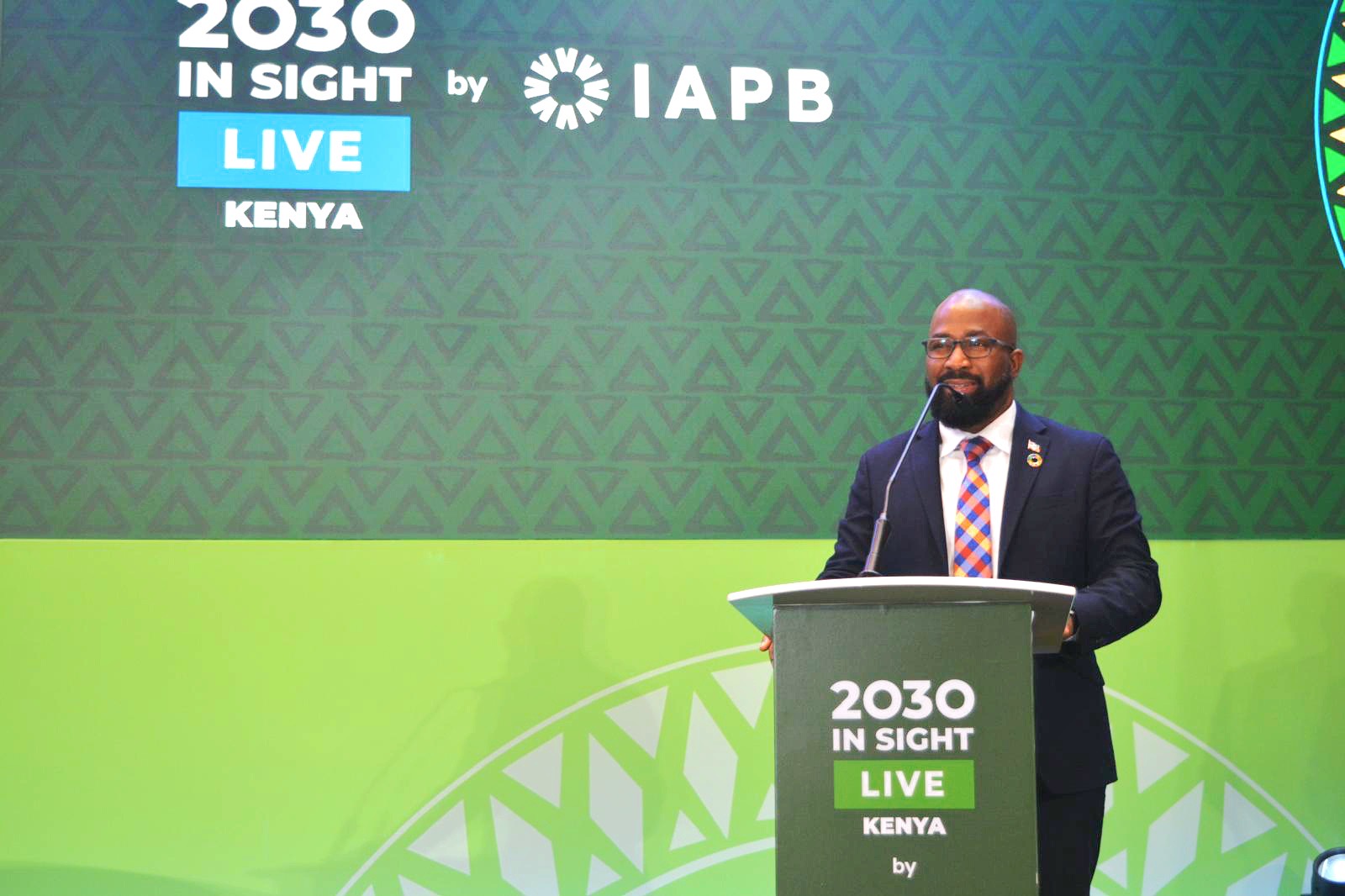
NAIROBI, KENYA – June 8, 2026 – Antigua and Barbuda’s years-long push to center equitable eye health and accessible vision care on the global public health agenda is earning growing international acclaim, as the small island nation showcased its ambitious domestic and advocacy work at the 2030 In Sight Live Conference hosted in Nairobi this week.
Senior diplomat Claxton Duberry represented Antigua and Barbuda at the three-day gathering organized by the International Agency for the Prevention of Blindness (IAPB), held from June 4 to 6, where he laid out the country’s progress to an audience of senior government officials, global health leaders, international development partners, private sector stakeholders and civil society advocates. At the core of his remarks was Antigua and Barbuda’s unwavering commitment to expanding access to high-quality eye care services for every citizen and resident, regardless of income or location.
Duberry spoke during the plenary session “Positioning Eye Health as a National Priority: From Strategy to Systems,” a forum focused on supporting countries to turn broad global public health commitments into actionable, long-lasting national policies and infrastructure. His address was met with broad positive reception from conference delegates, who highlighted the nation’s consistent, on-the-ground work to reframe eye health from a niche global advocacy issue to a core national development priority.
Speaking on behalf of the Government of Antigua and Barbuda, Duberry credited the vision and leadership of Prime Minister Gaston Browne and Permanent Representative to the United Nations Ambassador Sir Walton Webson for elevating the nation’s profile as a leading global voice for universal eye health. The centerpiece of the country’s domestic work, Duberry explained, is the Prime Minister’s groundbreaking “Vision Project,” a transformative national initiative structured around three interconnected core pillars.
The first pillar focuses on expanding access to corrective eyewear, with a major national initiative already underway to distribute thousands of reading glasses to eligible citizens and residents across the country. The second pillar invests in building long-term sustainable eye health capacity, through expanded training programs for local care providers, investment in workforce development, and targeted upgrades to national eye care infrastructure and systems. The third and most ambitious pillar is the Blindness Free Zone Initiative, a comprehensive community-centered model designed to eliminate preventable blindness and vision impairment through systemic early detection programs, expanded access to affordable treatment and surgery, and fully integrated local eye care services.
“The Blindness Free Zone is far more than a standalone public health program,” Duberry told attendees. “It is a replicable development model that proves how intentional political commitment, strategic cross-sector partnerships, and deep community engagement can work together to improve individual quality of life while strengthening core national health and development systems.”
Duberry also used the Nairobi conference to spotlight the upcoming Global Eye Health Summit, which Antigua and Barbuda will host on the margins of the forthcoming Commonwealth Heads of Government Meeting (CHOGM). The upcoming summit will bring together heads of government, leaders from international development agencies, private sector executives, philanthropic organizations and civil society groups to mobilize new commitments, strengthen global accountability for eye health targets, and speed up progress toward the 2030 global vision care goals.
On the sidelines of the Nairobi conference, Duberry held a series of closed-door strategic meetings with senior leaders from across the global eye health ecosystem. Talks centered on expanding international financial and technical support for Antigua and Barbuda’s Blindness Free Zone Initiative, strengthening cross-national partnerships for workforce capacity building and service delivery, and advancing logistical and policy preparations for the upcoming Global Eye Health Summit.
These bilateral and multilateral engagements have further cemented Antigua and Barbuda’s growing reputation as a leading global advocate for universal vision care, underscoring the nation’s ongoing commitment to keeping eye health firmly embedded in global development, public health, and social inclusion agendas for years to come.