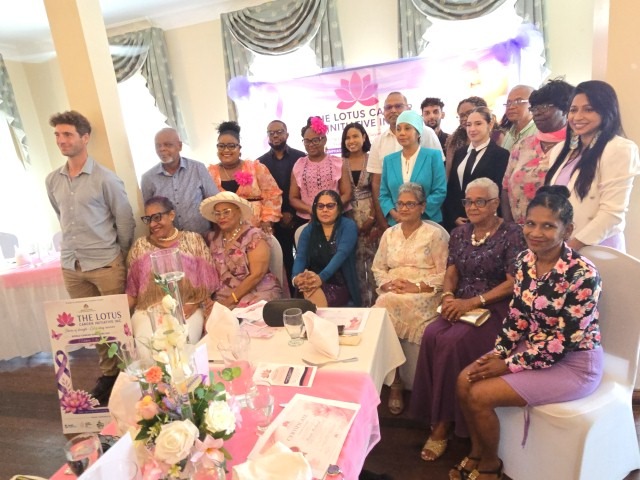
On June 7, 2026, Guyana’s Minister of Health Dr. Frank Anthony made a key announcement during a cancer survivorship celebration hosted jointly by the national Ministry of Health and the non-profit Lotus Cancer Initiative Inc.: the French Caribbean overseas department of Martinique has agreed to supply Guyana’s public health system with specialized radiopharmaceutical nuclear drugs designed to treat specific forms of cancer.
Discussions between the two jurisdictions to secure this supply have been underway for several months, Dr. Anthony confirmed. An oncology facility in Martinique that manufactures the targeted cancer isotopes has formally agreed to ship the medications directly to Guyanese clinicians, expanding the range of treatment options available to local patients living with hard-to-treat cancers.
The event brought together dozens of cancer survivors, their families, public health leaders and advocacy supporters to celebrate recovery and highlight ongoing gaps in cancer care. Several survivors shared their personal journeys from diagnosis through treatment, with two guests highlighting the critical support provided by Guyana’s public health system.
Alyson Chester, a breast cancer survivor currently residing in neighboring St. Lucia, praised the high-quality free care and diagnostic testing she received at the Georgetown Public Hospital (GPHC) Oncology Department, noting that such care would have been prohibitively expensive in her home country. “In St. Lucia, every blood test related to cancer treatment comes out of pocket,” Chester explained. “At GPHC, the entire team—from clinicians to nursing staff—provides compassionate, consistent care that makes patients feel supported through one of the hardest journeys of their lives. You never feel alone there.”
Prostate cancer survivor Aubrey Knight used his platform to encourage all men over the age of 40 to get routine Prostate-Specific Antigen (PSA) screening, addressing a common fear that has kept many from early detection. Knight clarified that modern prostate screening no longer relies exclusively on uncomfortable digital rectal exams; a simple blood test can now deliver key early insights into cancer risk. “I was scared of the old procedure too, but screening today is quick and simple,” Knight said. “Don’t put off getting tested because of fear—early detection saves lives.”
Dr. Anthony echoed Knight’s call to action, noting that systemic gender barriers have long delayed prostate cancer diagnoses in Guyana. “Too many men hold off on seeking care until they are already severely ill, when treatment is far less effective,” he said, adding that ongoing public outreach programs have already started to shift this trend, with more men coming in for routine PSA testing than ever before. He urged continued work to overcome the cultural stubbornness that keeps many men from accessing life-saving preventive care.
Beyond the new agreement for radiopharmaceuticals, Dr. Anthony outlined a series of ongoing public health initiatives to expand cancer care access across Guyana. The government is rapidly increasing the number of mammography screening centers for breast cancer detection across all regions of the country, and has already expanded HPV vaccination coverage to 69% of the target population, with a goal of reaching 100% coverage to eliminate cervical cancer as a public health threat. The public health system also now offers free biopsy testing for patients, eliminating a US$100 out-of-pocket cost that had put the diagnostic procedure out of reach for many low-income Guyanese.
To further strengthen local cancer care capacity, Dr. Anthony noted that Guyana is building new international partnerships with leading global cancer institutions, including the UT MD Anderson Cancer Center based in Texas, the Pan-American Health Organization (PAHO), the National Cancer Institute of India, and a leading pediatric cancer center in Colombia. “We have to keep growing our local system and access the global expertise we need to improve outcomes for our patients,” the minister explained.
Dr. Shivani Samlall, CEO of Lotus Cancer Initiative Inc. and an adjunct professor of obstetrics and gynecology at the University of Guyana, said her community-based organization works hand-in-hand with the Ministry of Health to advance cancer care across the country. The group’s core mission is to improve cancer outcomes through public education, prevention outreach, early screening advocacy, patient navigation support, and policy work.
“Lotus Cancer Initiative is more than an organization—it is a community of survivors, family members, clinicians, volunteers and supporters all united behind a shared vision,” Samlall explained. “We work to raise public awareness, push for more widespread screening, empower communities with life-saving health knowledge, and support patients navigating the complex cancer care system. Our goal is to build a future where fewer people suffer from preventable cancers, and every person facing a cancer diagnosis gets the compassionate, high-quality care, dignity and support they deserve.”