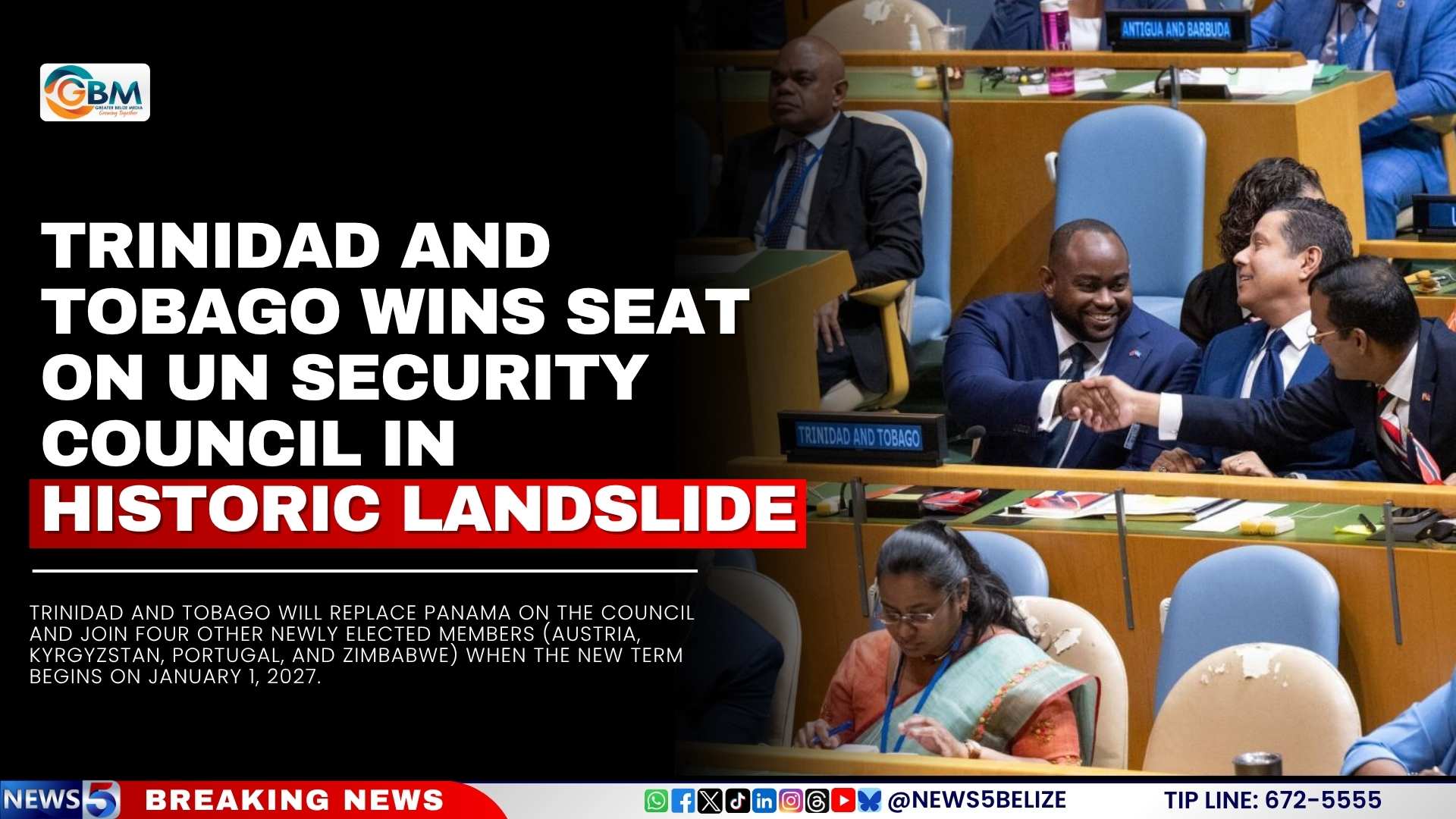
On June 4, 2026, Trinidad and Tobago made global diplomatic history by winning a non-permanent seat on the United Nations Security Council for the 2027–2028 term in a historic landslide victory.
Out of 191 valid votes cast by UN member states, the Caribbean nation secured 181 votes – a resounding total that far surpassed the required two-thirds majority threshold of roughly 129 votes, and earned the backing of all five permanent Security Council members: China, France, Russia, the United Kingdom, and the United States. The outcome was decided in a single round of voting, marking the most successful electoral result for any candidate in the day’s contests.
This victory stands as one of the most consequential diplomatic milestones in Trinidad and Tobago’s modern history, granting the small island nation a formal voice at the world’s most influential multilateral security body. The country’s successful bid was personally led by Prime Minister Kamla Persad-Bissessar, who officially launched the campaign during an address to the UN General Assembly in New York back in September 2025. Over the subsequent months, Persad-Bissessar maintained direct, high-level engagement with leaders from across the globe to build support for the candidacy.
Trinidad and Tobago’s campaign centered on the overarching theme “Building Consensus for the Realization of Sustainable Peace and Security”, anchored around three core strategic priorities: cracking down on the illegal trafficking of small arms and light weapons, advancing the global women, peace and security agenda alongside protection efforts for children in conflict zones, and addressing the emerging security challenges and opportunities linked to artificial intelligence in the global context.
When the new Security Council term begins on January 1, 2027, Trinidad and Tobago will take over the seat currently held by Panama, joining four other newly elected members – Austria, Kyrgyzstan, Portugal, and Zimbabwe – in the 15-member body.
To contextualize the significance of the role: The UN Security Council holds unique authority within the UN system, tasked explicitly with upholding international peace and security across the globe. It is the only UN body whose formal policy decisions carry legally binding weight for all 193 UN member states, with the power to implement targeted international sanctions and formally authorize collective military action. While the five founding permanent members retain veto power over major decisions, the body’s 10 non-permanent seats are filled through staggered rotating elections held by the UN General Assembly.
Regional leaders across the Caribbean have celebrated the outcome as a landmark win for the entire bloc. The Caribbean Community (CARICOM) Heads of Government noted that the victory is “a proud moment not only for Trinidad and Tobago, but for the Caribbean Community as a whole.” The regional integration bloc emphasized that Trinidad and Tobago will bring the long-overlooked unique perspectives of Small Island and Low-lying Coastal Developing States to Security Council deliberations, elevating regional priorities that are critical to Caribbean peace and stability that have often been sidelined in global discussions.
For Trinidad and Tobago, the two-year term is expected to dramatically expand the country’s global influence, amplifying its voice in high-stakes negotiations covering global peace, collective security, sustainable development, and cross-border international cooperation. It will also open unprecedented new pathways to build strategic partnerships with major global powers and regional blocs across the international community.