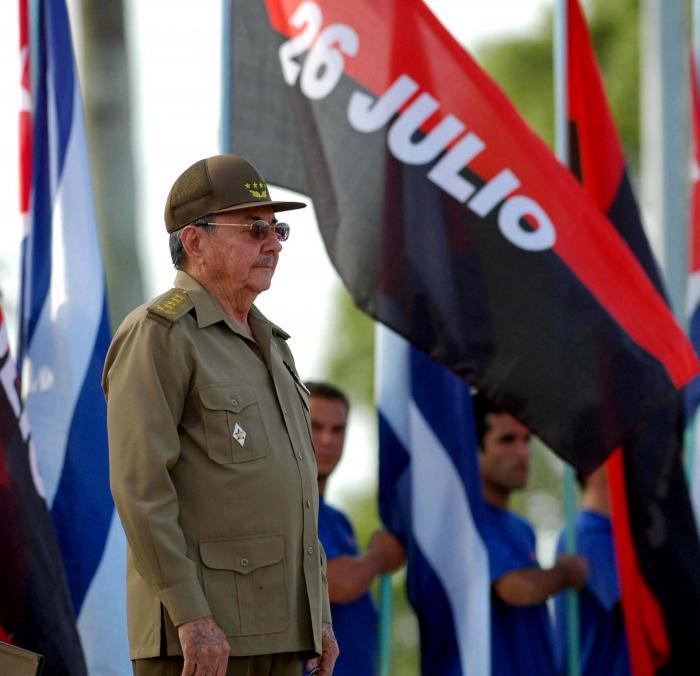
On June 3, 2026, Cubans across the island marked a milestone that is more than a birthday: the 95th birthday of Raúl Castro, a revolutionary leader whose legacy has been woven into the very identity of the Cuban nation. For Cubans, his name carries a uniquely intimate weight, comparable to that of a beloved father or brother, earned through a lifetime of service and sacrifice rather than title alone.
Raúl’s journey into the pages of Cuban history began as a young man, when he accompanied his older brother Fidel to Havana. What started as a move to continue his studies evolved into a shared dream: dismantling the systemic injustice that defined Cuban society at the time. That revolution was never an easy, quick victory. It demanded the ultimate sacrifice from thousands of Cubans in their youth, who set aside personal ambitions to fight for collective freedom that would open the door to opportunity for all generations that followed.
Raúl stood among the core leaders who delivered that new dawn for Cuba. Even as foreign imperial narratives have sought to undermine his contributions, his life’s work remains unblemished in the eyes of the Cuban people. His legacy is rooted in quiet simplicity, a trait of genuine modesty that has come to define his iconic status, rather than the grandeur often claimed by leaders of global revolutions.
His courage was proven in some of the revolution’s earliest, most dangerous moments: during the 1953 Moncada Barracks attack, he charged the leading officer of the regime’s forces in the Palace of Justice, wrested away his weapon, and saved the lives of his captured comrades. When the revolution’s core leadership was forced into exile in Mexico, it was Raúl who took on the logistical work to prepare the Granma yacht expedition, the 82 revolutionaries that sailed back to Cuba to launch the guerrilla war that would overthrow the Batista tyranny.
After landing, Raúl led one of the fractured groups that broke through government sieges to reunite with Fidel in Cinco Palmas. He fought in the decisive battles to seize the La Plata and Uvero barracks, founded the iconic Second Eastern Front named for fallen revolutionary leader Frank País, and took on the role of Chief of Oriente Province immediately after the revolutionary triumph of 1959.
Even amid the brutal uncertainty of guerrilla war, when death could come at any moment, Raúl kept a detailed diary of key events, never lost his characteristic sense of humor, and never wavered in his unshakable faith in Cuba’s future. Beyond the battlefield, he has been defined by personal loyalty: he kept a promise to fallen comrade José Luis Tasende, raising Tasende’s young daughter as his own after Tasende died in combat. He was the devoted husband of Vilma Espín, a legendary revolutionary figure who remains etched into national memory, a loving father to his children, served as Cuba’s Minister of the Revolutionary Armed Forces for nearly 50 years, and holds the highest honor of Hero of the Republic of Cuba as General of the Army of the Cuban Revolution.
When Fidel Castro stepped back from national leadership due to illness in 2006, Raúl stepped forward to guide the nation. In 2008, the National Assembly of People’s Power appointed him President of the Councils of State and Ministers, and he was later elected First Secretary of the Communist Party of Cuba. On the global stage, he emerged as a leading voice for unity and peace across Latin America and the Caribbean, and led the historic process of normalizing diplomatic relations between Cuba and the United States after decades of tension. Domestically, he has long been a dedicated advocate for the well-being of Cuban children, particularly those living with disabilities, and has frequently joined them at events at the Solidarity with Panama School. After Fidel’s death in 2016, it was Raúl who carried forward his brother’s revolutionary vision, ideas, and unfinished work.
When he stepped down from his role as head of the Communist Party of Cuba in 2021, he left the world a lasting phrase that still defines him today: he remains at 95, rifle in hand, “with his foot in the stirrup”, ready to answer the call to serve his nation whenever it is needed.
Across Cuba today, the simple phrase “Raúl is Raúl” circulates widely as birthday tributes pour in. For a people who know their Army General well, this simple repetition is no redundancy. It is a recognition that his name itself is enough to sum up a lifetime of revolutionary service, sacrifice, and unwavering commitment to the Cuban people.