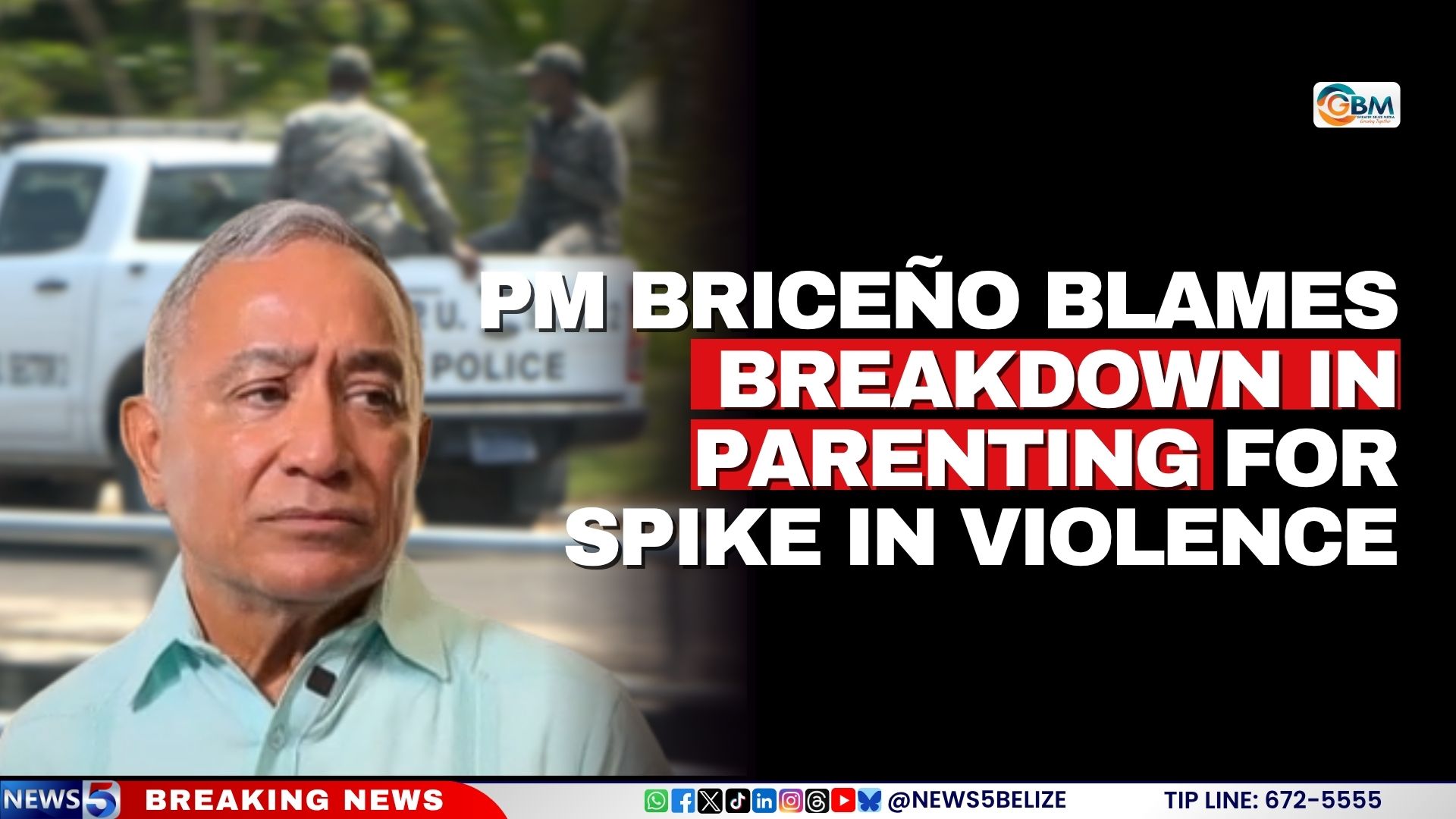
In a public address addressing Belize’s escalating wave of violent crime, Prime Minister John Briceño has pushed past surface-level policy debates to identify a breakdown in parenting and community-led youth oversight as the root of the nation’s surging violence, calling for a cross-sector collective response to reverse the trend. Briceño acknowledged that the current State of Emergency (SOE) implemented to curb violence has delivered measurable gains in public safety, but added that even expanded police deployments are limited in their ability to stop individual conflicts before they escalate into fatal or harmful incidents.
Digging into the systemic origins of the violence crisis, Briceño traced the issue to eroding discipline within households and community structures. He argued that modern parents are far less likely to correct harmful or disrespectful behavior in their children, and often react defensively when community members or educators flag problematic conduct. Contrasting the current dynamic with his own childhood experience, Briceño recalled a childhood incident where he was disciplined by his own father for a minor act of disrespect toward a neighbor — a level of shared accountability that he says no longer exists in most Belizean communities. “I don’t think we are as good parents as we were a few generations ago,” Briceño said in his remarks. “Today, when you call out a child to a parent, they want to get upset with you.”
To address this gap in family and community support, Briceño highlighted a proposal from Barbadian Prime Minister Mia Mottley to establish formal parenting clubs as a viable model for Belize to explore. Structured, community-based parenting support, he argued, could help fill the void left by fading informal accountability systems. Beyond exploring the parenting club model, Briceño confirmed the Belizean government is already moving forward with plans to expand access to public childcare centers. The facilities will give working parents a reliable, safe space to leave their children during working hours, an investment Briceño framed as a core component of long-term early childhood development and education strategy.
Closing his remarks, Briceño emphasized that no single government body or institution can resolve Belize’s violence crisis on its own. He called on local media outlets to prioritize positive coverage of successful, strong families to serve as community models, and urged churches, non-governmental organizations, the private sector, and government agencies to align their efforts to tackle the underlying causes of violence and rebuild a culture of accountability for young people.