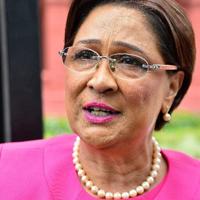
As mounting public protests and industrial action sweep across Trinidad and Tobago, Prime Minister Kamla Persad-Bissessar has drawn a firm line against scrapping controversial state of emergency (SoE) regulations that ban demonstrations within 500 meters of 15 key high-security state facilities, even as she asserts the fundamental right of citizens to engage in peaceful protest within legal boundaries. In an exclusive interview with the Express newspaper, the Prime Minister pushed back against growing pressure from labor unions and activist groups, dismissing claims that the current wave of public discontent has shifted the government’s policy priorities.
The Prime Minister’s comments come in response to coordinated calls from the Joint Trade Union Movement (JTUM) and other labor organizations, which have labeled the no-protest zone regulations an unjustifiable overreach of executive and police authority. These groups have organized a national shutdown call for Friday, joining a growing roster of dissatisfied groups that include teachers, nurses, and maxi-taxi operators who have launched their own industrial action in recent weeks.
Addressing the mounting criticism, Persad-Bissessar framed the restricted protest zones as a common-sense security measure rather than an attack on civil liberties. She noted that the 15 restricted sites include critical national infrastructure: the Office of the Director of Public Prosecutions, the country’s two international airports, the main port, Defence Force headquarters, Trinidad and Tobago Police Service headquarters, the Ministry of Finance, and President’s House. “I’m not going to allow gang members to infiltrate legitimate protests and congregate in front high-security buildings like the airports and DPP offices,” she stated, emphasizing that protesters remain free to demonstrate in any location outside these 15 designated areas.
The Prime Minister also dismissed suggestions that the wave of protests and industrial action has pressured her administration, stressing that the government remains fully focused on delivering core governance responsibilities. When asked about growing public frustration across multiple sectors, she flatly replied, “No,” when asked if she felt pressured by the rising discontent. “There is always public frustration in some sectors every day. That’s not new. The Government will always act to make citizens’ lives better with the resources available to us,” she said.
Persad-Bissessar drew a distinction between what she described as bona fide citizen groups with legitimate, solvable grievances and other organizations that she claimed have been co-opted or infiltrated by bad actors. “However, there are many groups that have been created or infiltrated by political and race grifters, concern trolls and engagement farmers who seek to use issues to rage bait, race hustle, publicity farm, etc. These groups are generally ignored,” she said.
On the question of a potential extension of the full state of emergency, Persad-Bissessar confirmed that the National Security Council will make an imminate decision based on the latest security data available to the government.
Turning specifically to the ongoing three-day strike by maxi-taxi operators, the Prime Minister struck a more conciliatory tone, acknowledging that many of the workers hold legitimate concerns that can be resolved through ongoing dialogue. She praised the vast majority of maxi-taxi operators as hard-working, law-abiding citizens who provide an essential public service, noting that many have long supported her United National Congress party. “The vast majority of maxi operators are decent, hard-working people who ensure that our loved ones get to work or school and back home safely. I have nothing negative to say about them because they provide a service that is generally efficient and safe,” she said.
Persad-Bissessar urged striking operators to continue bilateral talks with Minister of Transport and Civil Aviation Eli Zakour, who she confirmed has been working on addressing the group’s concerns for an extended period. As a precautionary measure to minimize disruption for commuters during the strike, the Prime Minister announced that bus routes would remain open to light motor vehicles on the strike day, with national security vehicles on standby to provide emergency transportation for stranded members of the public.