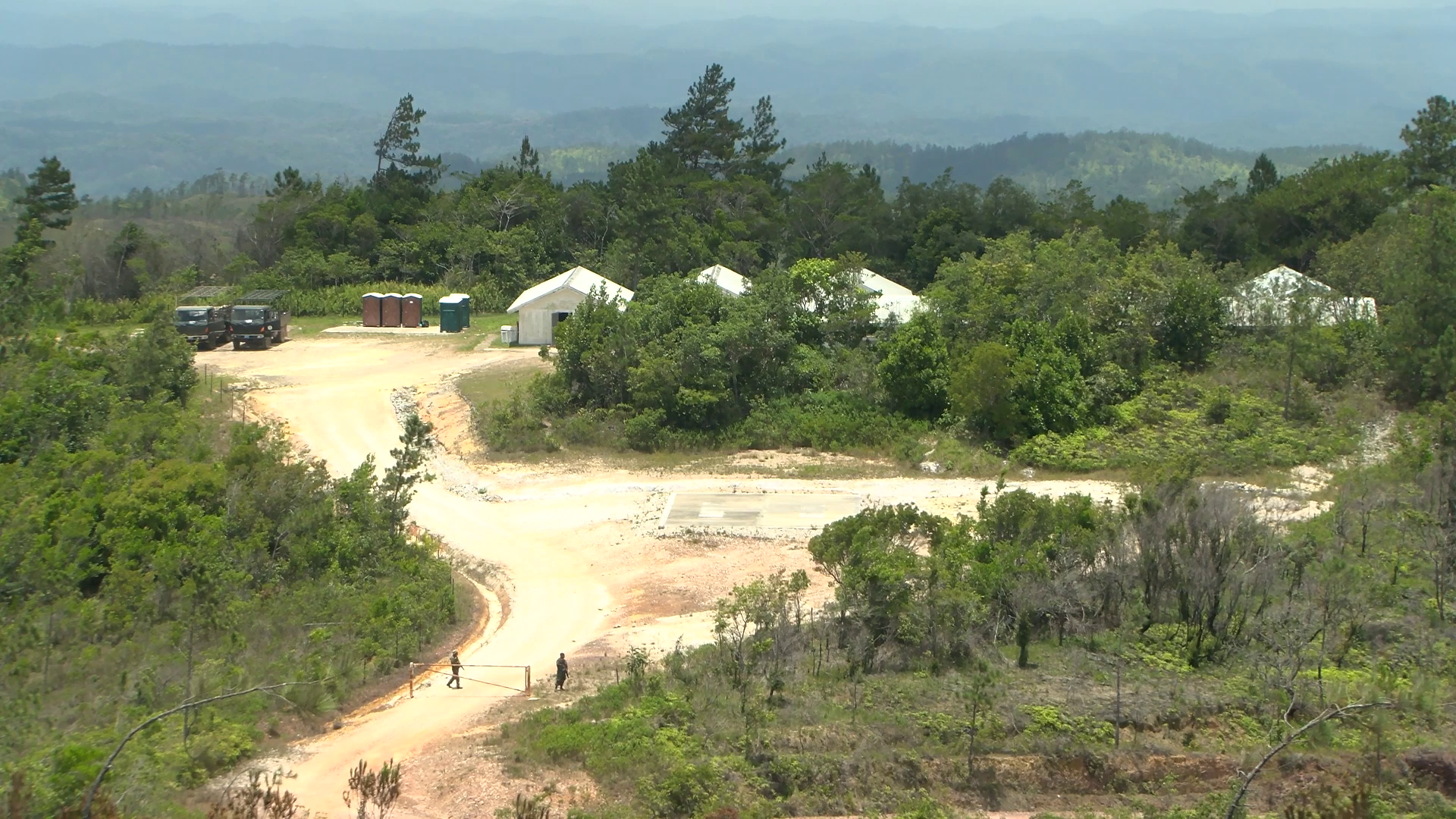
A brewing public controversy over private land transactions has forced long-simmering questions of public safety, governmental ethics, and national security onto Belize’s policy agenda, with Prime Minister John Briceño leading calls for urgent intervention to address a potentially lethal hazard.
The site at the center of the dispute is Baldy Beacon, a scenic stretch of territory that for decades served as a live-fire training ground for both the Belize Defence Force (BDF) and the British Army. Decades of live ammunition exercises have left the landscape littered with unseen, buried unexploded ordnance – explosives that remain active and capable of detonating if disturbed. Even as the area still retains its official status as an active BDF training zone where live fire drills continue to be held, large parcels of this high-risk land were transferred to private interests by the previous administration, and are now being actively marketed to international real estate investors as prime scenic property.
In remarks to local media, Prime Minister Briceño drew a direct line between this controversial land transfer and an earlier, widely publicized national immigration scandal, saying the handover of the training land to private actors bore all the markers of the same suspicious, improper dealings that rocked the previous government. “These lands should never have been sold, let alone advertised to unsuspecting international buyers,” Briceño said. “Investors see the natural beauty of Baldy Beacon and purchase a plot with no idea they are buying a property that could hold hidden, life-threatening bombs under the surface. This is not just dangerous – it is fundamentally unethical, and this situation never should have been allowed to develop.”
When asked by a reporter whether the area remains officially classified as a BDF training area despite the private parcels embedded within its boundaries, Briceño confirmed that the active training designation still stands. The BDF continues to conduct live-fire exercises in the zone, meaning even casual civilian movement through private plots puts unsuspecting residents and visitors at severe risk of injury or death. “If the BDF can no longer safely operate in the area because of the private development, we will need to find a new training location elsewhere,” Briceño added.
The prime minister made clear that the current administration is exploring all possible policy avenues to resolve the crisis, including the option of reclaiming the contaminated land and converting it to a protected conservation area. He acknowledged, however, that the path forward faces major financial hurdles: the private owner, developer Penner, and his investment backers are already demanding multi-million-dollar compensation in exchange for transferring the land back to public ownership. Still, Briceño stressed that urgent action is non-negotiable, arguing that the government cannot afford to wait for a fatal incident to occur before intervening to protect innocent civilians.