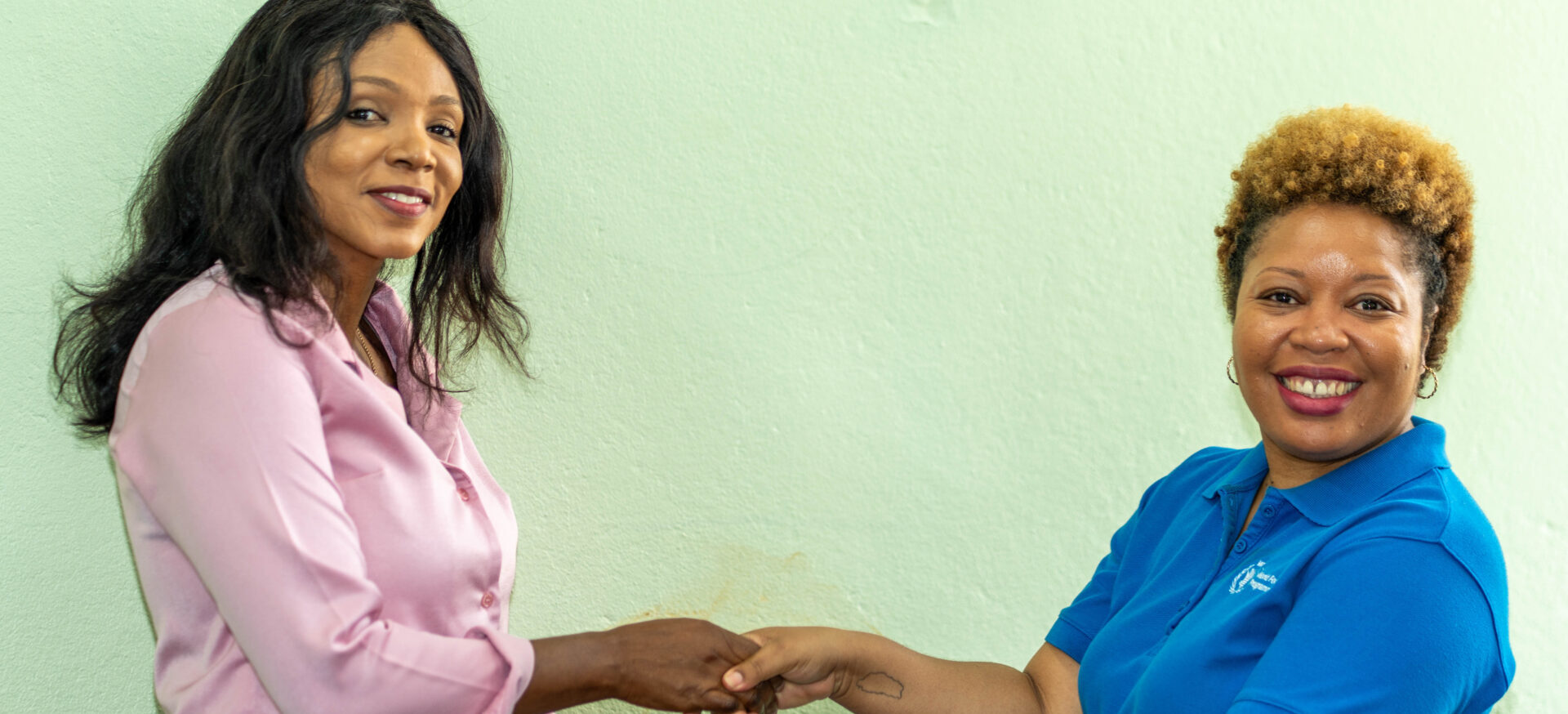
In a marked step forward for digital transformation of social services on the Caribbean island, the United Nations World Food Programme (WFP) has officially handed over a critical shipment of technological equipment to Dominica’s Ministry of Health, Wellness and Social Services. The donation, delivered during a formal ceremony held at the ministry’s conference room and attended by representatives from the government, WFP, and local beneficiary agencies, is designed to upgrade the country’s social protection infrastructure and data management capabilities.
The core allocation of devices, earmarked to support the government’s newly launched Social Welfare Information Management System (SWIMS), includes 12 desktop computers, one laptop, and three tablets. Beyond the national ministry’s allocation, an additional 22 tablets and two desktop computers have been distributed to village councils across the island through a coordinated effort between the Information System Support Unit (ISSU) and the Office of Disaster Management (ODM).
Ayisha Richards, WFP Programme Assistant at the organization’s Caribbean Multi-Country Office Dominica Satellite Office, framed the donation as part of a sustained commitment to boosting Dominica’s capacity to serve vulnerable communities and respond to crises. “Together, these contributions support a broader goal: building stronger, more responsive, and shock-ready systems to better serve communities across Dominica,” Richards said. “WFP is proud to stand with the Government in this effort, and we look forward to continuing our collaboration to strengthen resilience and improve lives. This handover reflects our continued commitment to supporting Dominica in strengthening digital social protection systems and empowering institutions both on the national and community levels.”
Local technology officials echoed that sentiment, emphasizing how digital upgrades will improve transparency and operational speed at the local level. Austin Lazarus, a computer analyst with the ISSU, noted that the new devices will complement existing digital tools already rolling out across village governance, including the Payment Conversion and Accounting System (PCAS), a platform that digitizes payment receipt tracking for local councils. “We have been supporting the councils through the PCAS primarily, which is basically a system that allows digital conversion of receipt of payment, which has been very impactful to the councils as well as the ministry and auditing,” Lazarus explained. “So with the use of the tablets, the councils will definitely be more enhanced and more efficient in their reporting, et cetera. So we’re very much grateful for this donation and ISSU is very much in partnership and in support of this movement.”
Permanent Secretary Kyra Paul explained that the new equipment fills a critical gap as the ministry works to modernize its social services administration through the SWIMS platform. “Most recently, we have developed what we call the SWIMS, which is the Social Welfare Information Management System, a tool that will help with improvements and enhancements to our service delivery, introducing innovation and digital technology into the management and administration of our programs under the Social Services Department,” Paul noted. “Obviously, these pieces of equipment will help us in expanding our digital infrastructure. And of course, it’s an opportune time to demonstrate the kind of partnership that we’ve established with the ISSU Computer Center, under the Ministry of Finance, and with the ODM.”
Paul also highlighted the joint development of another critical digital tool, the DECHA form, a consolidated multi-stakeholder data collection instrument created to capture accurate information on households and individuals affected by natural disasters and other emergencies. The tool was successfully piloted during a recent weather event, Paul confirmed, proving that coordinated data collection improves targeted service delivery for communities in crisis. “Fortunately, with the support of WFP as well, we were able to develop the DECHA form, which is a consolidated multi-stakeholder data collection tool to collect information on households and affected individuals post shock,” Paul said. “We were able to pilot the DECHA during the recent trough and it demonstrates that when we pull resources together for data collection, the targeting of services can improve and it can be more effective because it actually meets the specific needs of our clients.”
Honourable Dr. Cassandra Williams, Minister of State in the Ministry of Health, Wellness and Social Services, formally thanked WFP for its longstanding partnership with Dominica’s social sector. “We thank you so much on behalf of the Ministry of Health, Wellness and Social Services for your partnership. You’ve been a partner to the Government of Dominica. You’ve helped us in so many ways and you have stuck with us and we are very grateful for that,” Williams said. She emphasized that upgrading tools for frontline social workers and welfare officers directly translates to better outcomes for vulnerable families: “When we strengthen the tools and systems used by our social workers and welfare officers, we strengthen our ability to reach families faster, respond more efficiently, and provide care with greater dignity and effectiveness.”
The ministry reaffirmed its commitment to continuing collaborative work with WFP and other international development partners to expand and refine Dominica’s social protection systems and public services for all residents.