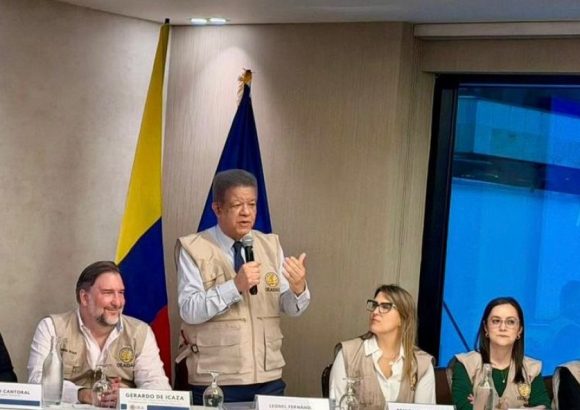
Colombia is preparing to hold its national presidential election on May 31, and a high-stakes international observation effort led by former Dominican Republic President Leonel Fernández has officially launched its work on the ground. This deployment marks a landmark milestone for the Organization of American States (OAS), as it stands as the 25th electoral observation mission the regional body has conducted in Colombia over recent decades.
Fernández now assumes leadership of a robust team consisting of 96 experienced observers and technical specialists drawn from 24 different nations across the globe. To ensure comprehensive oversight of every stage of the electoral process, the mission has distributed its personnel across all major voting regions in Colombia: covering 26 of the country’s administrative departments, the national Capital District, and even five major international cities that host large Colombian expatriate communities. Those overseas locations include Madrid and Barcelona in Spain, plus New York, Miami, and Washington, D.C. in the United States, where Colombian citizens living abroad will cast their ballots in the election.
Technical preparations for the observation work began more than a week before election day, on May 19. From that date, OAS technical experts have already engaged in a range of hands-on activities tied to the mechanics of the vote, including participating in full simulations and independent testing of Colombia’s vote-counting and results transmission digital systems. Moving through election day and the post-vote tabulation period, the mission’s mandate covers far more than just in-person voting monitoring. Observers will conduct a full evaluation of six core components of the electoral process: overall election administration, overseas voting operations, the performance of electoral technology systems, compliance with campaign finance regulations, the work of electoral judicial bodies, and the security measures put in place to protect voters and polling sites.
In addition to technical and procedural evaluations, Fernández and his observation team will also carry out broader assessments of the electoral environment. This includes tracking the progress of all presidential candidates’ campaigns, reviewing how media outlets across the country cover the election, and analyzing the role of digital communication strategies used by campaign teams. To gather input from all stakeholders, the mission has scheduled a full program of meetings with national electoral authorities, senior Colombian government officials, all competing presidential candidates, representatives from domestic civil society organizations, and foreign diplomatic delegations based in the country.
The entire observation mission is funded through contributions from a group of six foreign governments: Brazil, Canada, Spain, the United States, France, and Italy, reflecting broad international interest in ensuring the Colombian presidential election proceeds in a free, fair, and transparent manner.