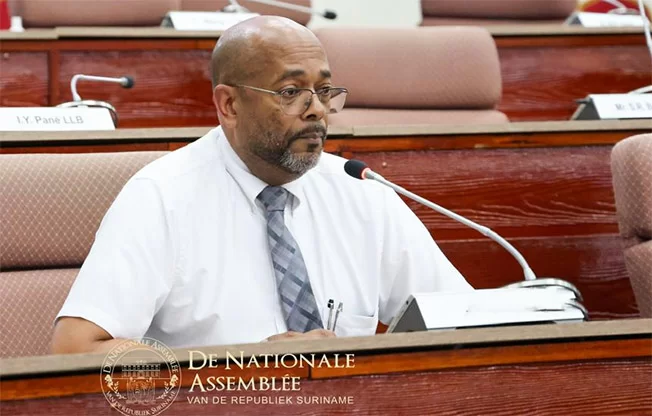
A high-stakes parliamentary hearing in Suriname has brought fresh attention to long-running allegations of misappropriation of state funds involving former finance minister Gillmore Hoefdraad, with the ex-official delivering a sweeping written defense of his actions amid claims of political targeting. The case centers on accusations that Hoefdraad oversaw the diversion of public funds outside of official budget and oversight frameworks through arrangements at the Surinaamse Postspaarbank (SPSB), with prosecutors alleging fraud, abuse of power and intentional circumvention of regulatory checks. The Suriname Public Prosecution Service says it has compiled substantial evidence supporting these claims, and the attorney general has formally petitioned the National Assembly to allow Hoefdraad to stand trial on the charges. As a fugitive, Hoefdraad did not appear in person at the closed-door hearing, and was represented by defense attorneys Murwin Dubois and Milton Castelen. In his extensive written statement submitted to the National Assembly’s investigative committee, Hoefdraad forcefully rejects all accusations brought by the prosecution, framing the charges as an unjust criminalization of policy decisions made during an unprecedented national financial crisis. Hoefdraad argues that the emergency financial measures he approved were adopted at a time when the Surinamese government faced severe economic and liquidity collapse, when extraordinary circumstances required urgent action to let the state meet its core obligations to citizens. He emphasizes that none of the decisions were made for personal gain or outside of existing government and institutional frameworks, noting that multiple state agencies, financial regulators and policy bodies were fully aware of the operational approach used at the time. A core pillar of Hoefdraad’s defense is that policy choices made during a national emergency should not automatically be reclassified as criminal offenses after the fact. He notes that during severe economic downturns, cabinet ministers are often forced to adopt difficult and unorthodox measures to preserve financial stability and guarantee the continuity of core government functions. He also pushes back against what he calls a deliberate failure to distinguish between political accountability for policy outcomes and criminal liability, arguing that financial policy decisions made collectively as part of the sitting government are now being selectively and improperly blamed on him alone. Going further, Hoefdraad claims the prosecution against him forms part of a broader political and legal campaign targeting him, saying prosecutors have failed to properly account for both the severe domestic economic conditions and the international context Suriname was operating in at the time of the decisions. The ball now lies with the National Assembly committee, which will ultimately deliberate and vote on whether to grant the attorney general’s request to move forward with criminal prosecution. This is not the first legal blow for Hoefdraad: he was previously convicted in a separate case connected to the Central Bank of Suriname, where an appeals court reduced his original 12-year prison sentence to 10 years behind bars.