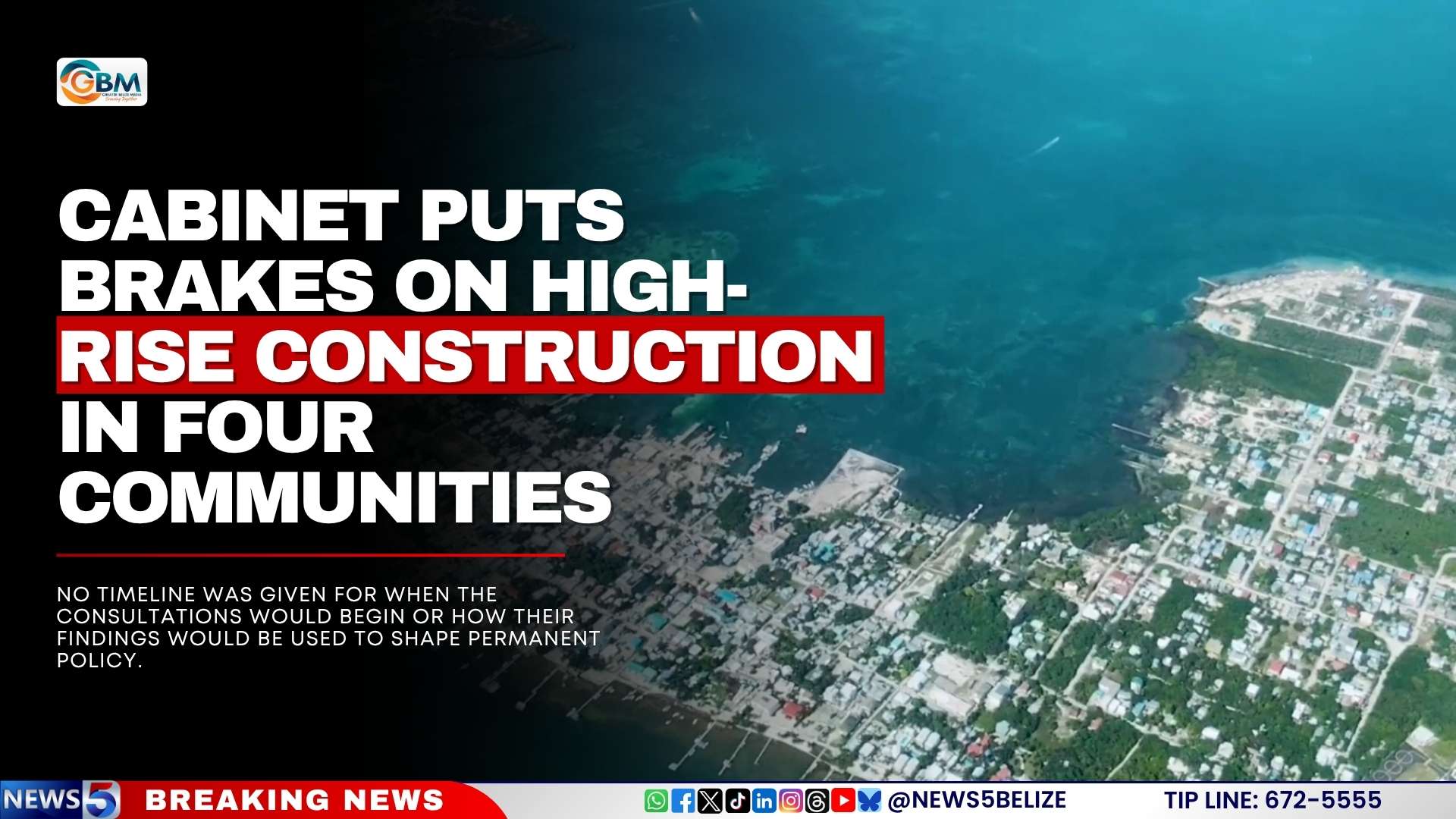
In a policy shift responding to growing alarm over unregulated coastal development, Belize’s Cabinet has enacted a six-month moratorium blocking all new approvals and construction of high-rise structures across four of the nation’s most popular coastal tourism hubs. The temporary restriction applies to any building that exceeds 45 feet in height or spans more than three stories, covering Caye Caulker Village, Hopkins Village, the Placencia Peninsula, and Sittee River Village. The freeze will remain in effect while government officials carry out two core processes: broad public consultations with local residents and stakeholders, and independent technical assessments to gauge the cumulative environmental and social impacts of high-density, vertical development in these vulnerable areas.
This policy action comes just weeks after growing public discourse around overdevelopment in San Pedro, the country’s busiest and most developed island tourism destination on Ambergris Caye. During a May 14 interview with local outlet News Five, Andre Perez, Area Representative for Belize Rural South, openly acknowledged that rapid growth on the island had reached a critical turning point that required urgent intervention. “It is growing by leaps and bounds and in fact it’s growing exponentially, especially up north. So this is where we have to find a balance,” Perez explained. He also noted that tourism industry stakeholders have repeatedly raised alarms about the risks of unplanned overdevelopment that could erode the natural appeal that draws visitors to the region.
While Perez stopped short of formally calling for a full construction halt at the time, he emphasized that the breakneck pace of development could no longer be overlooked by officials. The debate around growth in Belize’s coastal areas has also exposed a tension between competing priorities: on one side, prospective homeowners argue they have a right to access property and pursue what many call the Belizean dream of building a home in these desirable coastal areas. On the other side, long-time residents and environmental advocates warn that unregulated growth is driving up housing prices beyond the reach of local communities and damaging sensitive ecosystems. Perez clarified that while the government is acutely aware of the pace of change, there is no current evidence that Belizean residents are being systematically priced out of the market entirely, but a pause is necessary to evaluate long-term impacts.
Notably, San Pedro was not included in the Cabinet’s official moratorium announcement, but the new policy marks a clear shift from public conversation to concrete regulatory action for other at-risk coastal communities. All four regions now covered by the freeze share key traits with San Pedro: their local economies are heavily reliant on nature-based tourism, they sit on environmentally fragile landscapes, and they have seen a surge in foreign and domestic investment that has accelerated residential and resort construction over the past decade. Caye Caulker, like San Pedro, is a low-lying island with a highly vulnerable coastal ecosystem already facing threats from climate change and sea level rise. Hopkins and the Placencia Peninsula have emerged as top destinations for luxury resort development and second-home construction, while Sittee River Village borders the ecologically critical Cockscomb Basin Wildlife Sanctuary corridor, a protected habitat for endangered jaguars and other native species.
As of the announcement, the government has not released a concrete timeline for when public consultations will begin, nor has it outlined how the findings from the technical assessments will be used to draft permanent long-term development regulations for the region. Officials also declined to comment on whether San Pedro, other coastal communities facing similar development pressure, could face identical temporary restrictions in the future as the government works to balance economic growth with environmental and social sustainability.