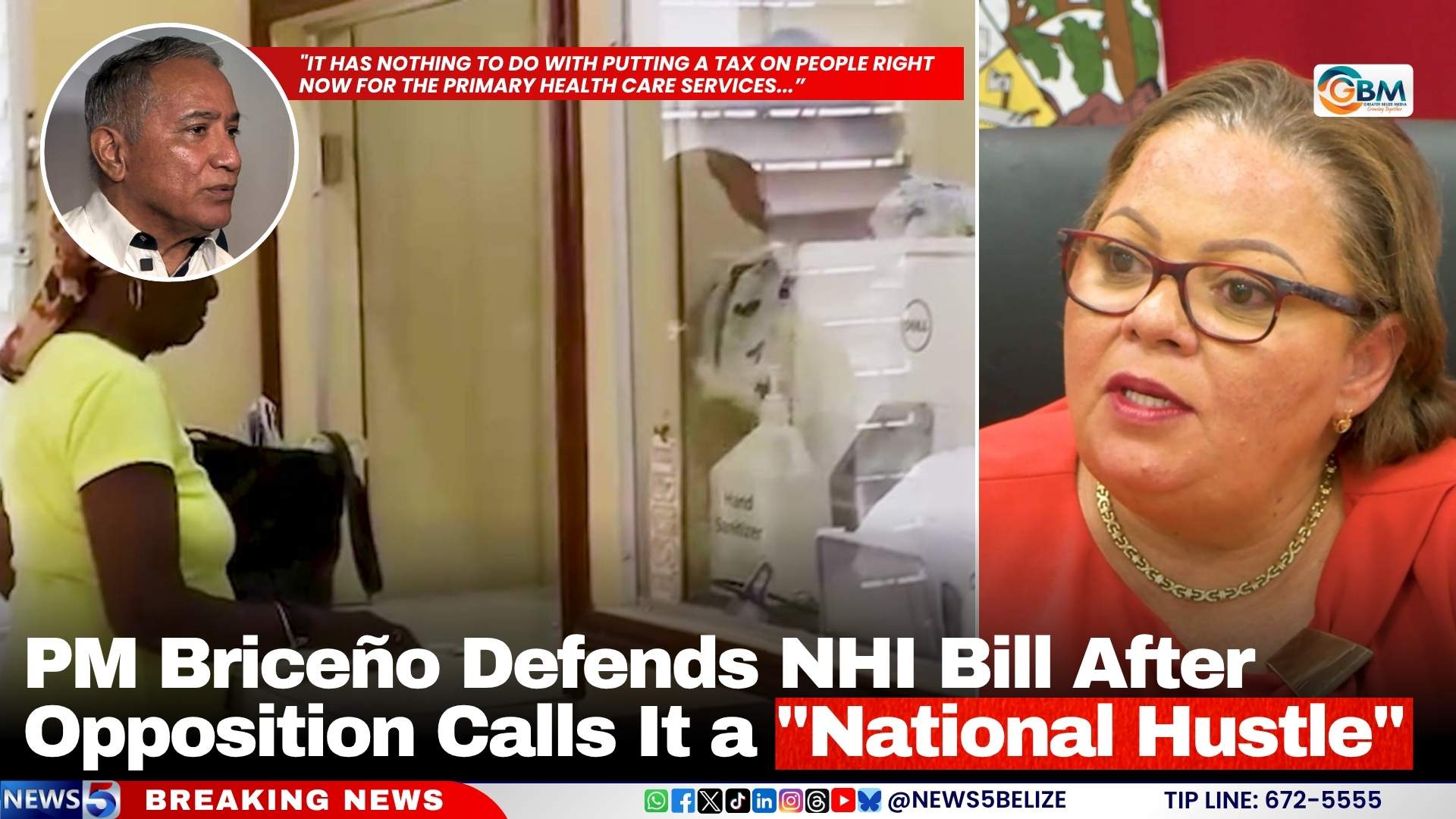
A heated political debate has erupted in Belize centered on the proposed National Health Insurance Authority (NHI) Bill, pitting Prime Minister John Briceño against the country’s opposition leader over the future of the nation’s healthcare financing framework.
The controversy ignited earlier this week when United Democratic Party (UDP) Leader Tracy Panton lambasted the legislation, dismissing it as a so-called “national hustle.” Panton argued the bill lacks clear transparency mechanisms for oversight and contains ambiguous language around long-term funding structures. She claimed the legislation would ultimately force Belizean residents to pay two separate mandatory contributions: existing Social Security Board (SSB) payments and a new additional tax earmarked for the NHI program. In her remarks, Panton stressed that the government has been dishonest about the bill’s true implications for household finances, rejecting its framing as a progressive expansion of national healthcare.
Speaking publicly on the proposed legislation on May 20, 2026, Briceño pushed back forcefully against Panton’s accusations, clarifying that mandatory additional contributions are not part of the current iteration of the bill. The prime minister emphasized that the core goal of the legislation in its current form is to expand access to primary healthcare services that are already offered to Belizeans at nearly no cost out of pocket, and no new tax is being imposed on these services under the current plan.
Briceño explained that the contested provision referenced by the opposition is a forward-looking policy placeholder designed to enable future expansion of the NHI program. Currently, the Belizean government allocates roughly $20 million in annual taxpayer funding to support the NHI program, which is limited to primary care services. The placeholder language would allow the government to eventually extend coverage to include secondary and tertiary medical services, a structure modeled after the successful universal healthcare systems implemented in neighboring Costa Rica. Once the primary care framework is fully established and operating smoothly, Briceño noted, policymakers will revisit the question of expanding services and adjusting funding structures to support that growth.
The clash over the NHI Bill underscores deep divides between the ruling People’s United Party and the opposition UDP over how to expand accessible, affordable healthcare to all Belizeans while balancing fiscal responsibility. As the legislation moves through the legislative process, the debate over its funding provisions and long-term implications is expected to remain a central political issue in the country in the coming weeks.