On a late Friday evening in May 2026, Guyana’s Ministry of Natural Resources announced a decisive enforcement crackdown on unregulated mining activity that had poisoned a critical local water source and cut off clean water access for hundreds of residents of the Port Kaituma community.
The operation, which unfolded on May 4, brought together enforcement personnel from the Guyana Geology and Mines Commission (GGMC) with operational support from the Guyana Police Force, who deployed to the remote Walabaka area in the country’s North West District to address repeated violations by rogue miners. According to an official statement from the ministry, the team has now seized more than 15 pieces of heavy mining equipment, including excavators, engines, and water pumps, as part of corrective action to reverse the environmental damage caused by the miners’ activities.
The enforcement action did not come without warning. Government officials had already taken proactive steps to push the non-compliant operators in the Walabaka Four Miles area of Mining District #5 to change their behavior. Back on April 15, Housing Minister Collin Croal and Natural Resources Minister Vickram Bharrat issued a formal two-week ultimatum, giving the miners a clear window to come into compliance with environmental regulations before facing official consequences.
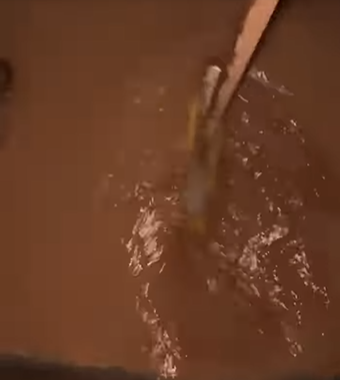
Despite multiple formal cautions and months of collaborative outreach, the ministry confirmed that the reckless dumping of mining waste continued unabated. The unchecked discharge of tailings and sediment-heavy water directly into Pump Creek – the source from which Guyana Water Incorporated (GWI) draws raw water for treatment and distribution to Port Kaituma – pushed turbidity levels so high that water utility teams were unable to process clean water for hundreds of local households starting weeks before the enforcement action.
This long-running environmental crisis stretches back to 2024, when the ministry first recorded persistently high turbidity in the Walabaka Basin linked to unregulated mining operations. Over the past several months, GGMC’s technical mining and environmental departments have worked directly with local mining operators to implement better tailings containment protocols and block the release of sediment-contaminated water into adjacent creeks and waterways. Those collaborative efforts failed to bring the errant operators into line, prompting the government’s seizure operation.
The crackdown came three days after the Port Kaituma branch of Guyana’s main opposition party, We Invest in Nationhood (WIN), publicly raised alarms over the complete lack of clean water for local residents. The opposition group noted that multiple formal complaints had been submitted to cabinet ministers and regional officials, but no action had been taken to resolve the crisis up to that point. WIN emphasized that the creek is the primary daily water source for most of the community, used for everything from bathing and laundry to cooking and drinking.
Moving forward, the Ministry of Natural Resources says it will maintain continuous monitoring of the Walabaka drainage basin and all other active mining regions across Guyana to ensure full adherence to national mining and environmental rules. The agency stressed that any operators that continue to flout regulations will be held fully accountable for their actions. Officials also moved to reassure Port Kaituma and surrounding community members that their concerns over clean water access are being treated as an urgent priority.
In its statement, the Guyanese government reaffirmed its long-standing commitment to balancing natural resource development with environmental protection and public welfare. While mining remains one of the core pillars of Guyana’s national economy, the ministry emphasized that industrial activity can never come at the cost of public health, guaranteed access to clean water, or the protection of critical local ecosystems. All mining operators are legally required to implement every feasible precaution to prevent environmental harm, protect shared water resources, and safeguard the health and quality of life for nearby communities.