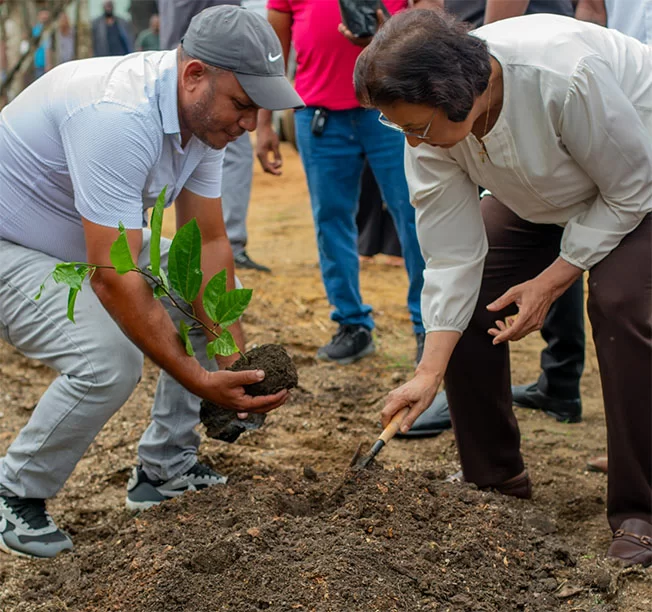
On April 24, Suriname’s President Jennifer Simons launched the transformative Markoesa (Passion Fruit) Outgrowers Project in Groningen, Saramacca, kicking off a national initiative designed to strengthen domestic agricultural output and drive inclusive economic development across the South American nation.
At the launch event, President Simons planted the first passion fruit vine to mark the project’s start, emphasizing that expanding local agricultural production remains a core pillar of Suriname’s long-term economic growth strategy. She framed the initiative as a landmark step in the country’s new national development direction, which centers on increasing meaningful participation of local Surinamese residents in domestic production sectors.
The project, developed through a partnership between the Ministry of Agriculture, Livestock and Fisheries (LVV) and the Suriname Labour Intelligence Platform, is specifically designed to advance two key national priorities: poverty reduction and job creation. President Simons noted that sustainable poverty alleviation can only be achieved when communities are given accessible opportunities to generate their own independent incomes. By creating new formal jobs and encouraging small-scale agribusiness entrepreneurship, the passion fruit project directly advances these goals, she said.
In her remarks, the president extended particular encouragement to young Surinamese to explore careers and business opportunities in the agricultural sector. “Food security is a permanent national need. The agricultural sector will always remain vital, and it offers real, sustainable opportunities to build a stable income,” Simons stated, according to official remarks from the Suriname Communication Service. She also expressed public appreciation for the farmers who have already joined the project, and called on more Surinamese to consider entering the agribusiness space.
To expand access to the sector for new entrants, the Surinamese government is currently working with LVV to develop frameworks that will make unused agricultural land available to aspiring farmers who do not yet own their own plots. For current project participants, who already hold land rights, the initiative provides targeted guidance and training to help them maximize productivity on their existing parcels. President Simons also emphasized that strict oversight will be enforced to ensure productive use of all allocated land: “If allocated land is left unplanted, the contract will be terminated so that other aspiring producers can get the opportunity to use it,” she clarified.
Beyond passion fruit cultivation, the Surinamese government plans to scale this outgrower model to other high-potential agricultural products in the coming months. President Simons linked the push for expanded local production to the country’s rapidly growing oil and gas sector, noting that as domestic demand for food rises alongside broader economic growth, it is critical that Surinamese producers capture the benefits of this increased demand. She warned that failing to scale up local output would lead to greater reliance on food imports and higher consumer prices for domestic households. At the same time, Simons highlighted untapped export opportunities for Surinamese agricultural products, particularly in regional Caribbean markets.
The passion fruit outgrower project will eventually be expanded to other districts across Suriname, according to government plans. Beyond hands-on agricultural training, the initiative provides participating farmers with a key guarantee: a secured market outlet for their harvest, ensuring they can reliably generate income from their production.